Cost of Living Dominates US Midterms as Economists Weigh Candidates' Inflation Proposals
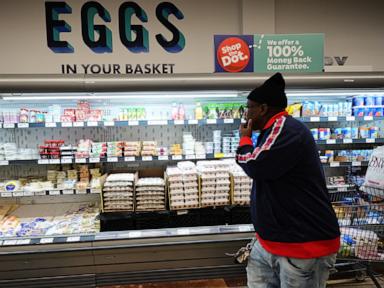
In the final sprint to Tuesday's midterm elections in the United States, attack ads and exchanges involving current and former occupants of the White House have drawn headlines, but one issue has preoccupied voters throughout the campaign season: affordability.
According to U.S. government data, the Iran war set off a months-long surge of inflation as fuel prices climbed in response to unrest in the Middle East. In response to rising prices, a jump in bond yields has pushed up rates for loans such as credit cards and mortgages, threatening to worsen the financial crunch for households.
Candidates for Congress have voiced a range of proposals meant to address the price pressures, including tax cuts, an easing of regulations, a removal of tariffs and an end to the Iran war.
Economists who spoke to ABC News evaluated whether the proposals could cool inflation. Analysts praised some policies and criticised others, but they all acknowledged that no single measure could dramatically shift the price picture, at least anytime soon.
The Iran war triggered a rise in inflation earlier this year as a historic oil supply shortage pushed up prices for gasoline, groceries and other essentials, the report said. Some candidates, mostly Democrats, have proposed an end to the Iran war as a means of dialling back price hikes.
Dan Osborn, an independent candidate for U.S. Senate in Nebraska, said at a debate in September: "We were promised no new foreign wars, but here we are, 185 days into a new foreign war and Nebraskans are paying the price." On his campaign website, Osborn calls for ending the wars that drive up prices, pointing specifically to the Iran war.
Sen. Jon Ossoff, D-Ga., who is up for re-election, vowed last month, when asked how he would bring down prices, to "end this disastrous war in Iran."
Analysts who spoke to ABC News attributed elevated prices for gasoline and some other goods to ongoing conflict in the Middle East, which has damaged oil infrastructure and forced firms to take up costly means of transporting crude.
The national average price of a gallon of gas stands at $4.16 a gallon, an increase of $1.18 since the outset of the Iran war in February, according to AAA data. Gas prices jumped more than 9% in September from August, accounting for more than half of the overall price increase that month, the most recent month on record, U.S. government data showed.
Gian Maria Milesi-Ferretti, a senior fellow in economic studies at the Brookings Institution's Hutchins Center for Fiscal and Monetary Policy, told ABC News: "The war has a lot to do with what has happened to oil prices and of course to the refined product prices. Ending the war would be salient."
President Donald Trump has acknowledged the rise in oil prices while maintaining that the war has been worth it to prevent Iran from acquiring a nuclear weapon. In September at the United Nations General Assembly, Trump said that after the war, "oil prices will come plummeting down even lower than they were at the start of the conflict."
In the event of a peace deal in the Middle East that brought all fighting to a halt, oil prices would likely fall as supply challenges eased, some analysts said, but the reduction could take time as producers repair oil infrastructure in the region. Gas prices, meanwhile, would likely fall at a delayed pace as retailers sell through refined product purchased while oil prices were higher, they added.
Kara Reynolds, an economist at American University, told ABC News: "Even if we ended the Iran war today, I think it's going to take a while for those energy prices to come down. We're underestimating how much of the capacity of production has been destroyed in that area."
President Trump's signature One Big Beautiful Bill, which included a range of tax reductions for individuals and businesses, has drawn praise from Republican candidates. Ashley Hinson, a Republican candidate for the U.S. Senate in Iowa, says on her campaign website: "Ashley has always believed it is YOUR money, not the government's money." Sen. Pete Ricketts, R-Neb., who is running for re-election, also mentions this approach on his campaign website.
Economists described tax cuts as a potential way to ease affordability pressures by sheltering some income from taxes. At the same time, they said, a resulting uptick in consumer spending would risk heightened inflation if demand outpaced supply. Reynolds said: "In general, tax relief can give you income you can use to compensate for higher prices. The problem is when you lower taxes that can be seen as a fiscal stimulus. To the extent that's fueling more consumer spending it exacerbates inflation."
Tax cuts also reduce revenue taken in by the federal government, which could add to the nation's $40.5 trillion debt in the absence of an equivalent reduction in spending, analysts said. A further increase in debt could in turn raise borrowing costs for consumers, making a mortgage or credit card more expensive. Milesi-Ferretti said: "Public debt is already rising and the cost of financing it is going up."
Both Republican and Democratic candidates have proposed relief from regulations as a means of achieving greater efficiency, especially in housing. New York Gov. Kathy Hochul, a Democrat, has called for speeding up the permit process and easing environmental reviews. Members of both parties in Congress voted overwhelmingly to pass the 21st Century ROAD to Housing Act, which aims to reduce home prices by removing regulation and bolstering supply; the measure became law in July. Rep. Mike Flood, R-Neb., a co-author of the measure, says on his campaign website: "My bill cuts red tape and makes it more affordable to build new homes."
Analysts said solutions of this type could succeed in reducing home prices, though progress would likely take years due to the prolonged duration of housing construction. Harry Holzer, a professor of public policy at Georgetown University and a former chief economist at the U.S. Department of Labor, said: "I like the supply-side ideas. We've made it ridiculously expensive to build in America." Milesi-Ferretti said a larger supply of homes could eventually ease prices, but not anytime soon. Reynolds questioned the impact of federal steps, since zoning regulation critical to new home construction typically falls under state or local jurisdiction.
On the campaign trail, Democratic candidates have criticised tariffs issued by the White House as a cause of price increases. Many Democrats — and some Republicans — have called for a reduction of some levies. In all, the current level of U.S. tariffs will cost the typical American household $1,077 per year, according to an estimate released by the Yale Budget Lab in August.
Levies imposed on Canada over the summer have drawn close attention from candidates in states near the northern border. Many of those states host closely contested Senate races that may determine which party retains control of the upper chamber.