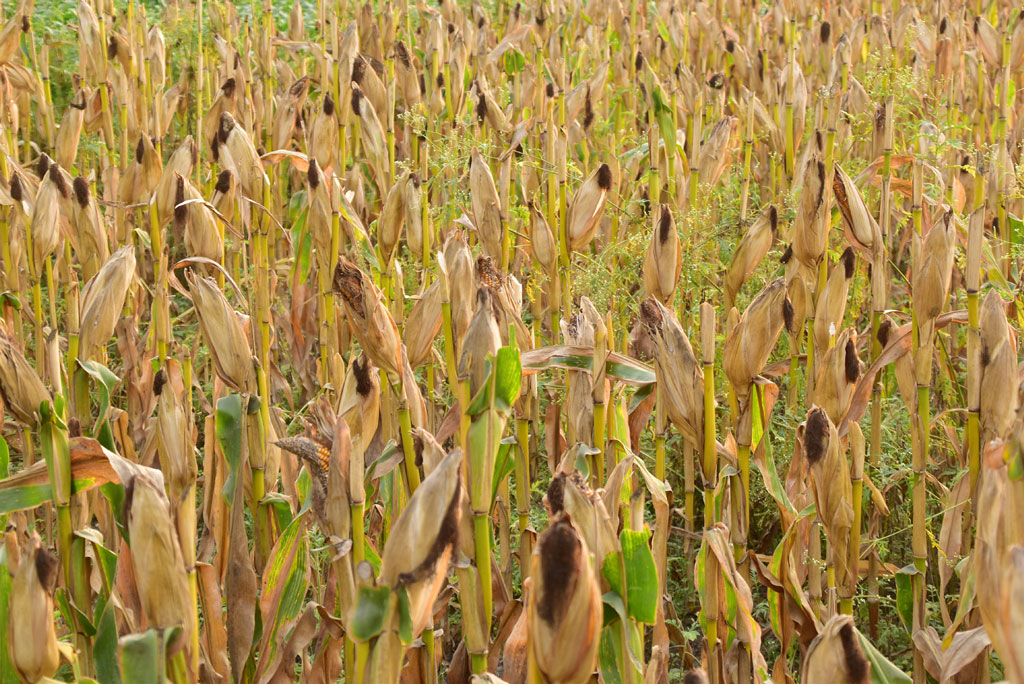
New rice variety BRRI Dhan 119 approved for saline land, average yield 5.7 tonnes per hectare

A new rice variety developed by the Bangladesh Rice Research Institute (BRRI), BRRI Dhan 119, has created fresh prospects for rice production in salinity-prone coastal areas. The National Seed Board has given final approval for the variety to be cultivated in the transplanted Aman season.
According to BRRI sources, BRRI Dhan 119 received approval for transplanted Aman cultivation at the 116th meeting of the National Seed Board held on 28 October. Md Al-Amin, an official of BRRI's Publication and Public Relations Department, confirmed the matter on Monday afternoon, 2 November.
According to the research data, with proper care BRRI Dhan 119 yields an average of 5.7 tonnes per hectare. Depending on the environment and the level of soil salinity, the yield can range from 4.8 to 7.6 tonnes. The new variety can produce about one tonne more per hectare than the existing BRRI Dhan 73.
One of the variety's special features is that it can be grown not only in coastal saline areas but also in non-saline regions of the country. Its life cycle is about 115 days. As a result, after the Aman rice is harvested, Rabi crops such as sunflower and mustard can be grown on the same land.
BRRI Dhan 119 was developed by a research team from the institute's Plant Breeding Division. The team was led by the division's chief scientific officer, Mohammad Ekhlasur Rahman. The other members are senior scientific officer Hasina Khatun, senior plant breeder Nusrat Jahan, scientific officer Armin Akter Setu, and scientific officer (CRCIL) Ribet Farzana Disha. The research was carried out with funding from the Location Specific Technology Development (LSTD) project, aimed at developing location-specific varieties.
According to the researchers, the variety can tolerate salinity at various stages of growth, starting from the seedling stage. As a seedling, it can withstand salinity of 12 decisiemens per metre for up to three consecutive weeks. From vegetative growth through the sensitive reproductive stages, it can also produce a yield at salinity levels of 8 to 10 decisiemens per metre.
The rice plant stands an average of 113 centimetres tall. Its stem is strong, so it does not lodge easily. Each panicle carries an average of 215 filled grains, about 70 to 80 more than BRRI Dhan 73. Grain also does not shatter easily from the panicle.
The rice of the new variety is medium-slender and white. When cooked, the rice is fluffy. Its amylose content is 25.9 percent.
According to the researchers, because of its short life cycle, BRRI Dhan 119 can bring a positive change to the prevailing cropping patterns of coastal areas. After the Aman harvest, sunflower and salt-tolerant mustard can be grown on medium-high to high land. This could create an opportunity to produce an additional crop from the same land in a year.
The variety's suitability has been tested not only for Aman but also for the Boro season. Under the supervision of the Seed Certification Agency, its yield trials were completed at 20 locations across the country in saline and non-saline environments. On the basis of the trial results, the National Technical Committee has also recommended it for cultivation in the Boro season. The variety can be grown in both Aman and Boro seasons.
For cultivating BRRI Dhan 119, the researchers have advised sowing seeds between 1 and 30 July in the transplanted Aman season. Seedlings aged 25 to 30 days should be transplanted at two to three per hill. The row-to-row distance should be 20 centimetres and the hill-to-hill distance 15 centimetres. Medium-high to high land is most suitable for this variety.
BRRI Director General Md Rafiqul Islam said the development of BRRI Dhan 119 is a notable achievement in the country's agricultural research. Alongside helping farmers in saline coastal areas to produce rice, the variety will play an important role in strengthening the country's food security, he said.
The research team leader, Mohammad Ekhlasur Rahman, said their team had worked diligently at every stage of the long research. Seeing the benefits of this variety in farmers' fields would be the greatest reward, he said.