Previously unseen Tagore family archive goes on public view for the first time at Christie's in Mumbai
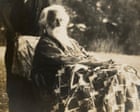
A private family archive offering a glimpse into Rabindranath Tagore's artistic process and personal relationships in his final years is being brought into public view for the first time, at an exhibition by Christie's opening in Mumbai this month.
Titled 'Rabindranath Tagore and Mungpoo', the exhibition runs from 10 November to 18 December at Christie's space in south Mumbai. It brings together artworks, manuscripts, letters, photographs and personal effects.
The archive draws from Tagore's visits between 1938 and 1940 to the family home of his protege, Maitreyi Devi, in the village of Mungpoo in Darjeeling. Tagore died in 1941, so the material bears witness to the very last phase of his life.
Tagore was the first non-European to win the Nobel prize in literature. The Bengali poet, musician, novelist, philosopher, songwriter, painter, humanist and educator left enduring legacies that include the national anthems of both India and Bangladesh.
As Nobel laureate economist Amartya Sen once wrote, Tagore was 'a towering figure in the millennium-old literature of Bengal', whose songs resonate across eastern India and Bangladesh, while his ideas on education, nationalism and freedom of the mind remain relevant today.
The Irish poet W B Yeats is said to have described Tagore as 'greater than any of us'. Gitanjali, the collection that won the Nobel prize, was published in English translation in London in March of that year and reprinted 10 times by the time the prize was announced in November; the committee praised its 'profoundly sensitive, fresh and beautiful verse'.
The exhibition's curator, Nishad Avari, head of South Asian modern and contemporary art at Christie's, points to one instructive document: a manuscript from 1940 that appears to be a draft of Tagore's memoir Chelebela, or My Boyhood Days, reflecting on growing up in a large family in Calcutta and on the changing world ushered in by electricity and the motorcar.
For Avari, the ideas in the document echo the educational philosophy Tagore put into practice at Santiniketan, the experimental school he set up about 100 miles from Kolkata. 'He speaks about how education is like being in prison and that it should be open and free... about the idea of wonder and even fear as inspiring creativity,' Avari said, adding that at Santiniketan people sat under trees with their gurus and learned in the open, so education did not feel like a restriction or an imposition.
Avari points to another detail that makes the document valuable: of the 10 complete manuscripts in the exhibition, it is the only one dictated to Devi, whose father was a close friend of Tagore's. For Avari, this speaks to their close relationship and the trust he placed in her.
The collection also includes copies of almost every one of Tagore's publications signed by him to Devi, and hundreds of letters — first between Tagore and her father, and later between Tagore and Devi herself. Doodles among the corrections show how his literary practice fed into his artistic practice.
Among the artworks is a portrait of Devi, particularly notable because Tagore's figure studies were not generally attributed to specific individuals. There is also a landscape depicting the forests of Mungpoo, which Tagore embraced as a retreat. Alongside them are vintage photographs and personal effects, including a kurta and a lungi that Tagore left behind at the family home.
On the international art market, Tagore's paintings command significant prices. This year, Sotheby's sold one of his watercolours for £1.02 million, nearly four times its low estimate.
Institutions such as Visva-Bharati in Santiniketan and the National Gallery of Modern Art hold much of Tagore's archival material, making the discovery of a private archive particularly rare. Avari hopes that making the material public will offer historians, scholars and admirers new perspectives — adding to the understanding of the artist, his career, and of the man beyond his art.