Ladakh Government Issues Notice to Shut Sonam Wangchuk's Desert Flower School in Leh
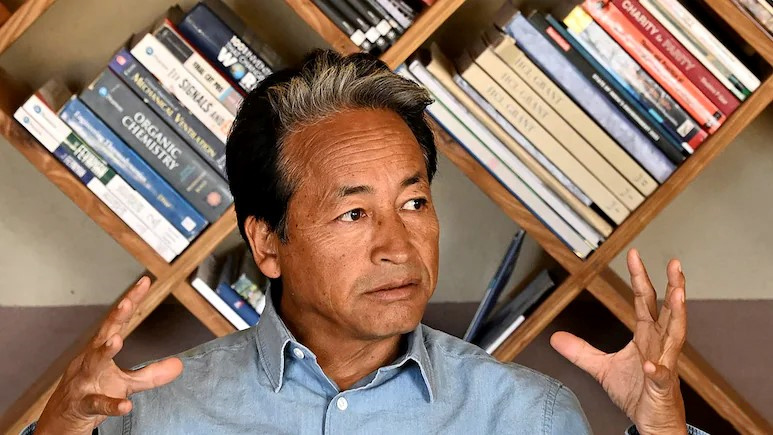
Amid a court battle over the cancellation of the land allotment for climate activist Sonam Wangchuk's Himalayan Institute of Alternatives, Ladakh (HIAL), the institute has run into fresh trouble. The Ladakh government has issued a notice directing that classes and other activities at Wangchuk's Desert Flower School in Leh be kept closed. The government alleges the school's activities were started without the necessary approval.
The notice, issued by the Leh tehsildar, was sent to Wangchuk's wife, Dr Gitanjali J Angmo, the founder and chief executive officer of HIAL. She has been told to "strictly maintain the status quo." She has also been directed not to do anything that could adversely affect the case pending before the Jammu and Kashmir and Ladakh High Court.
The administration said that on September 22, Angmo wrote to the Leh deputy commissioner seeking a no-objection certificate or approval for the members of the proposed management committee of the Desert Flower School at Phyang, under HIAL's activities.
The administration, however, claims that classes and other activities had already begun at the school without the necessary consent or approval of the concerned authorities.
The notice advises Angmo not to take any step to run or start the school's activities until the court decides the case or issues a further order.
The administration has linked the warning over the school to the ongoing legal dispute over the land allotted to HIAL, saying the direction was issued to ensure that no step by the institute affects the matter pending before the court.
The dispute began in May 2018, when HIAL was allotted 1,076 kanals and one marla of land at Phyang Thang to establish an alternative university on sustainable development in the Himalayan region. The proposal was to lease the land for 40 years, subject to certain conditions.
On August 21, 2025, however, the Ladakh government cancelled the land allotment. The administration alleges the institute did not complete the lease formalities and did not build the university for which the land was allotted.
HIAL challenged the decision in the High Court. During a hearing in September this year, the court directed the administration not to create third-party rights over the disputed land, although the interim order did not stay the cancellation decision.
In October, the administration filed a 136-page affidavit defending the cancellation. It claimed HIAL's allotment had automatically expired in May 2019 because the lease deed was not executed and the mandatory land premium was not deposited within one year.
The administration also cited an October 2026 certificate from Ladakh's higher education department stating that HIAL is not a recognised university and that its courses have no legal approval or affiliation.
The institute disagrees. Angmo said HIAL applied to execute the lease deed on May 20, 2018, just 15 days after the allotment, and contacted the authorities repeatedly over the matter afterwards.
Wangchuk has also accused the administration of delaying the process. He claims he applied in writing five times to have the lease deed executed, visited the concerned office 15 times and made 30 phone calls.
He also cited a government letter from February 2021 which, according to him, acknowledged delays caused by administrative complications during Ladakh's transition to a union territory and by the coronavirus pandemic, and allowed construction work to continue while the lease formalities remained in progress.
Wangchuk alleges the land dispute is being used to target him because of his activism in Ladakh. The administration maintains that HIAL did not fulfil the conditions attached to the allotment.