14 Districts Identified as Sources of the Most Irregular Migration: Shama Obaid
State Minister for Foreign Affairs Shama Obaid has said 14 districts in the country have been identified as the places from which the most irregular migration takes place. Meetings have been held with the deputy commissioners (DCs) of those districts. They have been tasked with building a social movement at grassroots level.
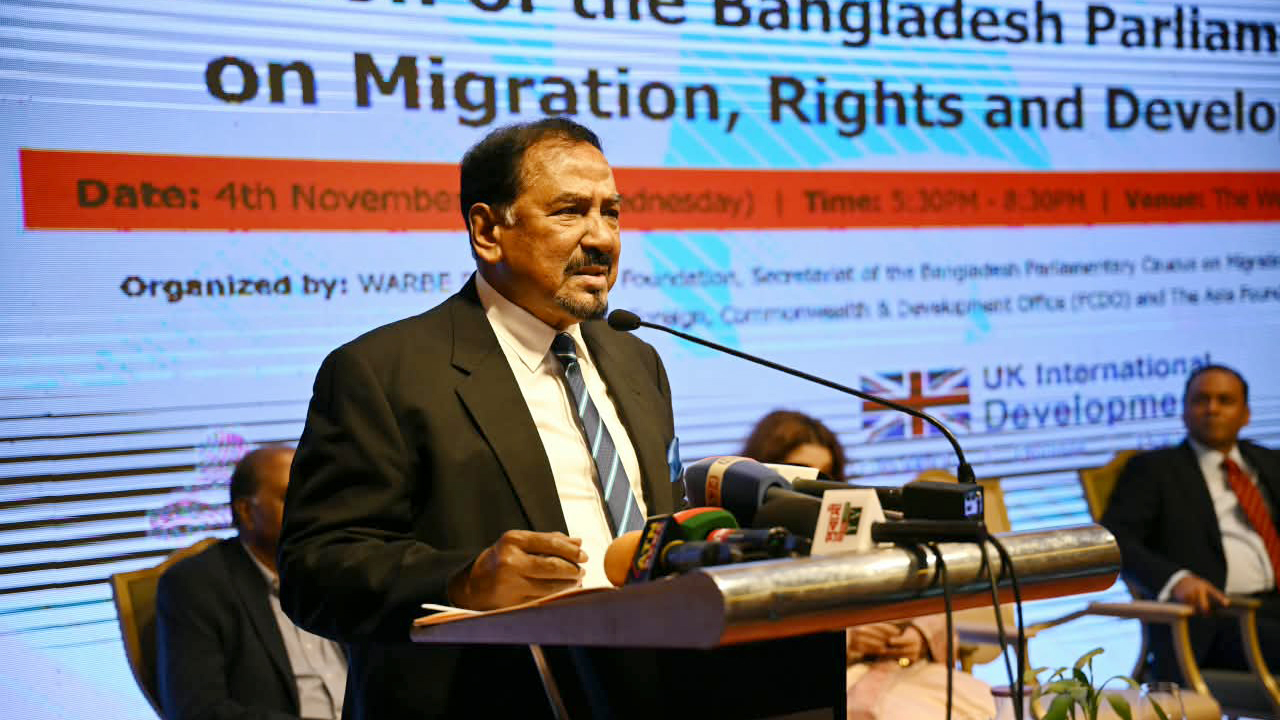
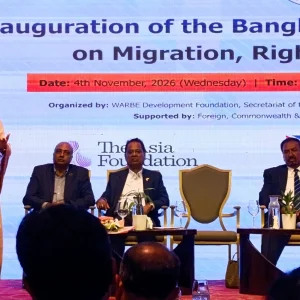
She made the remarks on Wednesday (4 November) at the inaugural ceremony of the 'Bangladesh Parliamentary Caucus on Migration, Rights and Development' at Hotel Westin in the capital. The caucus was formed to strengthen the parliamentary role in protecting the rights of Bangladeshi migrants, ensuring safe migration and advancing sustainable development.
Shama Obaid said multiple meetings have been held, under the leadership of the Prime Minister, with the ambassadors and representatives of Italy and Libya. Work is being done jointly with the Ministry of Expatriates' Welfare. The aim of the social movement is to ensure people cannot be misled and lured abroad, and to identify the broker syndicates hiding at district, upazila and police-station levels.
On irregular migration, the state minister said many people from her constituency of Faridpur, Madaripur and Shariatpur travel to Europe by irregular routes. They try to reach Italy via Libya across the Mediterranean Sea. They are thrown into the sea midway and die. Those who do arrive also end up in dire straits.
On migration costs, Shama Obaid said the cost must be reduced. From neighbouring Nepal, going abroad costs no more than Tk 150,000 to 200,000. But in Bangladesh, legitimate businesses are being harmed because of broker syndicates. Ordinary people are spending Tk 1.5 to 2.5 million, selling their land, to go abroad. Some find work; others are cheated and lose everything. In her words, the government has to address this point.
She said that since taking charge of the foreign ministry and since the government was formed, various problems have been coming to her, especially from members of parliament. Problems of expatriates in various countries including Russia and the Gulf states reach the expatriates' welfare ministry just as they reach the foreign ministry. She said a migration wing has been opened at the foreign ministry for the first time, and the wing is working closely with the expatriates' welfare ministry.
The state minister said the main goal of the current BNP government's manifesto is creating employment at home and abroad. That has to be done through skills development and skilled migration. The government wants safe migration. Emphasis is also being placed on language skills: learning the language of the destination country — Chinese, Japanese, Arabic and others — before leaving increases job security. For this, the education ministry, the expatriates' welfare ministry and the vocational training centres are being reformed.
On the expatriate sector, she said the BNP has a special feeling for this sector because it was started by martyred President Ziaur Rahman. She said talk about expatriates' welfare is not political, but comes from the heart.
Shama Obaid also said that after many years Bangladesh has a parliament elected by the people's vote and accountable to the people. This parliament believes in multi-party democracy. And so all parties and all views together will work for the welfare and development of the expatriate remittance warriors.