Five US States Back Citizen-Only Voting Measures, Each With More Than 60 Percent Support
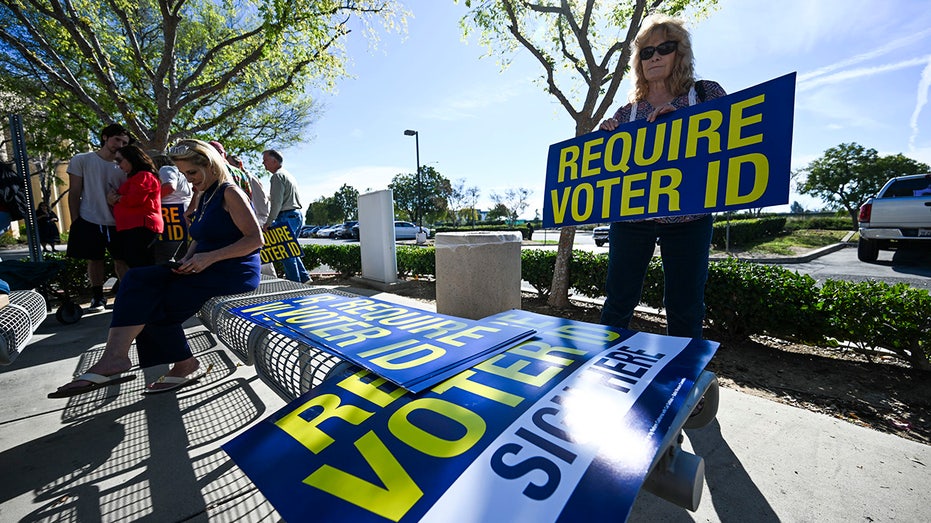
Voters in five US states have overwhelmingly approved ballot measures barring noncitizens from voting. The states are Kansas, Alaska, Arkansas, South Dakota and West Virginia.
Support exceeded 60 percent in each state. In Kansas, Democrats scored a major Senate upset, while the Senate race in Alaska remains uncalled.
Federal law already prohibits noncitizens from voting in federal elections, but the approved measures clarify or explicitly codify citizenship requirements for voting in state and local elections.
Jason Snead, executive director of Honest Elections Project Action, said noncitizen voting bans are overwhelmingly popular and enjoy bipartisan support.
Snead pointed to a 2024 Gallup poll that found 83 percent of Americans, including 66 percent of Democrats, support requiring first-time voters to provide proof of citizenship when registering to vote.
The results come as the Supreme Court prepares to consider a related dispute over Arizona: whether the state can require proof of citizenship on its state voter-registration form and remove suspected noncitizens from the rolls before an election.
Related election measures failed in California and Arizona. California's Proposition 39 was defeated 58.5 percent to 41.4 percent, a margin of roughly 17 percentage points. The measure would have required voter ID and additional citizenship-verification procedures.
Snead said the left poured more than 30 million dollars into the campaign to defeat the California measure. On Arizona, he said the measure was broader omnibus legislation that included several provisions beyond noncitizen voting, which may have contributed to its defeat.
The victories follow the Trump administration and congressional Republicans' failed efforts to pass the SAVE America Act, which would require proof of citizenship to register to vote.
The SAVE America Act became a flashpoint in Congress. Trump's effort to tie the bill to Department of Homeland Security funding contributed to a prolonged standoff during the department's shutdown. Senate Majority Leader John Thune said Republicans lacked the votes to pass it, while Democrats argued it would disenfranchise eligible voters.
Hans von Spakovsky, a former member of the Federal Election Commission and senior legal fellow at Advancing American Freedom, said the Democratic Party is completely divorced from its voters. Snead agreed, saying Democrats took a 90-10 issue and turned it into a highly politicized fight.
Spakovsky warned, however, that the approved provisions will not be much good unless states are able to verify voters' citizenship. He pointed to Republican National Committee v. Mi Familia Vota, in which the Supreme Court will decide whether federal law prevents Arizona from requiring documentary proof of citizenship and removing suspected noncitizens from its rolls.
Snead said simply checking a box attesting to citizenship on a federal form has not been sufficient. He cited recent Justice Department arrests and indictments against noncitizens, and the failures of automatic voter registration in New Jersey, which added 6,600 noncitizens to the rolls, with almost 400 of them voting.
Spakovsky said a ruling in favor of Arizona would only apply to future voter registrations. The only way to check the citizenship of people already registered, he said, is by using the SAVE database at the Department of Homeland Security.
Snead applauded the Trump administration's efforts to expand states' access to the SAVE database to clean up their voter rolls. Both he and Spakovsky voiced concerns that Democrats will try to defund the database or prevent its use.