Trump says decision on renewed all-out strikes on Iran coming soon, as Qatar draft proposal drives diplomatic moves
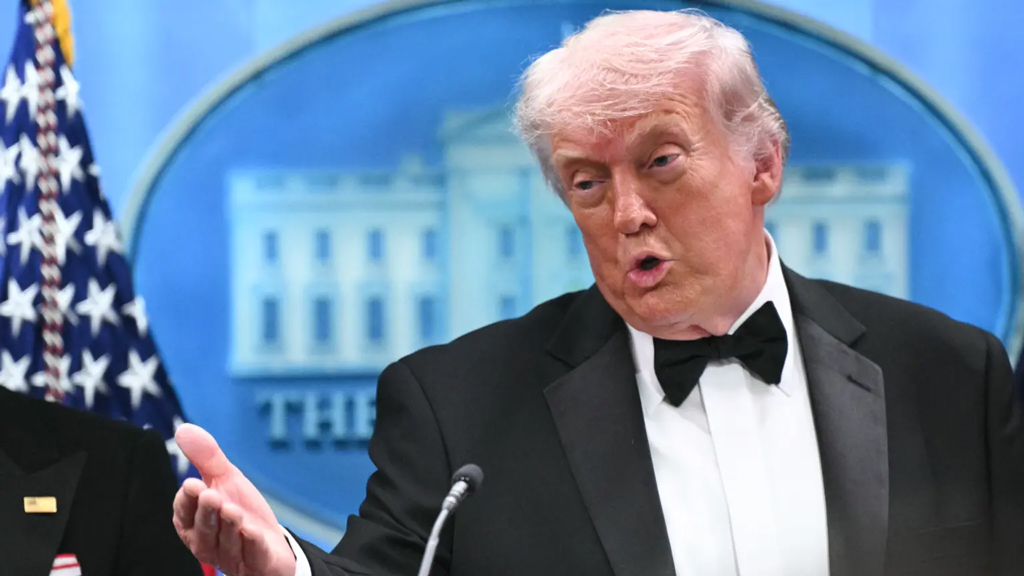
US President Donald Trump has said a decision will be taken soon on whether to resume all-out military operations against Iran after the midterm elections. He spoke on Thursday local time after a meeting with his national security advisers.
Whether to launch fresh heavy bombing to completely destroy Iran's nuclear programme is now the main question before Washington.
US outlet Axios reported that the election was seen as an important turning point in determining Trump's next step on the Iran war. Fresh heavy air strikes on Iran to end the war are under consideration.
Trump currently has three options before him. They are launching fresh military strikes, continuing economic pressure on Iran's ruling system, or reaching a settlement by giving Tehran significant concessions.
Citing two US officials, Axios said Trump and his top national security advisers met on Thursday for the first time since the midterm elections to discuss the Iran situation. The meeting was held as part of the weekly intelligence briefing.
After the meeting, Trump told reporters in the Oval Office: 'Now we will decide. Will we go further to completely destroy Iran's nuclear programme and make sure nothing like this ever happens again?' He said: 'If possible, I do not want to destroy the rest of the country. But I may have to. You will know very soon.'
While Trump waits to decide on his next step on Iran, diplomatic activity increased across the region on Thursday. Iran's Foreign Minister Abbas Araghchi spoke by telephone several times that day with regional mediators from Qatar, Saudi Arabia, Turkey, the United Arab Emirates, Oman and Egypt.
Qatari mediators have continued discussing a draft proposal with Iran and the White House. The proposal calls on the two sides to take a series of steps within two days to pave the way for a broader agreement. Its aim is to build mutual trust.
Under the proposal, on the first day the United States would lift its naval blockade on Iran and release some of the country's frozen funds. In return, Iran would formally invite the International Atomic Energy Agency (IAEA) to inspect the nuclear sites damaged in the bombing. Regional sources said the inspection would be conducted on the basis of an agreement reached in Cairo a year ago.
On the second day, the Strait of Hormuz would be reopened. Nuclear talks with Iran would then resume. Iran's stockpile of highly enriched uranium would feature prominently in those talks.
Meanwhile, Mohsen Rezaei, secretary of Iran's Supreme National Security Council, who plays an important role in indirect talks with the United States, met Russian President Vladimir Putin at the Kremlin in Moscow on Thursday. The meeting took place a few days after a telephone conversation between Putin and Rezaei. The Russian president had earlier offered to mediate between the United States and Iran. Rezaei said he had delivered a message from Iran's Supreme Leader Mojtaba Khamenei to Putin, and that Putin had expressed his readiness to help end the war.
After the meeting, Rezaei said: 'We told Mr Putin that we have declared seven conditions to the United States on diplomacy. Until the United States fulfils those seven conditions of ours, the Strait of Hormuz will not be opened and there will be no talks.'
Meanwhile, US Central Command (Centcom) is finalising preparations in case major military operations against Iran resume. However, a US official said it has not yet received any new instruction from Washington on this.
A possible sign of US plans for fresh strikes could be the arrival in the Middle East of the US Navy's third carrier strike group. A US official said the USS Theodore Roosevelt and its accompanying strike group will stay in Singapore for a few days from Friday, where the ships will make a port call. However, the carrier will not reach Centcom's area of responsibility before mid-November.
Discussion is growing of blaming Defence Secretary Pete Hegseth for the Republican Party's defeat in the US midterm elections. He has faced criticism within his own party over his handling of the Iran war, contradictory statements about the war's goals and timeline, and changes in the military leadership.