Eisenkot Moves Towards Forming Israel's Government: Backed by 67 Lawmakers, President to Decide on Sunday
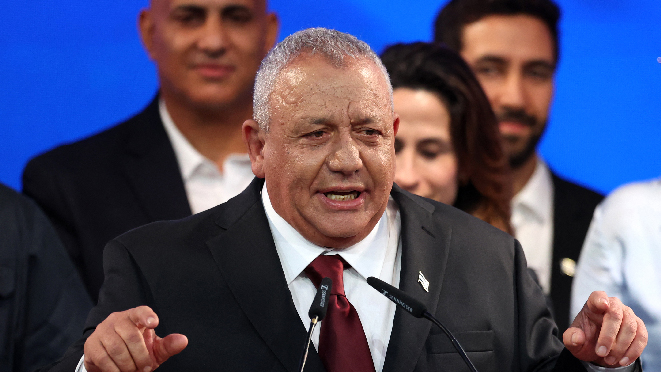
Sixty-seven members of Israel's parliament, the Knesset, have backed Gadi Eisenkot as the country's next prime minister. The figures emerged after political party representatives met President Isaac Herzog on Thursday. The development has cleared the path for Eisenkot to be formally tasked with forming the next government.
According to the Israeli outlet Times of Israel, President Herzog said parties representing 67 lawmakers had recommended Eisenkot for prime minister. Parties representing 46 lawmakers, on the other hand, recommended incumbent Prime Minister Benjamin Netanyahu. Although the outcome is clear, Herzog will hold further talks with party leaders before assigning the mandate. A decision is expected on Sunday.
Eisenkot's party, Yashar, has urged the president to hand him the mandate quickly. The party claims this is the highest number of lawmaker recommendations for a prime ministerial candidate since 2015.
Yet despite winning the support of a majority of lawmakers, building the coalition needed to form a government remains a major challenge for Eisenkot. The six anti-Netanyahu parties are divided into two camps. Four Jewish-led parties hold 48 lawmakers between them, while two Arab-led parties hold 19. Although all six parties back Eisenkot as prime minister, three of the Jewish-led parties are so far unwilling to form a government with the Arab parties.
In last week's election, Netanyahu's outgoing coalition won 53 seats. But United Torah Judaism (UTJ), with seven seats, did not recommend Netanyahu for prime minister. That has raised the possibility that the party may support an Eisenkot-led government in future.
Yisrael Beiteinu chairman Avigdor Lieberman has stepped back from his long-standing objection to a coalition with the Haredi, or ultra-Orthodox, parties, according to Israel's Channel 12 News. A report published on Thursday said Lieberman is considering a coalition with UTJ, prioritising the removal of Netanyahu from power.
The report said Lieberman considers forming a government with the Haredi parties more acceptable than building a coalition with the Arab-led parties or depending on their support. In such a government, Eisenkot and Lieberman could reach an arrangement to rotate the premiership. Compulsory military conscription for members of the Haredi community could also be discussed.
Amid the deadlock over government formation, the new Knesset is set to be sworn in on 10 November. A new speaker is to be elected soon after the swearing-in, which could remove Amir Ohana of the ruling Likud party from the post. Ohana has said he will arrange a parliamentary debate on the matter if at least 61 lawmakers formally demand the election of a new speaker.
Following last week's general election in Israel, the Joint List, the alliance of Arab-led political parties, has taken a position in favour of giving opposition leader Gadi Eisenkot the mandate to form the government. The alliance announced this on Thursday (5 November).
At the meeting with President Herzog, Ra'am party leader Mansour Abbas did not explicitly recognise Hamas as a terrorist organisation. Eisenkot has made recognising Hamas as a terrorist organisation one of the conditions for parties wishing to join his potential government. Abbas, however, expressed hope that Eisenkot would be able to form a 'good government'.
Asked by President Herzog whether Ra'am could be part of a government that would fight terrorism without any limitations, Abbas said: 'The claim that Ra'am's participation would prevent any government or cabinet from protecting Israeli citizens is not correct.' Abbas also complained that Arab politicians are repeatedly being made to face a 'loyalty test'.