From 100 to 12 taka in a month: green chilli prices collapse in Gangni, farmers ready to cut plants for wheat
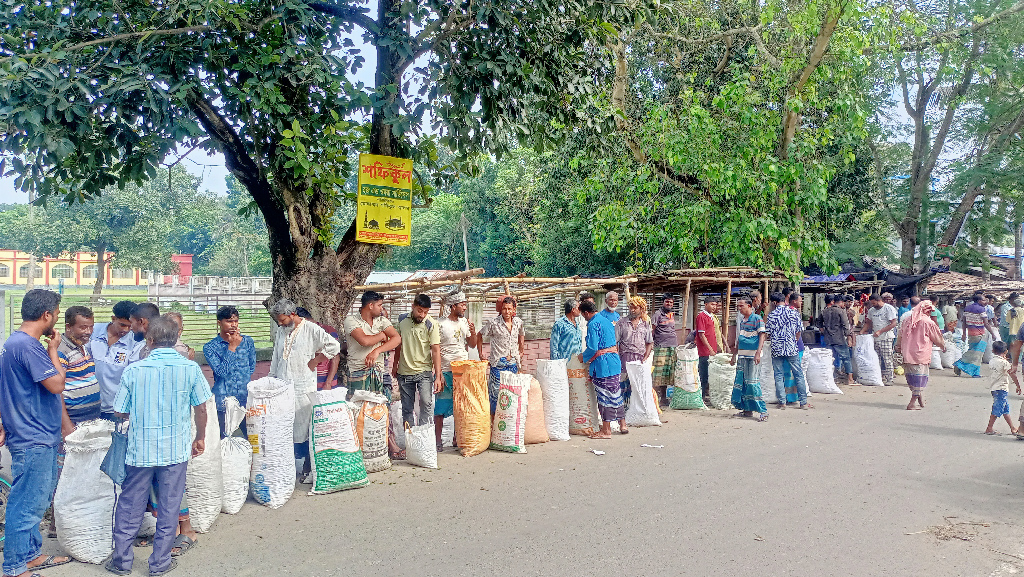
Chilli cultivation has increased in Gangni of Meherpur this season. Farmers are increasingly drawn to it each year because it earns more than other crops, and many have become self-reliant through chilli farming. But although the yield has been good this time, farmers are frustrated because the price has fallen. Chilli that sold for 100 taka a kilo just a month ago now sells for 10 to 12 taka. For the past two months, the price has stayed between 10 and 15 taka a kilo.
Talking to several chilli farmers in the upazila, it emerged that chilli offers a chance of higher profit in a short time compared with other crops. Chillies begin to grow on the plants two and a half to three months after transplanting, and the harvest can then be collected quickly. Many farmers also grow companion crops alongside chilli in the same field. But they had not imagined the market price would fall this far.
Farmers say it costs about 15,000 to 20,000 taka to cultivate chilli on each bigha of land. If the weather is favourable and the yield is good, a higher profit than other crops is possible in a short time. Wholesalers come to Gangni from different areas to buy chillies, purchasing them from the market or directly from farmers, meeting the demand of their own districts and carrying them to different parts of the country.
Chilli farmer Alamgir Hossain said he had brought 26 kilos of chillies to the market, of which about two kilos were deducted. There is a market tax of one taka per kilo and a transport cost of one taka per kilo. Farmers are now picking the chillies from the plants themselves, because picking by hired labour costs 15 taka per kilo, and at the current price the labour cost alone means a loss.
Alamgir said, 'There are still many chillies on the plants, but I am losing the interest to pick them. The picking cost alone will eat up everything, so I no longer feel like picking them. I will cut the plants and grow wheat.'
Chilli farmer Alfaz Uddin said they cultivate chillies every year. Interest in chilli farming is growing in the region because it brings good profit in a short time. But compared with last year, the prices of fertiliser and diesel have risen this time. They had hoped for a profit again after getting a good price at the start, but now, with the price fallen, nothing remains after paying for picking, fertiliser and irrigation.
Chilli farmer Zahidul Islam said the soil of the region is suitable for chilli cultivation. Local farmers grow chillies on both fallow and cultivated land. The hope of profit is drawing more people to it day by day, though natural disasters sometimes cause losses. This time the price is so low that selling at 10 to 12 taka a kilo leaves farmers with nothing in hand.
Zahidul added that Gangni's chillies go to different parts of the country. Small chilli markets sit in various bazaars, and the price rises when demand in the market increases. But for now, he sees no prospect of the price rising.
Chilli farmer Ariful Islam said that only a few days ago they sold chillies at 100 taka a kilo, and now the same chillies cost only 12 taka. Because of this, farmers are losing interest in picking them, and many have already started cutting the plants.
Istiyak Ahmed, a chilli farmer from Debipur village, said there is no profit in selling at 12 taka a kilo. Picking the chillies from the field, bringing them to market and paying the tax together cost a lot, and the prices of fertiliser, diesel and labour have also risen.
Md Mintu Mia, leaseholder of Debipur market, said an average of 3,000 kilos of chillies are arriving at this market every day now. Daily arrivals used to be 8,000 to 10,000 kilos, but they have fallen over the past month. At one time, as much as 12,000 kilos arrived here. With the price fallen, many farmers are no longer picking chillies as before.
According to the Gangni upazila agriculture office, chillies were cultivated on 1,835 hectares in the upazila this season, compared with 1,825 hectares last year. In other words, cultivation has increased slightly over the course of a year.
Gangni Upazila Agriculture Officer Abdullah Al Mamun said chilli cultivation has increased in the upazila because it is profitable, and many farmers have taken it up. A short while ago, the price of chillies was high because production was low, but towards the end of the season the price has fallen sharply. For that reason, many farmers are cutting their chilli plants and preparing the land for wheat.