China-Pakistan information corridor raises fresh fears over press freedom

China and Pakistan have jointly launched a 'China-Pakistan Information Corridor' (CPIC) aimed at countering fake news and disinformation. Critics fear, however, that behind the initiative the two governments are creating an opportunity to establish control over the media and block news that goes against their interests.
In particular, the initiative could become a tool to pressure journalists by labelling critical reporting on the China-Pakistan Economic Corridor (CPEC) as 'misleading'. The joint initiative by two countries that rank low on press freedom indices has created fresh concern over freedom of expression.
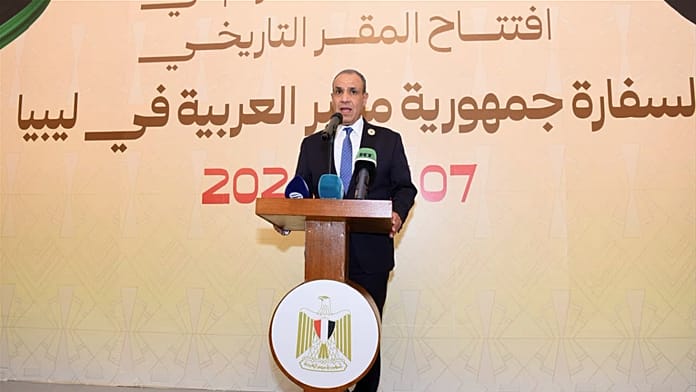
According to a report in The Diplomat, the CPIC was formally launched on 27 October at the Pakistan-China Friendship Centre in Islamabad. The event, organised by Pakistan's Ministry of Information and Broadcasting, was attended by Chinese foreign ministry spokesperson Mao Ning and China's ambassador to Pakistan, Jiang Zaidong.
At the event, Pakistan's Information Minister Attaullah Tarar thanked the Chinese embassy for its cooperation in the project.
Under the CPIC, 18 media organisations from the two countries will exchange news and content. They will also jointly produce news and set up a fact-checking unit to respond to reports the two governments consider misleading. Think tanks from both countries will carry out joint research and publications.
Officials involved have described the initiative as the 'voice' of the China-Pakistan Economic Corridor (CPEC). CPEC, run with billions of dollars of Chinese investment and financing, is one of Pakistan's most important economic projects.
The idea of the CPIC is not new, however. In March 2024, Information Minister Attaullah Tarar called on China and Pakistan to work together against alleged fake news about CPEC. Earlier, in 2021, the China-Pakistan Media Forum announced the formation of a media corridor and established a network for it.
A report by the US State Department said that through a jointly run 'nerve centre', China was seeking to establish significant control over monitoring and influencing Pakistan's information flow.
The 18 media organisations linked to the CPIC include Pakistan's state broadcaster and several private television channels. From the Chinese side are Xinhua, China Media Group and People's Daily. The Pakistan-China Institute, meanwhile, will coordinate the joint research and publication work of the two countries' think tanks.
Pakistan's Information Minister Attaullah Tarar said these activities would help build public opinion and narratives in favour of the two countries. Chinese foreign ministry spokesperson Mao Ning said both countries face disinformation, fake news and lies, and that the initiative would help build public opinion in their favour by countering them.
Critics ask, however: who will decide which news is fake or misleading? There is also concern about how neutral the initiative will be when it comes to news about the actions of the two governments.
Pakistan already has a record of taking legal action against journalists on charges of spreading fake news. In January 2025, the government amended the Prevention of Electronic Crimes Act (PECA).
Under Section 26-A of the amended law, spreading information known or reasonably believed to be false carries a maximum of three years' imprisonment, a fine of two million Pakistani rupees, or both. But the information must be such that it is likely to create fear, panic or unrest among the public.
The amended law also gives the government-controlled regulator sweeping powers to remove online content. Content deemed 'against the ideology of Pakistan' can also be removed under it.
According to Reporters Without Borders (RSF), at least nine journalists faced cases or legal action under PECA in the first nine months after the law was amended. Among those arrested in March 2025 was Farhan Malik, founder of Raftar.
The National Cyber Crime Investigation Agency (NCCIA) of Pakistan also sent a notice to Dawn journalist Muhammad Akbar Notezai over an investigative report he published in 2024 on corruption in Balochistan. Gwadar port, a key part of CPEC, is located in Balochistan.
By April 2026, the Pakistan government said 187 cases had been filed under Section 26-A of PECA. Freedom Network, meanwhile, documented 129 incidents of violations against journalists between April 2025 and March 2026, of which 58 were legal cases, most of them under PECA.
The organisation's executive director, Iqbal Khattak, said the amended law has created a climate of fear among journalists, and that many are restraining themselves out of fear of cases and arrests.