
Bangladesh can overtake India within three to four years, says commentator Masefield
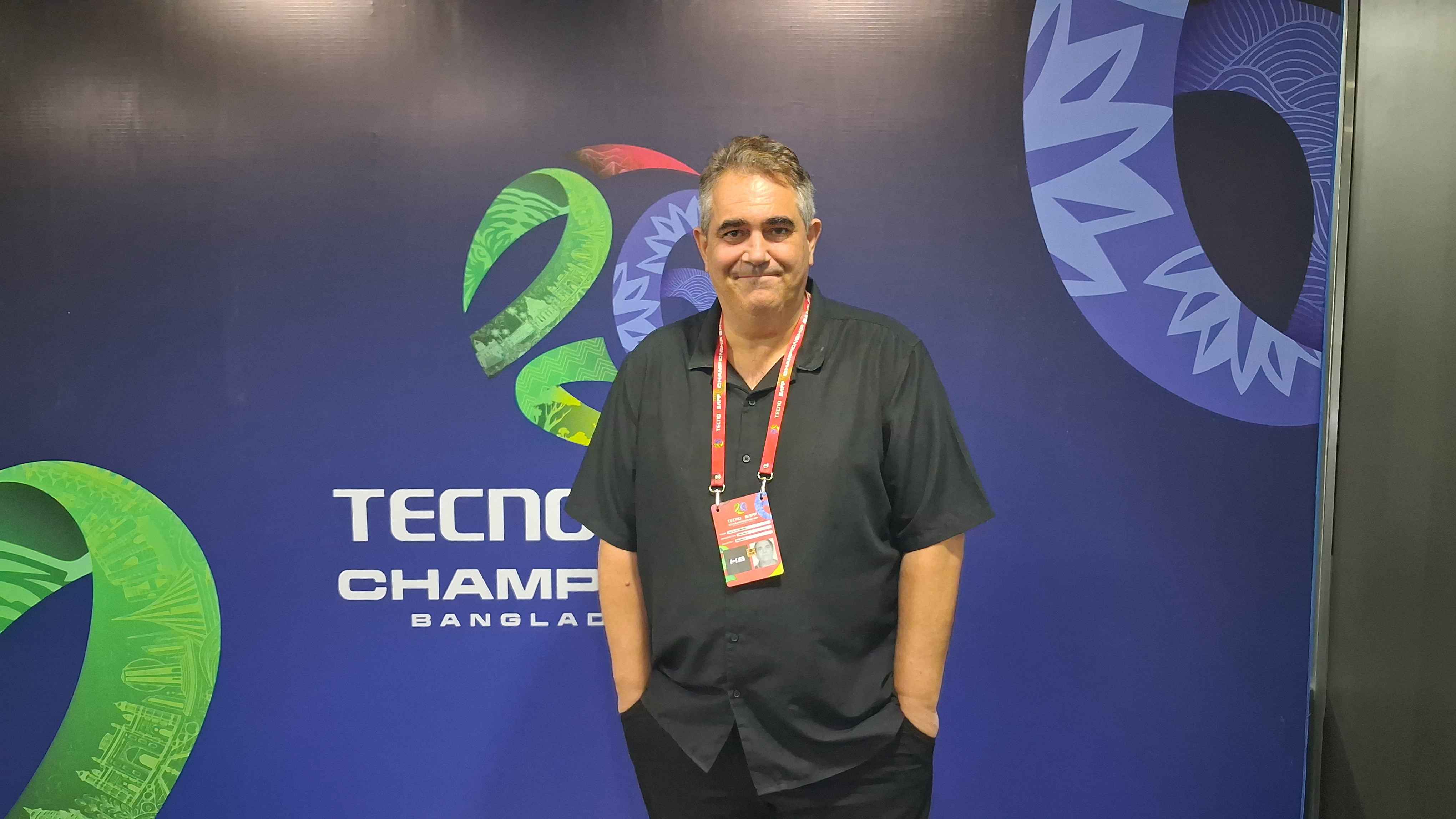
Former English footballer Paul Masefield, who is in Dhaka to commentate on the SAFF Championship, believes Bangladesh can compete from a better position than India within the next three to four years if the work is done properly. He shared this view in an interview at the National Stadium yesterday on SAFF and Bangladesh football.
Masefield played alongside English legend Alan Shearer. The former footballer is now a familiar commentator on Asian football. The interview was conducted by Anwar Sohag.
He said the SAFF tournament has become quite interesting. After a disappointing opening defeat against India, Pakistan bounced back strongly. Now it remains to be seen whether Maldives can do something against India in the final group match.
On Bangladesh, he said the team won its match but was not as flawless as many had expected. Still, there is plenty of room for the team to move forward and improve. He said he was also eager to watch Sri Lanka, given the way they have built their side.
Masefield said the teams are playing good attacking football, which is positive. Watching Bangladesh, he felt the team was trying to play positive football. They want to be progressive and attacking and to move forward with the ball.
But he believes players need some time to get used to any particular style of play. There may be some hesitation or anxiety in the team. Players do not want to make mistakes, and they want to stay in the coach's good books to keep their place in the eleven. That may be why outsiders say they should play better.
Hamza Chowdhury's inclusion is a huge gain for the team off the field even more than on it, Masefield said. He said Hamza talks to the players in the dressing room, leads on the field, and inspires others to raise their own standards. But the whole process needs time, and supporters must be patient.
From the way he has seen Bangladesh over the past year, including the Asian Cup qualifiers, Masefield said the team is on the right path. Hamza's influence is clear from his play, his communication with teammates, his guidance, his passing and the way he controls the game.
Masefield said playing alongside high-quality footballers helps others learn quickly and become better players themselves. Anyone can make an ordinary ten-yard pass, but the difference lies in whether the ball is delivered to exactly the right place so a teammate can control it without breaking stride. Hamza always plays the ball a yard ahead, so a teammate can run onto it. His presence in training alone teaches teammates this standard.
Several diaspora footballers like Hamza now play for the national team. Masefield called the question of whether to rely on overseas talent in the long term a million-dollar question. He said many countries, including Indonesia, are doing it now. Indonesia's foreign-born talents were visible in their match against Bangladesh, but that was the result of their federation's advance planning and identification of roots.
He said teams should play at the highest possible level for as long as possible. If he were English and his grandparents were Bangladeshi, and he had the chance, he would definitely play for Bangladesh if the country allowed it. There is nothing wrong with that, because it is a matter of roots.
Masefield believes Bangladesh's domestic league, while good, is not even comparable to the second divisions of Portugal, Spain, Germany or England. European football is far ahead in standard and professionalism, and players coming from there are helping raise the standard of Asian football.
On local players' fear of losing their places, he said that when someone wants to take your professional place, you try even harder. Local players will therefore be forced to raise their performance standards or lose their spots. The federation should explain to players that it is trying to bring in deserving players.
He said that at the end of the day, one has to accept that the incoming player is better. Do people not want Bangladesh to win the SAFF, win the Asian Cup and go to the World Cup? Average local players will not deliver that success. When outside players arrive, locals face a tough test, and that will certainly raise the standard of Bangladesh football.
On the India-Bangladesh rivalry, he said it would become clear if they meet in the semi-final or final. India has always been the regional powerhouse, winning the SAFF eight or nine times, while Bangladesh lifted the trophy only once, in 2003. Intense rivalry is essential in football, he said.
He said that with the way FIFA is thinking about expanding tournaments, regional competitions like this may one day open a path to the World Cup. To close the gap with the big teams and eventually overtake them, Bangladesh must keep improving constantly, bring through young talent and draw fans into the galleries. If those things are done properly, Bangladesh can compete from a better position than India within three to four years.
Meanwhile, Bangladesh captain Jamal Bhuiyan wants to end the team's 23-year title drought by winning the SAFF at home. He spoke about his personal and team dreams yesterday afternoon at the Brothers Club ground in Gopibagh. Bangladesh coach Tomas Duli is also making various plans for the team ahead of the SAFF.


