Rubio Pushes Back on Vance's Claim That the Iran War Cost Republicans the Midterms
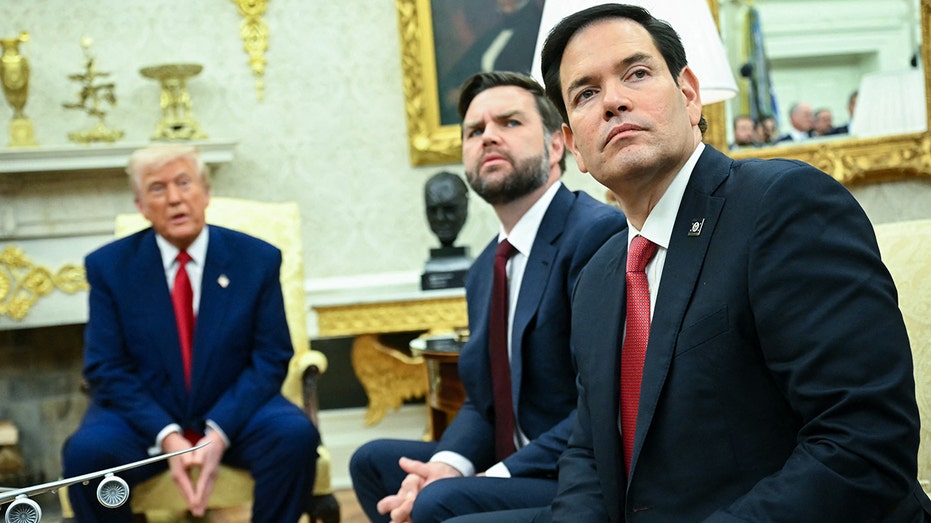
U.S. Secretary of State Marco Rubio on Sunday defended the Trump administration's war against Iran, days after Vice President JD Vance blamed the conflict for Republicans' devastating midterm losses. The White House is under pressure as it confronts an unresolved standoff with Tehran.
"I think the president took on something that other presidents have failed to do. Sometimes, when you do the right thing, you don't know whether it's popular or not, but it's still the right thing to do. Presidents are elected to take on the hard things, sometimes difficult things, but necessary things," Rubio said Sunday.
In a post on X last week, Vance wrote: "The reason we lost is the war. The president himself said so last night. But everyone knows why we lost. And any honest conversation about where we go from here must start there."
Vance cited an unnamed pollster in the post who said voters who had abandoned the GOP wanted the administration to end the conflict, address inflation and the cost of living, put America first and change its relationship with Israel.
The vice president's argument, however, is complicated by polling. The Fox News Voter Poll found that 89% of voters considered the cost of living a crucial or major factor in their congressional vote, compared with 74% who said the same about the war in Iran. The findings suggest broader economic frustrations were also a major concern among voters, although the two issues may overlap and the polling does not establish which ultimately drove Republican defections.
Fox News Digital contacted Vance's office five times seeking clarification on whether ending the conflict would mean lifting the blockade, withdrawing American forces or securing new concessions from Tehran, but received no response.
Meanwhile, Republicans are beginning to look ahead to 2028. Trump named Rubio as a possible presidential contender during an interview with CBS. According to The Wall Street Journal, some longtime Trump donors are reportedly expressing doubts about backing Vance in 2028, fearing his ties to the Trump administration and the GOP's devastating midterm losses could hurt his presidential prospects, with some floating Florida Gov. Ron DeSantis and other Republicans as alternatives.
Asked about the midterm results, Rubio said, "I'm not in a political office. As you know, I just don't comment on domestic politics."
At the same time, Trump and Vance are pursuing another diplomatic opening with Iran, with Qatar mediating talks over a possible agreement that could ease the U.S. blockade and reopen the Strait of Hormuz. Trump met with Qatari Prime Minister and Foreign Minister Sheikh Mohammed bin Abdulrahman Al Thani on Monday to discuss mediation efforts and potential terms for ending the conflict with Iran.
Rubio expressed skepticism Sunday that negotiations were nearing a breakthrough, arguing that Iran's demands remained unrealistic. According to Axios, Vance has been personally involved in indirect talks with Iranian representatives through regional mediators in recent weeks.
Trump initially projected that Operation Epic Fury, launched against Iran in February, would involve four to five weeks of combat operations. More than eight months later, the broader confrontation continues despite the end of major U.S. combat operations in April. After a June Memorandum of Understanding with Iran failed to produce a lasting resolution, the Trump administration returned to economic and military pressure, with renewed limited strikes, continued maritime tensions and an unresolved standoff over Iranian missile capabilities and the flow of oil and natural gas through the Strait of Hormuz.
Vance played a role in the administration's negotiations with Iran, helping lead diplomatic efforts that produced the June agreement before it unraveled. Trump joked in June: "If it works out, I'm going to take the credit. If it doesn't work out, I'm blaming JD." The vice president has previously defended the administration's military campaign, crediting U.S. forces with significantly weakening Iran's conventional military and its ability to threaten commercial shipping.
Ludovic Hood, a senior fellow at the Hudson Institute's Center for Peace and Security in the Middle East, described Vance's post as "striking, if not shocking." He also questioned Vance's emphasis on the war as the primary cause of Republicans' losses, arguing that broader economic concerns played a significant role in voters' frustration.
Retired Army Lt. Col. Daniel L. Davis, a veteran of four combat deployments and host of the "Daniel Davis Deep Dive" show on YouTube, offered a sharply critical assessment of the campaign's results. He said that on Feb. 28, Trump pledged to destroy Iran's missile capabilities and production facilities, eliminate its navy and prevent Tehran's regional proxies from destabilizing the Middle East. "Eight months and 9 days later, none of those objectives have been met," Davis said.
The White House has offered a starkly different assessment. In April, the administration declared that U.S. forces had achieved the military objectives of Operation Epic Fury, pointing to the destruction of Iranian military infrastructure and significant degradation of Tehran's missile and naval capabilities. Davis said that although American strikes inflicted significant damage on Iran's conventional military, Tehran retains the ability to threaten U.S. forces and regional allies through missiles, drones and naval assets protected in underground facilities. He warned that renewed major combat operations could expose American forces and Gulf allies to further retaliation without eliminating those capabilities.
Trump dismissed suggestions on Sunday that Vance's comments about Iran had strained their relationship. "No, not at all," Trump said when asked whether Vance's comments had affected their relationship. "But a lot of people didn't like his comments, but not me. He was right." Trump added that Vance "should have made one other statement," arguing that the administration's actions against Iran were worth repeating. Secretary of War Pete Hegseth also publicly defended the Iran campaign, calling it a "courageous and historic" effort, even as he faces questions about his future in the administration, although the president publicly insisted he intends to keep his Pentagon chief.