China leading on green energy and the rest of the world must follow, says John Kerry
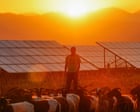
China is leading the world in moving away from fossil fuels, and the rest of the globe — including the United States — must now follow, former US secretary of state John Kerry has said. In an interview with the Guardian, he said most nations are moving slowly while China has hugely accelerated.
Kerry said, 'The only country that has hugely accelerated is China. The rest of the world is stumbling along while Mother Nature is sending us more powerful signals every week, every day.' He spoke as Cop31, this year's climate summit, opens in Turkey, amid speculation over whether China will finally step into a climate leadership role.
In its latest five-year plan, adopted in March 2026, China for the first time pledged to 'actively participate in and lead global climate governance'. Cop31 could provide the first indications of whether Beijing is ready to turn that rhetoric into action.
The scale of China's advance is clear in the figures. In 2025, its clean-tech exports surpassed $220bn, and they are expected to grow again this year. The world's largest emitter is now the world's leading supplier of clean energy technology.
China accounts for about 85 percent of solar supply chain production capacity and about 80 percent of lithium-ion battery supply chain capacity. In 2025, nearly 75 percent of electric cars were manufactured there.
Analysis for Carbon Brief shows China's emissions have been on a 'flat or falling' trend since March 2024. Green energy has become a vital part of the export engine keeping China's sluggish post-pandemic economy on track.
Kerry said China suddenly realised it had far too much dependency on oil and gas from other places and decided it needed to be independent. Since the war in Iran and the interruption of the strait of Hormuz, other countries have made a similar decision, and there has been a massive uptick in the deployment of renewables. On that point he joked, 'Thank you, Donald Trump.'
He said renewables together with storage, together with some transitional gas, is now cheaper and more effective than going with fossil fuels alone. 'The marketplace has made its decision and globally is moving to electrons,' he said. 'People are going to electricity and they're going to try to do that as clean as humanly possible. That is unstoppable.'
China has already said it wants Cop31 to discuss the free flow of green technology against a backdrop of 'intensifying' geopolitical conflicts — widely seen as a reference to US and EU tariffs on Chinese electric vehicles and solar products.
Li Shuo from the Asia Society Policy Institute said climate action was once seen as a constraint on growth but is now increasingly a driver of it. In that setting, he said, China faces a singular question: will it step into a leadership role not out of obligation, but out of self-interest?
Kevin Tu from the Oxford Institute for Energy Studies said Beijing sees the energy transition as 'central to economic modernisation and energy security'. The wars in Ukraine and the Middle East and their effect on oil and gas supplies have only hardened that stance.
Isabel Hilton, founder of the specialist environment outlet China Dialogue, said that in the fossil fuel era, the US dollar's role as the global trading currency for oil gave Washington what has been termed 'the exorbitant privilege of being the global lender of last resort'. Without that, she said, the US position in the world looks weaker, and adding China's dominance of clean technology supply chains makes US dominance look more vulnerable still.
President Xi Jinping describes China as a 'doer and go-getter working for the cause of global development'. The value of the green energy deals in China's belt and road initiative in the first half of 2026 has already surpassed the total for the whole of 2025. Analysts say China is likely to find support from Brazil, India, South Africa and other developing countries concerned about the costs and market-access effects of climate-related trade measures if tariffs come up in the talks.
China still hesitates over leadership, however. Its attitude to plans for a global electrification target has been ambivalent, even though it would easily hit it. Yixian Sun, a professor of sustainability governance at the University of Bath, said there is still a mismatch between Chinese policymakers' views of the role China can play in global climate governance and international expectations of the influence it should exert. Kate Logan of the Asia Society Policy Institute believes China would be happy with a Cop that produces no major drama but ends with a relatively cooperative outcome. Analysts will now watch China's climate finance commitments, support for a just transition, and whether Beijing will bid to host Cop33 in 2028.