At COP31 Bangladesh Demands Grants, Not Loans; Its NDC Plan Needs $116 Billion
The UN climate conference COP31 is under way in Antalya, Turkey. It began on November 9, 2026 and is scheduled to run until November 20. Heads of state from many countries, along with hundreds of delegates, researchers, scientists, climate activists and campaigners, are attending. The talks cover cutting carbon emissions, controlling global warming, increasing adaptation capacity, and decisions on finance, technology and capacity support for developing and climate-vulnerable countries.
UN climate conferences have been held since 1995. At the Paris conference, a charter was declared to keep the global temperature from rising above 2 degrees Celsius by the end of this century.
According to a recent study published in the journal Earth System Science Data, the global temperature in 2025 was 1.39 degrees higher than in the pre-industrial era, of which humans were responsible for a rise of 1.37 degrees. Scientists have warned that in only another four to five years the temperature will touch the 1.5-degree Celsius threshold, and that by the end of this century it could reach 2.7 or 2.8 degrees Celsius.
The research found that for every 0.1-degree Celsius rise in temperature, about 140 million people around the world face dangerous levels of heat risk, and food production and biodiversity are also put at risk. About 50,000 people died in the severe heatwave across Europe this summer. A 1-degree rise increases the amount of water vapour in the air by more than 7 percent, which in turn increases storms, rainfall and disasters.
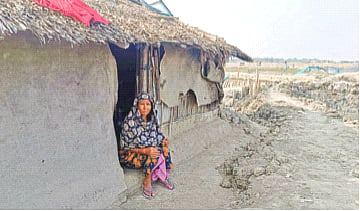
Although Bangladesh emits a minimal amount of greenhouse gases, it is among the countries at climate risk, as are Nepal, the Maldives and the small Pacific island states. According to the World Bank's 2022 Bangladesh Country Climate and Development Report, cyclones cause an average of about $1 billion in economic damage in Bangladesh every year. The same report warned that about 13.3 million people could be displaced inside the country over the next three decades because of climate change.
Against this backdrop, Bangladesh has emphasised climate justice and effective commitments. From the conference, Bangladesh hopes that adaptation finance will be increased to tackle the risks of floods, cyclones, river erosion, salinity and heatwaves, and that quick disbursement on easy terms from the loss and damage fund will be ensured. For tackling climate damage, Bangladesh wants grants, not loans.
Bangladesh's demands also include effective technology transfer to protect the lives and livelihoods of people in coastal areas, haors, chars and drought-prone areas, and a just transition including alternative employment and social protection.
Bangladesh itself is also committed to cutting carbon emissions. In September 2025 it submitted its third Nationally Determined Contribution plan, 'NDC 3.0'. After the Paris Agreement, every country made such a plan to cut greenhouse gas emissions according to its own capacity.
Under NDC 3.0, the target is to cut total emissions by 20.31 percent by 2035 compared with what emissions would have been with no additional measures. Of this, 6.39 percent will come from Bangladesh's own capacity and an additional 13.92 percent depends on international finance and technological support.
Implementing the plan will require an estimated $116 billion, a large part of which will depend on international cooperation. Bangladesh has also set a target of raising the share of renewable energy in its power generation system to 25 percent by 2035.
The government has already taken initiatives including tree planting, excavation of rivers and canals, conservation of forests and wetlands, expansion of renewable energy and green employment.