Government plans bond issue in New York or London to cut reliance on bank borrowing
The government wants to reduce its one-sided dependence on the banking sector for financing large, long-term investment. Initiatives have been taken to strengthen the capital market and the bond market. At the same time, to keep debt-servicing risk at the lowest level, the amount of borrowing through long-term bonds and the Shariah-based investment product Sukuk is being increased instead of short-term treasury bills.
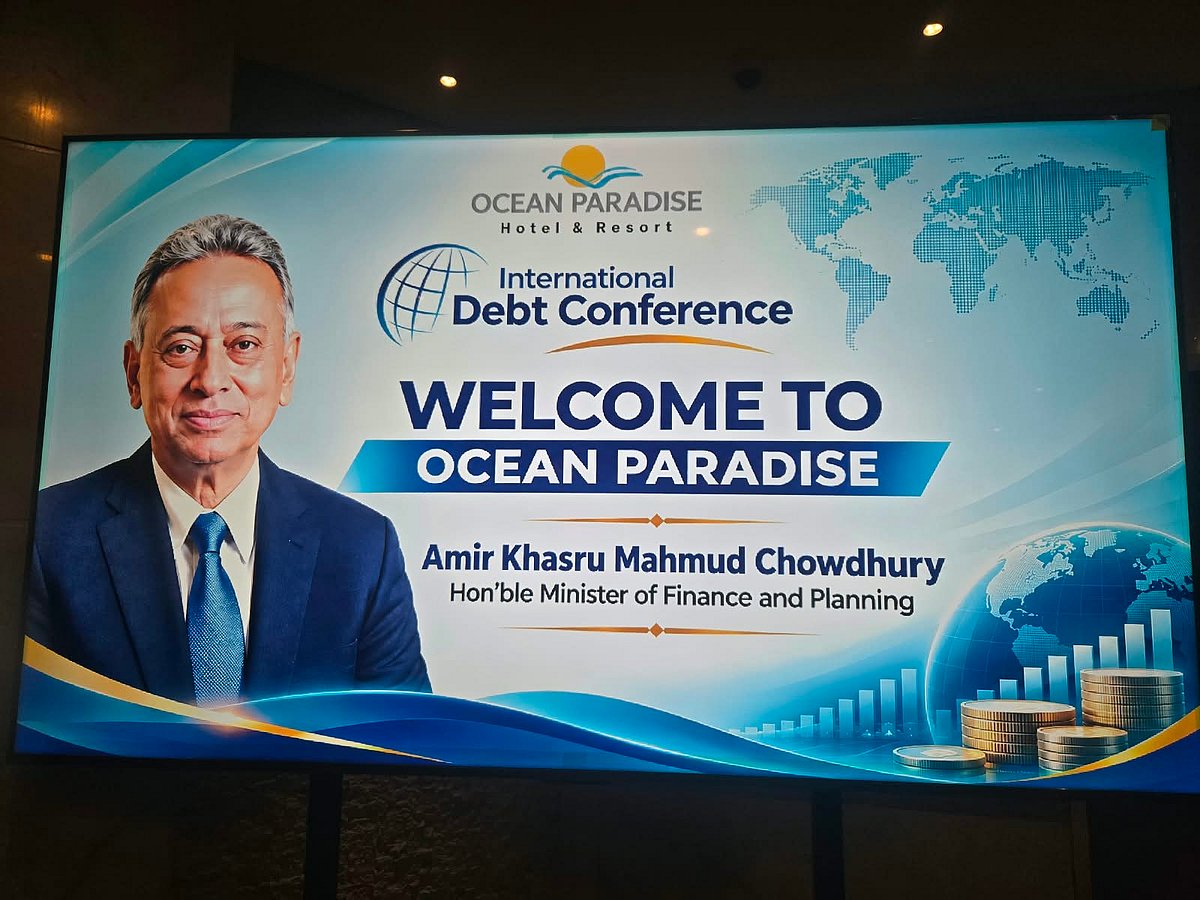
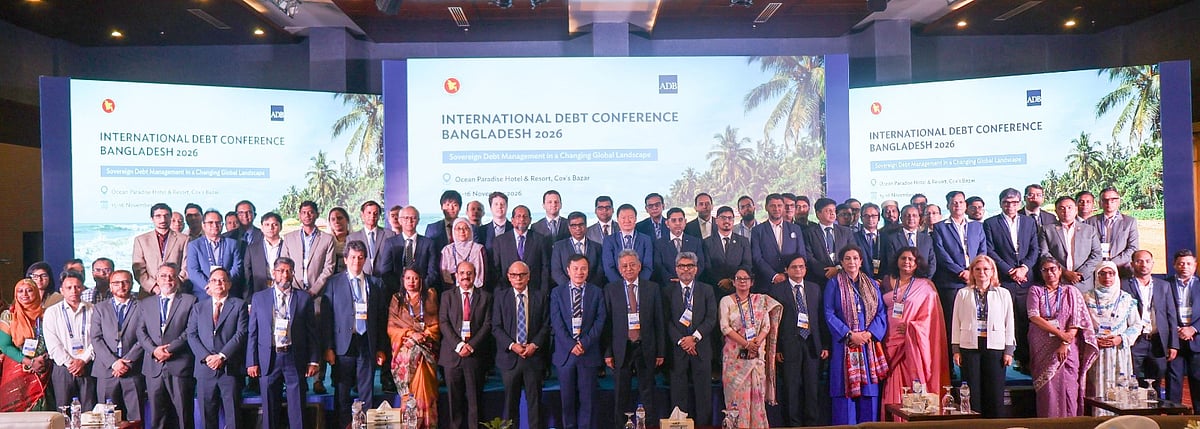
Finance and Planning Minister Amir Khasru Mahmud Chowdhury disclosed this at a press briefing in Cox's Bazar on Sunday, held on the occasion of the 'International Debt Management Conference Bangladesh 2026.' He had inaugurated the conference earlier. The two-day international conference, the first of its kind in the country, has been jointly organized by the Finance Division of the Ministry of Finance and the Asian Development Bank (ADB).
At the briefing, the prime minister's special assistant Tanvir Gani said the private sector has so far borrowed mainly from banks; it has not gone to the capital market, nor issued bonds. As a result, loan pressure has built up on the banks, and many private-sector firms have been hurt by having to borrow at high interest rates. Alternative sources of financing, including bonds, are being opened up not only for the government but also for the private sector.
Tanvir Gani said the government wants to issue a bond in the international market within the next two to three months. The bond could be issued in the New York or London market. However, no decision has yet been taken on what the interest rate will be or through what process it will be issued; work on that is under way, he said.
It was stated at the briefing that among the conference's three main goals, special importance has been given to expanding the bond and capital markets. Under the government's plan, initiatives will be taken to issue US dollar Eurobonds, Sukuk, Japan's 'Samurai bonds' and China's 'Panda bonds' in order to enter the international capital market at a suitable time.
Steps are also being taken to make the country's bond market easily accessible to foreign investors. As part of that, the opportunity to include Bangladesh's local bonds in JPMorgan's 'GBI-EM' index will be used. There is also a plan to connect with the international clearing houses Euroclear and Clearstream to make foreign investors' transaction settlement easier.
In addition, the finance minister spoke of plans to expand the scope of environment-friendly 'green bonds' and ocean-economy-based 'blue bonds' alongside Sukuk, to strengthen the investor base at home and abroad. Initiatives have been taken to attract pension funds, insurance companies and foreign investors to strengthen the local bond market, he said. The finance minister said: 'It is not how much debt is taken; how well the debt is used is what matters.'
Information given at the briefing showed that stopping the practice of printing money from Bangladesh Bank to meet the budget deficit has restored macroeconomic stability and reduced the government's borrowing cost. The interest rate on 91-day treasury bills was about 12 percent in June 2025. In June 2026 it fell below 10 percent, and it is currently between 8 and 9 percent. The government is now borrowing mainly through long-term bonds and Sukuk.
The finance minister also mentioned at the briefing that debt reports are being published and the primary dealer (PD) system modernized to bring transparency to bond and debt management. In addition, an 'annual borrowing plan' and a new medium-term debt strategy are being published for the first time so that market participants can know the government's borrowing plans in advance.
The briefing also presented the debt picture as of June 30, 2024. Government debt then stood at Tk 18.89 lakh crore, which was 36 percent of GDP. In the previous two years, government debt had risen by Tk 5.45 lakh crore. In the same period, Bangladesh Bank's lending to the government rose from Tk 730 crore to Tk 56,750 crore, foreign exchange reserves fell to 20.5 billion dollars, and inflation climbed to nearly 10 percent. Later, government borrowing from the central bank fell; by June 30, 2026 it had come down to Tk 482 crore, while reserves, calculated by the IMF's BPM6 method, have crossed 30 billion dollars.
The finance minister said the time has now come to repay the debt taken in the past. In the 2025-26 fiscal year, 4.5 billion dollars is being spent on repaying principal and interest on foreign debt. In 2029-30, that spending will rise to a maximum of 5.5 billion dollars. Raising revenue is the biggest reform for sustainable debt management, he said; for that, the tax net is being expanded, unreasonable tax exemptions reduced, and the VAT and income tax systems digitized. Alongside that, work is under way on recapitalizing state-owned banks, forming a unified Debt Management Office (DMO) and enacting a Public Debt Act.
The finance minister expressed hope that the conference would produce realistic recommendations, keeping in view the goals of building a one-trillion-dollar economy by 2034 and graduating from the least developed country (LDC) list in 2029. Experts from the World Bank, the International Monetary Fund (IMF) and the ADB, as well as from the United States, the United Kingdom, Malaysia, Indonesia, Pakistan and Sri Lanka, are taking part in the conference.