Net Savings Certificate Investment Nearly Stalled in September; Government's Net Borrowing Tk 2,489 Crore in Three Months
The government's net borrowing from savings certificates has risen, but the pace of growth has slowed. Net borrowing from savings certificates grew 57 percent in the first two months of the current 2026-27 fiscal year, but a sharp fall in investment in September brought the growth for the first three months down to 28 percent.
From July to September of the fiscal year, the government's net borrowing from savings certificates stood at Tk 2,489 crore, compared with Tk 1,945 crore in the same period of the previous fiscal year — an increase of Tk 544 crore year on year. The figures come from an analysis of Bangladesh Bank's updated report.
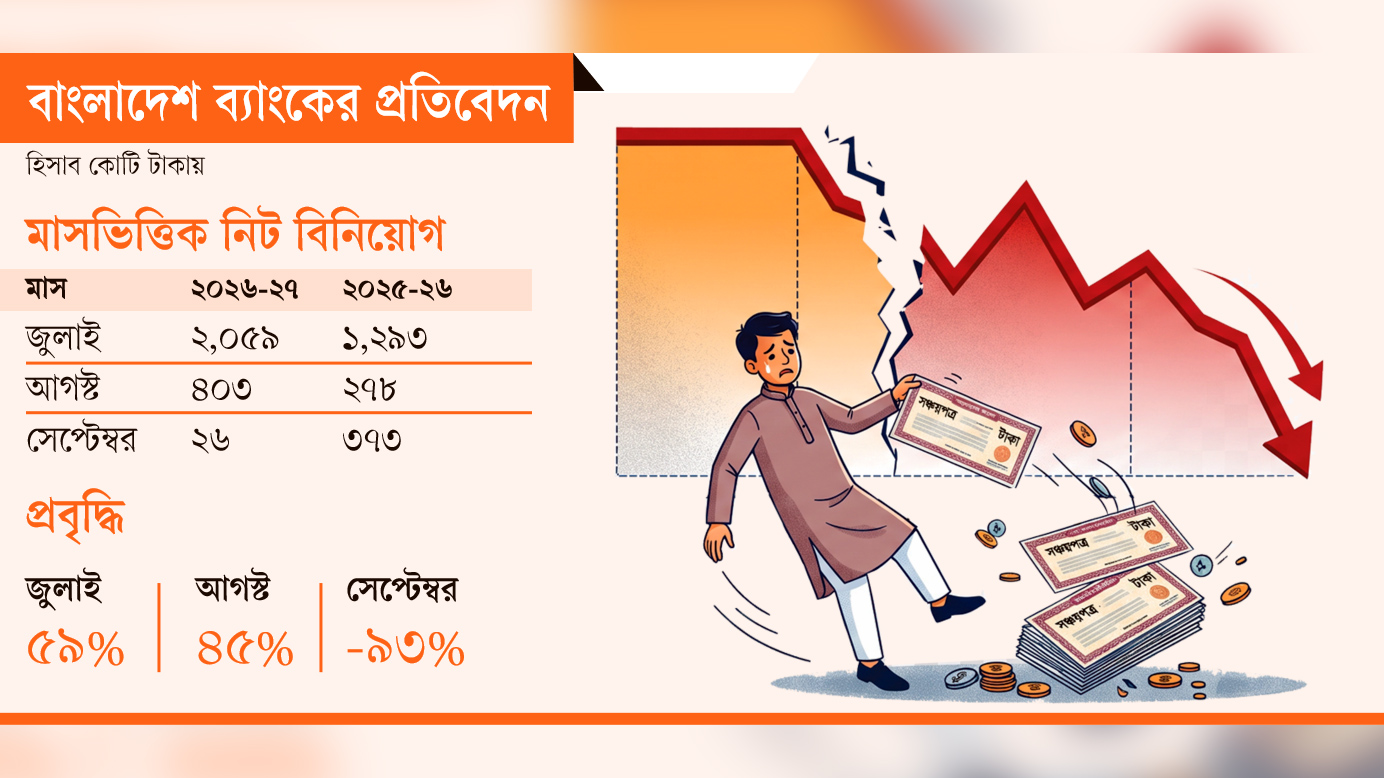
According to the report, net borrowing from savings certificates in the first two months (July-August) was Tk 2,463 crore, against Tk 1,572 crore in the same period a year earlier. But September saw a major break in that trend: net borrowing that month was only Tk 26 crore, compared with Tk 373 crore in the same month of the previous year — a fall of Tk 347 crore, or about 93 percent, year on year.
Month by month, net investment in savings certificates in July was Tk 2,059 crore, up Tk 766 crore, or about 59 percent, from Tk 1,293 crore a year earlier. In August, net investment stood at Tk 403 crore, Tk 125 crore or about 45 percent more than the Tk 278 crore of the same month the previous year. But with net investment nearly stopping in September, overall growth over the three months fell significantly.
Net investment in savings certificates means the surplus left with the government from the sale of new certificates after repaying the principal and profit on previously sold certificates. The government uses this money for development and other spending, making savings certificates an important source of domestic borrowing.
Former Bangladesh Bank chief economist Dr Mustafa K. Mujeri said the country's banking sector has not yet become fully stable, leaving depositors with uncertainty and a lack of confidence. Against inflationary pressure, many people are investing in savings certificates to keep what little savings they have safe. In his view, there is no risk of losing capital in savings certificates, they can be encashed when needed, and the profit rate is comparatively good — which is why people are interested in this instrument.
Mujeri cautioned, however, that higher government borrowing from savings certificates also increases the future liability of profit payments, putting pressure on the government's interest expenditure. In collecting debt from this source, he said, the cost of borrowing and repayment capacity must be kept in view.
In the original budget for the 2025-26 fiscal year, the target for borrowing from savings certificates was set at Tk 12,500 crore, later revised down to Tk 11,500 crore. By the end of that fiscal year, however, the government had to repay Tk 436 crore more than it newly borrowed — a situation of net repayment rather than net borrowing from savings certificates.
Continuing that trend, the target for borrowing from savings certificates in the current 2026-27 budget has been reduced further, to Tk 8,500 crore.
Meanwhile, in the first three months of the current fiscal year the government borrowed a net Tk 24,245 crore from the banking system. In the same period of the previous fiscal year, instead of borrowing, the government had repaid Tk 6,926 crore to the banking sector.