Trump in No Hurry for a Deal as Iran Rejects 'No War, No Peace': Conflict Hardening Into a Frozen War

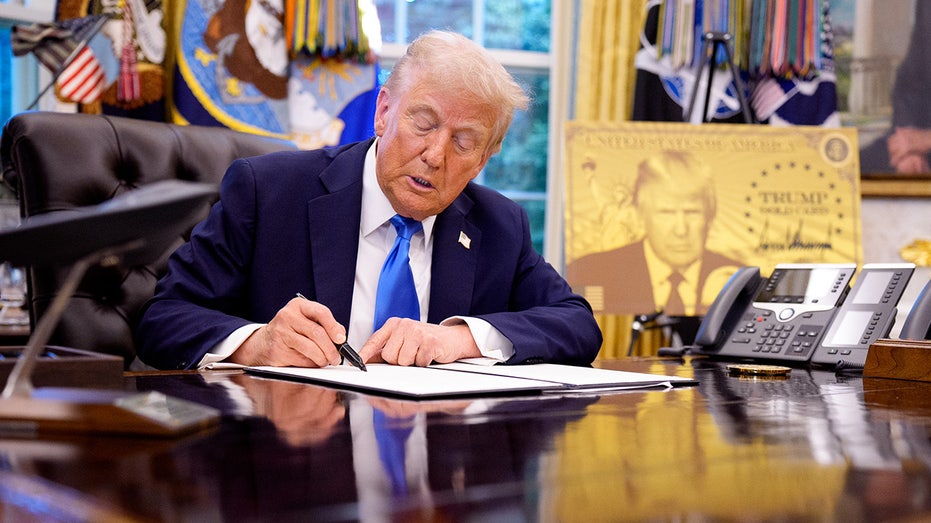
United States President Donald Trump has signalled that Washington is in no hurry to end its war with Iran. 'We don't need a deal with Iran,' Trump wrote on his Truth Social platform late last week. 'Those days have long since passed. We've got their money, Hundreds of Billions of Dollars, and we've got their Strait,' referring to the Strait of Hormuz, which joins the Gulf to the open ocean.
In the same post, Trump told Vice President JD Vance to give his 'complete and total attention' to what Trump described as 'corruption and crime' in Democratic-run cities. Vance led the talks with Iran, which produced a short-lived truce in June.
But Trump has given mixed signals in recent days. Earlier last week, he said the war was 'militarily ... effectively over', though he added that he 'would not hesitate' to resume strikes if diplomacy failed.
Trump's mixed messaging came as his Republican Party suffered heavy losses in the November 3 midterm elections. Vance blamed the losses on the deeply unpopular US-Israel war on Iran and its economic fallout, in particular soaring fuel prices.
Observers say Trump's mixed messages, and Vance's comments criticising the war, indicate a disagreement within the party, with at least some members of the administration more comfortable with leaving the conflict unresolved.
That could mean leaving the US naval blockade of Iranian ports in place and sanctions against Iran ongoing. Both are red lines for Iran, which has consistently stated that it will not reopen the Strait of Hormuz or resume peace talks until these are lifted, among other demands.
On November 9, President Masoud Pezeshkian said Supreme Leader Mojtaba Khamenei had ordered officials to end the state of 'neither war nor peace'. Pezeshkian added that Iran was ready to negotiate but would not yield to coercion. Parliament Speaker Mohammad Bagher Ghalibaf, Iran's chief negotiator, said 'the ball is now in the American court' — to accept its terms for talks or continue the war.
The war began in February, when the US and Israel launched strikes on Iran. Talks in Pakistan in April produced a memorandum of understanding in June which paused the fighting and briefly lifted the US blockade. The truce collapsed soon after, primarily over disagreements about control of the Strait of Hormuz, and Washington reimposed its naval blockade on July 14.
'Diplomatically, we are already there and have been since July, when the June memorandum fell apart,' said Muhanad Seloom, an assistant professor in critical security studies at the Doha Institute for Graduate Studies. However, he added that the word 'frozen' 'flatters' a conflict with a US blockade, attacks on shipping around Hormuz running at more than one a day and strikes in both directions.
The US has carried out limited strikes, including on Iranian air defence systems on Qeshm Island. Iran has attacked tankers using what it calls unauthorised routes in the Strait of Hormuz. According to trade intelligence firm Kpler, only five commodity vessels crossed the strait on November 7, and none crossed the following day, despite US claims to be escorting ships through. 'The war has changed form, from an air campaign to a siege,' Seloom said, 'and sieges end when the besieged side either breaks or breaks out.'
In October, a Chicago Council on Global Affairs survey found that nearly 70 percent of Americans believed the war was not worth fighting. Polls have also consistently suggested deep opposition to sending troops to Iran. Following the defeat in the midterms, which resulted in the Republicans losing control of the US Congress to the Democratic Party, Vance wrote on X that anyone who believed the war was worth 'losing the Senate for the next 6 years' should argue so openly. 'With support for the war at 31 percent and Congress just lost, a ground operation is close to unsellable,' Seloom said.
Yet ending the war on current terms is also unattractive for the US. Lifting the naval blockade on Iranian ports, a move designed to stop oil exports and further cripple Iran's economy, and leaving the Strait of Hormuz under contested Iranian control would leave Trump with nothing to show for eight months of war. According to reporting by The Associated Press news agency, Trump has conceded that walking away with Iran's current government in place would amount to a 'defeat'.
'Ironically, there is no military solution that does not involve a ground component,' said Tallha Abdulrazaq, a researcher at the University of Exeter's Strategy and Security Institute. Trump is reluctant to commit ground forces, and the public is 'wary of another Iraq or Afghanistan'. As a result, Abdulrazaq said, 'this conflict will drag on as neither side is willing to back down on their negotiating positions.'
Abdulrazaq said Trump wants a deal that goes far beyond the 2015 nuclear agreement with Iran negotiated under President Barack Obama, known as the Joint Comprehensive Plan of Action (JCPOA). Under that, Iran committed to restrictions on uranium enrichment and submitted to regular inspections. But Trump withdrew the US from the JCPOA during his first term. 'He simply has no political wiggle room to accept a deal similar to it, and the Iranians are in no mood to even give him those terms,' Abdulrazaq said. That leaves Trump 'stuck between a rock and a hard place', he said.
Abdulrazaq added that any serious US-initiated escalation of the war would most likely come within the next two months, before the US Congress formally comes under Democratic control. Until January, Republicans hold slim majorities in the outgoing Congress. That gives Trump 'a narrow window of opportunity', Abdulrazaq said, particularly with three US carrier strike groups likely to remain in the region through December.
Iran is in its own bind. It has set seven conditions for a formal ceasefire, the reopening of the strait and a resumption of peace talks. These include lifting the US naval blockade, sanctions relief, the release of frozen funds and an end to hostilities on all fronts, including by Israel in Lebanon and hostilities against Iran's allies in Yemen and Iraq. Ghalibaf has said the Strait of Hormuz could also then be reopened, but it will 'never return' to its pre-war, toll-free status. At the same time, Iran's economy is under severe strain as a result of the naval blockade, decades of sanctions and a renewed economic push by the US against countries and entities trading with it since the war began.