Tk 6,922 Crore Project to Excavate Rivers and Canals Nationwide, Goes to ECNEC on Wednesday
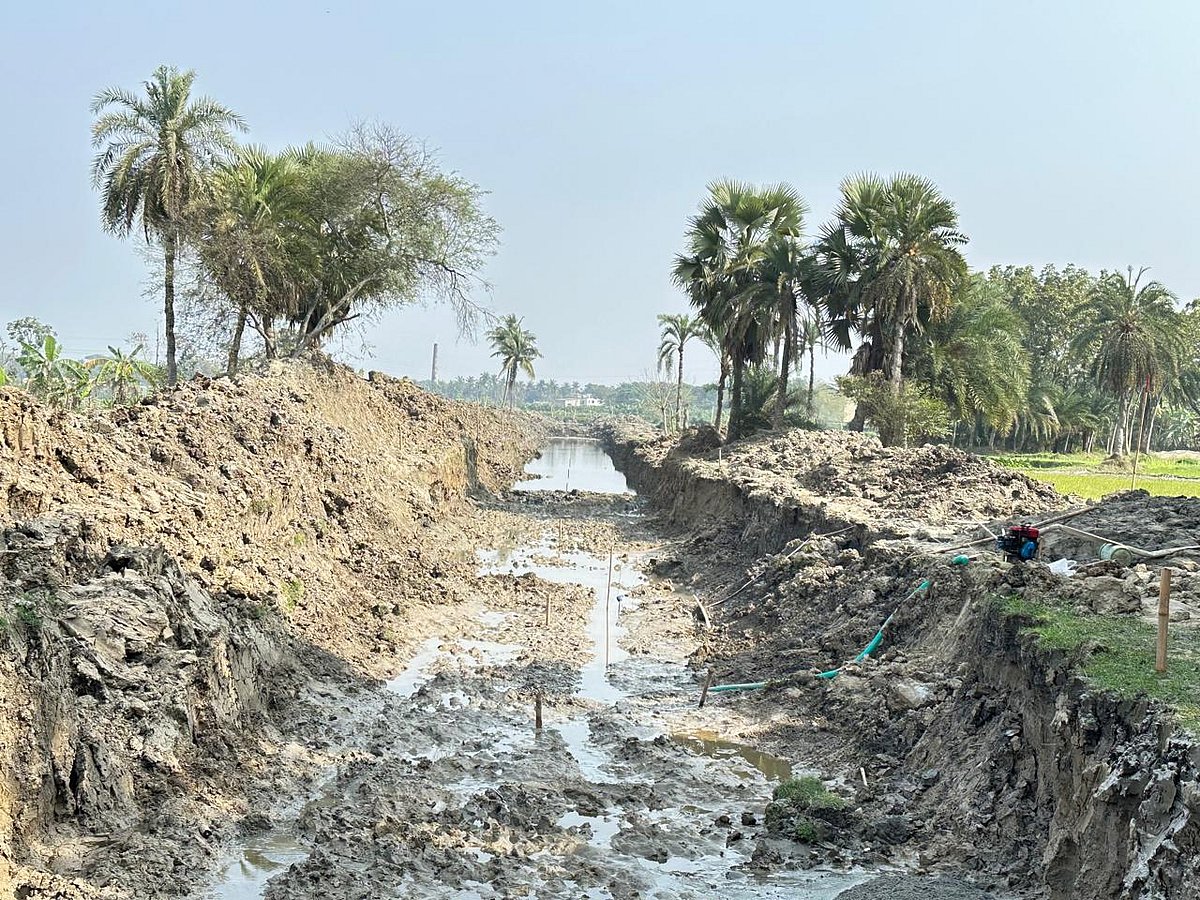
The government has taken up a large project to restore the navigability of the country's rivers, canals and water bodies. Under it, canals, small rivers and water bodies will be excavated and re-excavated in 444 upazilas across 64 districts in all eight divisions.
The project, aimed at reducing waterlogging, expanding irrigation for agriculture, developing fisheries and preventing river erosion, has been costed at Tk 6,922 crore. The money will come from the government's own funds.
The project, titled 'Increasing drainage and irrigation facilities through excavation and re-excavation of canals, small rivers and water bodies nationwide', will be implemented by the Bangladesh Water Development Board (BWDB). Its proposed duration is from October 2026 to June 2030.
The project will be placed before a meeting of the Executive Committee of the National Economic Council (ECNEC) on Wednesday. Alongside excavation, it also plans eviction of illegal encroachment on rivers and canals, bank protection, tree planting and creation of a digital database.
The BNP government's election manifesto had set a target of excavating 20,000 kilometres of waterways. People involved say this project has been taken up as part of that target.
According to the project proposal, 1,481 canals with a total length of 6,297 kilometres will be excavated and re-excavated. About 168.6 million cubic metres of earth is planned to be removed from these canals. Canal excavation has been costed at Tk 3,447 crore, the largest share of the project's total cost.
In addition, 2,570 kilometres of 151 small rivers will be excavated and re-excavated. Earth cutting for this work has been estimated at 161.3 million cubic metres, at a cost of Tk 3,124 crore. Alongside this, 26 kilometres of 12 water bodies will be re-excavated at a cost of Tk 262 crore, with about 1.8 million cubic metres of earth planned for removal.
Planning Commission officials say a BWDB expert committee selected the rivers and canals through field-level work. An official, speaking on condition of anonymity, said river excavation would cost Tk 1.21 crore per kilometre, while canal excavation would cost Tk 54 lakh per kilometre.
Asked about it, Planning Commission member Kabir Ahamad said, 'Proper monitoring arrangements have been kept within the project. This is a priority project of the government. It is being implemented mainly for flood control by keeping the rivers' water retention right.'
River experts say the history of river excavation in the country is not good, because excavation has never been done scientifically, so the money spent did not bring benefits. They advise keeping those issues in mind. River researcher and Begum Rokeya University professor Tuhin Wadud said, 'If you excavate without ensuring the water source, you will not get benefits. Excavation must be done keeping the river's measurements right. Otherwise, cutting a river into a canal is of no use.' He advised ensuring that mismanagement like in the past does not happen.
The huge volume of earth from excavation will be managed through district committees. The earth can be used to fill government land, roads and sites of religious institutions. If needed, arrangements to sell the earth following prescribed policy have also been kept. Alongside this, a national water resources database will be created to preserve information on the location, navigability, illegal occupation and filling of rivers and canals, and project work will be monitored through GIS technology.
The project will also mark the boundaries of rivers and canals and take steps to evict illegal occupation. For this, landscaping, freeing from occupation and related infrastructure development will be done through 64 packages in 64 districts, with Tk 32 crore allocated for this sector.
To prevent soil erosion on river and canal banks, binna grass will be planted on a pilot basis in 444 upazilas. In each upazila, the grass is planned over an area 400 metres long and 5 metres wide, covering 8.9 million square metres in total, at a cost of about Tk 5 crore. In addition, 107,000 trees will be planted on river and canal banks through the BWDB's 70 regional divisions, with Tk 3.60 crore allocated for this.
According to project estimates, the water-holding capacity of canals, rivers and water bodies will increase by about 300 million cubic metres. As a result, the drainage system of about 1.75 million hectares will improve. On the other hand, a target has been set to expand irrigation facilities to 265,000 hectares of farmland, which project officials see as potentially producing about 1.01 million metric tons of additional food grain a year.