Gangs drain bKash accounts from stolen and snatched phones, even take loans in victims' names
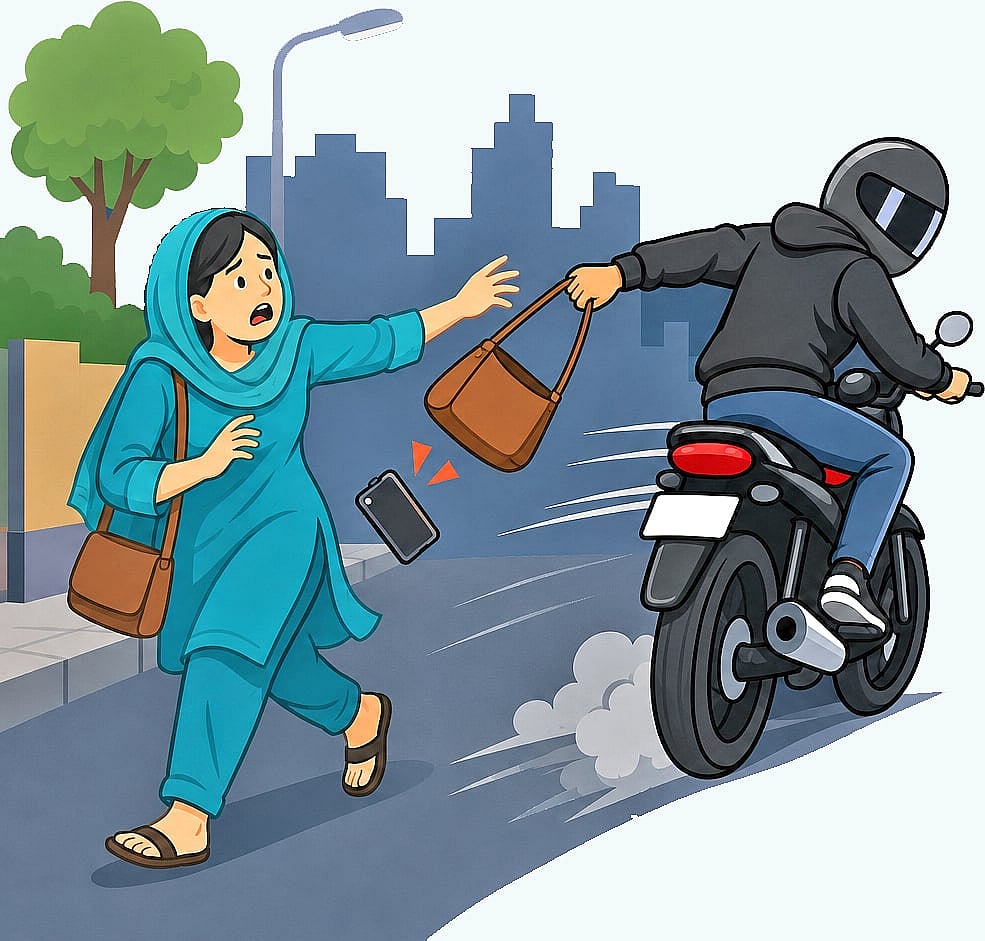
Hasib (not his real name), who works at a private firm in Gulshan in the capital, had his mobile phone stolen from his pocket in the Gulshan-1 area on his way from home to office one day. Within an hour and a half, he called the bKash call centre from another number and had transactions on his account stopped.
The call centre told him transactions on his account had been temporarily suspended. Two days later, Hasib replaced the SIM of the stolen number and, calling the call centre again, learned that his account had been reactivated a day earlier, although he himself had made no such request. Creating a new PIN and entering the account, he found that 85,115 taka had been taken out, moved in several instalments to various numbers through send money, cash out and mobile recharges.
On November 11, Hasib said his phone had been locked and he used a PIN on the bKash app. He had also contacted the call centre after the theft and had transactions stopped. He said he could not understand how the money was still taken, and suspected someone at bKash might be involved.
Complaints of money being drained from mobile financial service (MFS) accounts through recently stolen or snatched phones are rising. In some cases, gang members are also taking loans in the victim's name and embezzling the money. Phishing links are being sent to take control of phones.
Reviewing several incidents and speaking to police officials, it emerged that the methods vary. Sometimes a phone is snatched while unlocked and money is moved quickly. Sometimes saved passwords are used. In other cases, money is taken after changing the MFS account PIN.
Kamal (not his real name), a doctor at a hospital in the capital, was travelling by bus to his workplace in Shyamoli in the last week of last month when criminals snatched the phone from his hand. The next day, after replacing his SIM and entering the bKash app, he found 7,000 taka had been taken, and a further 35,000 taka had been embezzled through a loan taken in his name.
After Kamal's complaint, the Cyber and Special Crime Division of the Dhaka Metropolitan Detective Police (DB) began investigating. An officer involved in the inquiry said the phone had been unlocked at the time of the snatching, so the gang was able to move money within the first 10 minutes. Google's automatic password feature was enabled on the phone. Information on the numbers used to move the money is being analysed, but no one has yet been identified.
On October 5, university student Beli (not her real name) had her iPhone stolen while travelling by bus in the Demra area of the capital. After replacing her SIM and entering the bKash app, she found 110,000 taka had been taken from the account. On the evening of November 11, Beli said the money was moved through send money, payments and mobile recharges, and that transactions began two hours after the theft.
The gang did not stop after taking the money. An attempt was made to destroy Beli's Apple ID and create a new one, and a phishing link was sent to her number for that purpose. She gave no information through the link. A gang member later called her on WhatsApp, pressuring and threatening her to enter the link. Beli later filed a case, which the DB's Cyber and Special Crime Division is investigating. Officials said six people have been arrested in the case, four of them members of a stolen-phone gang.
Investigators say that after unlocking Beli's iPhone, the gang changed her bKash account PIN, then broke a DPS of nearly 100,000 taka held in the account. The money was sent to numbers and accounts of various online gambling sites, and some was cashed out from local shops. How the gang changed the PIN is still not fully clear.
Statistics from the Dhaka Metropolitan Police (DMP) Cyber Support Centre show that from the start of this year to October 19, about 2,000 complaints were filed there, 23 percent of them related to lost mobile phones. Officials say draining money from lost or stolen phones accounts for a significant share of these complaints and is a new trend in cybercrime.
bKash's head of corporate communications, Shamsuddin Haider Dalim, said on November 17 that when a bKash account is suspended after a phone is lost, a customer must pass several steps of identity and information verification to reactivate it: the call must be made from the registered number, the number from which the suspension call was made must be provided, and questions on national ID information and recent transactions must be answered correctly.
Bangladesh Bank spokesperson Arif Hossain Khan said no such complaint had yet reached them, but that they regularly inspect MFS providers. If such a complaint is received, they will direct that any weakness in the provider's technical system be checked and necessary action taken, and will tell MFS providers to strengthen their systems.
Cyber security expert Abdullah Al Jaber said criminals are taking money using the SIM, MFS app and saved information of stolen or snatched phones, in many cases entering accounts by misusing weak PINs, OTPs and personal information. He advised using a strong lock on the phone and a secret PIN on MFS accounts, never sharing an OTP or PIN, and quickly blocking the SIM and MFS transactions if a phone is lost.
Syed Harun Or Rashid, joint police commissioner of the DMP DB (Cyber Security and Support Centre, South Division), said there is no alternative to awareness to avoid such crimes. Anyone who falls into such a situation can contact the Cyber Support Centre, he said, adding that immediate legal action will be taken and work will be done to identify the criminals.