Record harvest, mounting burden: India struggles with a rice surplus as subsidy costs climb
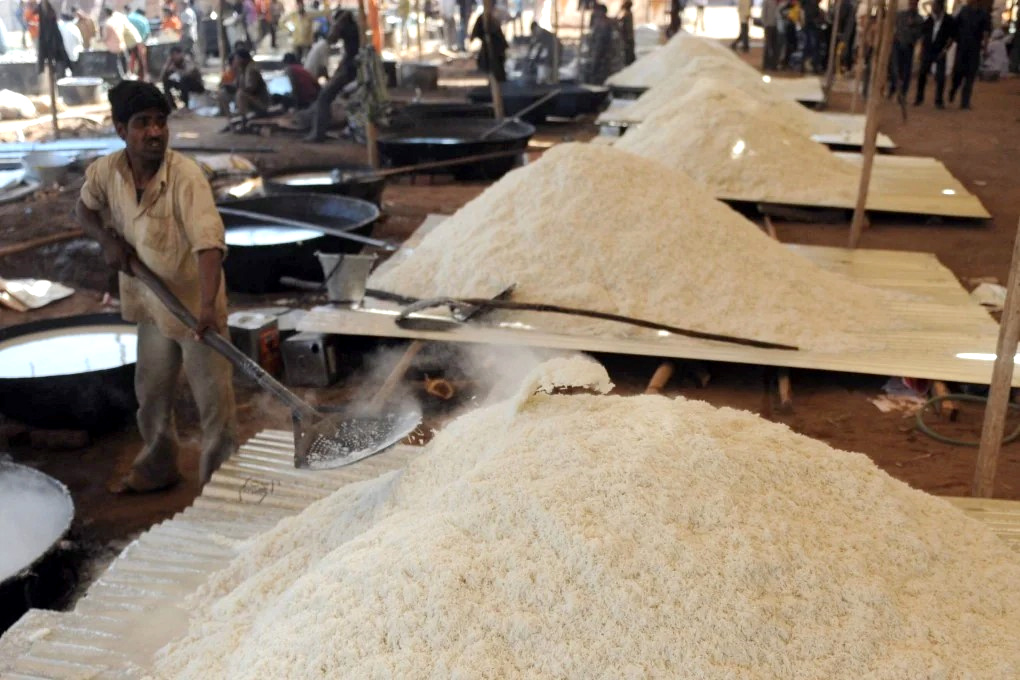
Even after a record harvest and capturing nearly 40 percent of the world rice export market, the Indian government is struggling to manage a huge rice surplus. Rice subsidies, extra incentives from state governments, fertiliser costs and a groundwater crisis are fuelling growing disputes between the central government and the states.
India once struggled to feed its own people. In 1965, because of an inadequate harvest, the government urged citizens to skip dinner one day a week. Within a few decades, that same India became one of the world's largest rice producers. Production now leaves a huge surplus even after domestic demand is met; much of it is exported, but the government is still struggling to handle the pressure of production and stocks.
India produced a record 154 million tonnes of rice in the 2025-26 fiscal year, while domestic demand in the country of 1.4 billion people is only 100.7 million tonnes. Rice production has risen 50 percent over the past decade, helped by new paddy varieties that made cultivation reliable across large flood-prone areas of eastern India.
Exports have risen alongside production. India's rice exports doubled over the decade to 22.3 million tonnes in 2025, and the country now accounts for about 40 percent of world rice trade. Although El Nino is expected to reduce rainfall and may cut production in 2026-27, the US Department of Agriculture (USDA) has forecast that India's rice exports will keep rising over the next two years because stocks are ample.
The findings come from a Reuters investigation based on a review of communications between India's central government and the states and interviews with 10 government officials and more than a dozen scientists. According to the investigation, more than two-thirds of India's central food subsidy spending now goes on rice. Food subsidy spending has more than doubled in a decade to 2.28 trillion rupees, or $24.1 billion, in 2025-26.
Agricultural economist Ashok Gulati, a former government adviser on farm pricing, said: 'In reality, we are subsidising foreign consumers with taxpayers' money.' In his view, India's surplus rice is being sold on international markets at prices that undercut rival countries. Because government subsidies also sit behind exported rice, concern is growing within Prime Minister Narendra Modi's administration.
The sheer volume of production means there is not enough warehouse space to store the rice. Naveen Agarwal, a private rice mill owner in Cuttack in the eastern state of Odisha, said: 'We have no space left. We are waiting for government agencies to take away the rice they bought from us earlier.'
Under India's subsidy system, the central government sets a minimum support price (MSP) for rice each year, taking into account labour wages and input costs including fertiliser. In recent years many state governments have begun paying bonuses on top of the central price, making paddy cultivation even more profitable and pushing production higher still. But those bonuses are reducing cultivation of crops such as oilseeds and pulses, which India has to import.
India's rice surplus is not only creating pressure at home; it is also raising tensions with rival producers on international markets. Rice-producing countries such as Thailand, Vietnam and the United States have expressed dissatisfaction with India's subsidies and its low-priced rice exports.