US forms 20-member 'Taskforce Iron Gate' to block arms supplies to Iran, yet supply routes persist
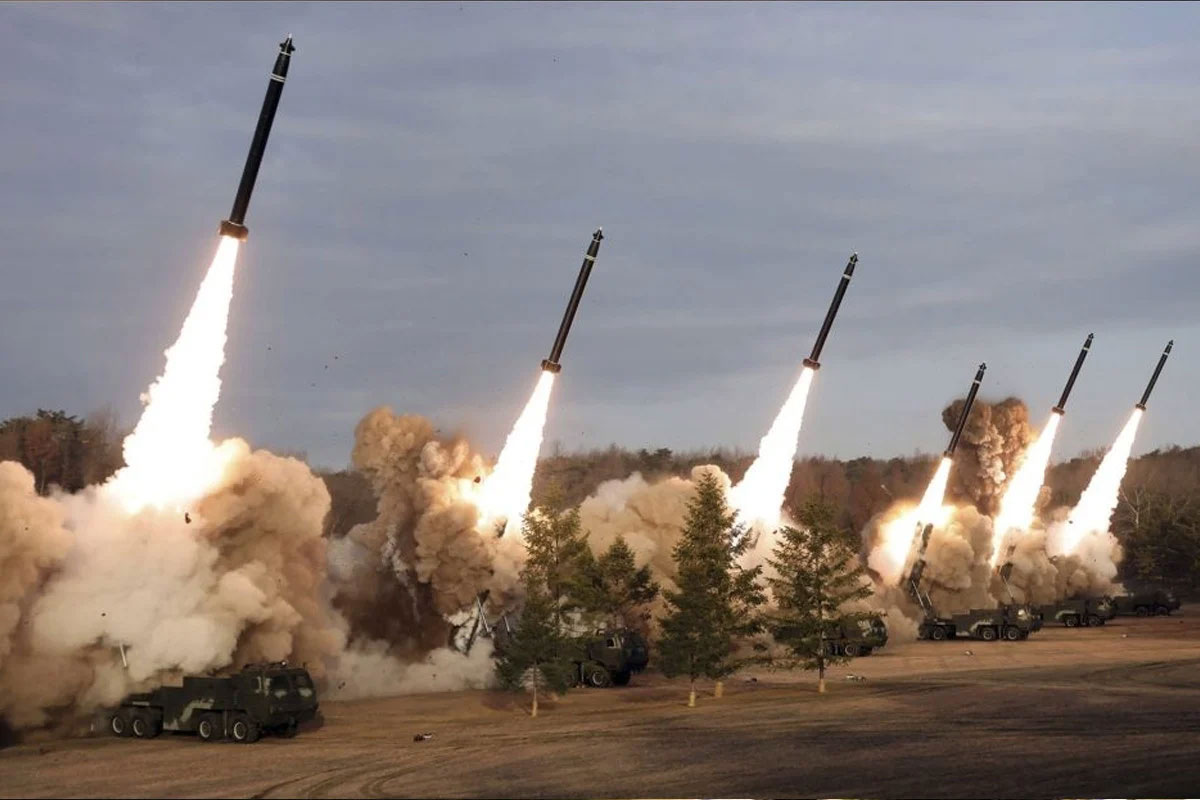
The United States has taken a new initiative to shut down Iran's military equipment supply system. Washington has formed a 20-member unit called 'Taskforce Iron Gate' for that purpose. Blocking the entry of weapons, military technology and weapons-making materials into Iran by land routes and through the Caspian Sea is the unit's main goal.
Admiral Brad Cooper, head of US Central Command, inaugurated the 20-member taskforce in Tampa, Florida. Washington, however, has not given details of how it will work. Alongside stopping arms supplies, the United States also wants to obstruct Iran's exports.
Iran has used missiles and drones in a war with the United States and Israel that has lasted more than eight months. Talks between Washington and Tehran to end the war are under way, but there is no clear sign of an end, the report said.
Iran produces most of its own weapons at home. But with normal trade through its southern ports nearly shut down by the US naval blockade, Tehran has increased its reliance on northern supply routes for military equipment. Weapons and parts are entering Iran via Russia and various Central Asian countries, and there is also information about arms purchases from China.
Some Iranian missiles, including the Sejjil, have a range of about 2,000 kilometres or 1,240 miles. These missiles can carry explosives weighing at least 500 kilograms. Iran still holds a stockpile of at least 2,500 long-range missiles, according to the report.
Peter Wezeman, a senior researcher at the Stockholm International Peace Research Institute (SIPRI), said Iran believes keeping its own arms industry alive is the best way to ensure safe supply under a long-standing arms embargo.
A large part of Iran's arms industry is centred on making missiles and drones. But Iran cannot itself produce the complex parts needed for missiles and drones, such as motors, microchips and semiconductors. Such parts are also used for civilian purposes, so they are called 'dual-use goods', and they are made in only a few countries in North America, Europe and East Asia.
Russia has been Iran's main arms trading partner for decades. On October 31, Iranian army spokesman Mohammad Akraminia said the country had bought an undisclosed number of Su-35 fighter jets from Russia, to be delivered once the war with the United States and Israel ends. Moscow has also contracted to sell several thousand advanced shoulder-fired missiles for delivery between 2027 and 2029.
Wezeman, however, believes the amount Iran buys from Russia is far smaller than its own production. Supplies have also flowed in the opposite direction through the Caspian Sea — Russia has used Iranian-made Shahed attack drones and Fateh-360 ballistic missiles in its war against Ukraine.
China is also believed to have supplied arms to Iran, although none of those supplies has been independently confirmed and China often denies such allegations. The United States has also criticised China for supplying Iran with missile and drone-making materials, such as chip-making technology and sodium perchlorate, which is important for making rocket fuel.
The dual-use materials for Iran's missiles and drones reach the country from various countries through complex and opaque intermediary networks. There is evidence that such equipment is brought in by land through the Caucasus region, Turkmenistan and other Central Asian countries, by air, and by cargo ships through the Caspian Sea.
Alongside the naval port blockade, the United States is pressuring Iran's seven land-border neighbours — Iraq, Turkey, Armenia, Azerbaijan, Turkmenistan, Afghanistan and Pakistan — to control the movement of goods across their borders.