US warns ships taking Iranian cargo by ship-to-ship transfer will also be stopped

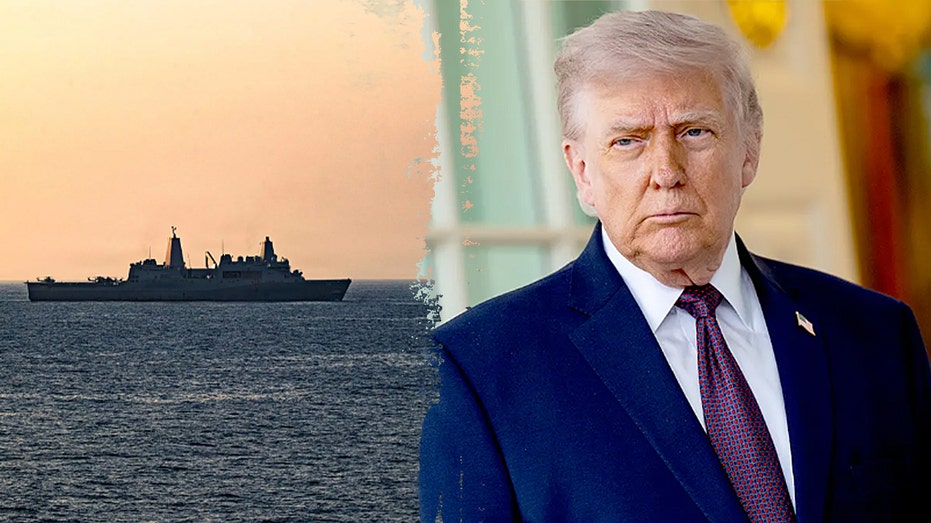
The United States military has tightened its naval blockade of Iran, warning that vessels receiving Iranian cargo through ship-to-ship transfers will also face military action.
US Central Command (CENTCOM), in an advisory on Wednesday, said ships receiving cargo from vessels loaded at Iranian ports or along the country's coastline could be considered to be 'evading the blockade'.
'Any ship that receives cargo via a ship-to-ship transfer with a vessel subject to the blockade and carrying cargo loaded at an Iranian port or coastline may be considered to be evading the blockade, even if it has not entered Iranian ports or the Iranian coastline,' CENTCOM said.
Such ships may be stopped, boarded, diverted, captured, or directed to proceed to the Iranian port where the cargo originated, CENTCOM added. It also warned that ships failing to comply with its orders could face enforcement action, including the use of force.
The move is aimed at closing a loophole that has allowed some Iranian petroleum products to reach international markets, despite Washington's blockade of Iranian ports and oil exports since mid-July. Washington initially imposed the blockade on April 13, lifted it in June following an understanding with Tehran, and reinstated it on July 14 after the agreement collapsed.
Iranian authorities have yet to issue a direct response to CENTCOM's announcement, but Tehran has repeatedly warned against US efforts to restrict its trade, and Iran's Islamic Revolutionary Guard Corps (IRGC) has repeatedly warned of retaliation against attacks on Iranian vessels.
An article published by Iran's semi-official Fars News Agency on Wednesday proposed sending a group of oil tankers through the blockade. It suggested that any attack or obstruction could prompt Iran to target energy infrastructure in the region, especially UAE oil.
Earlier this month, IRGC spokesman Brigadier General Hossein Mohebi rejected Washington's ability to impose a comprehensive economic blockade on Iran, saying America could never achieve the type of economic blockade it is after. He also warned that Iran would retaliate harder if US forces attacked its vessels.
Iran has managed to bypass parts of the blockade, but restoring large-scale crude exports presents a much greater challenge. Before the US-Israeli war began in February, Iran exported roughly 1.5 million to 2 million barrels of crude oil per day, with China purchasing the vast majority of its shipments.
In October, Reuters reported that at least eight tankers carrying Iranian liquefied petroleum gas (LPG) had left the Gulf of Oman since July. On Thursday, Reuters, citing maritime monitoring service TankerTrackers.com, reported that a vessel was loading Iranian crude through a ship-to-ship transfer in the Gulf. If the shipment reaches its destination, it could become the first successful crude export since Washington reinstated the blockade in July, though there was no confirmation from Iranian authorities.
Andreas Krieg, associate professor in Security Studies at King's College London, says Iran lacks the military capabilities to challenge the blockade directly, given overwhelming American naval superiority. However, policing every shipment, intermediary and ship-to-ship transfer is considerably more complicated than stopping tankers leaving Iranian ports.
Krieg says Iran's objective would be less about physically defeating the blockade than making its enforcement politically and economically unsustainable, describing the situation as potentially one of the most dangerous escalation scenarios seen in recent weeks.
Analysts note that before the war, about 20 percent of the world's oil and roughly one-fifth of global liquefied natural gas trade passed through the Strait of Hormuz. In retaliation for the war, Iran has de facto closed the strait, and Tehran has repeatedly warned that the Houthis, its allies in Yemen, could similarly lock down the Bab el-Mandeb strait.