Cyclone Akvan rains leave farmers struggling with paddy and vegetables, dried-fish work halted
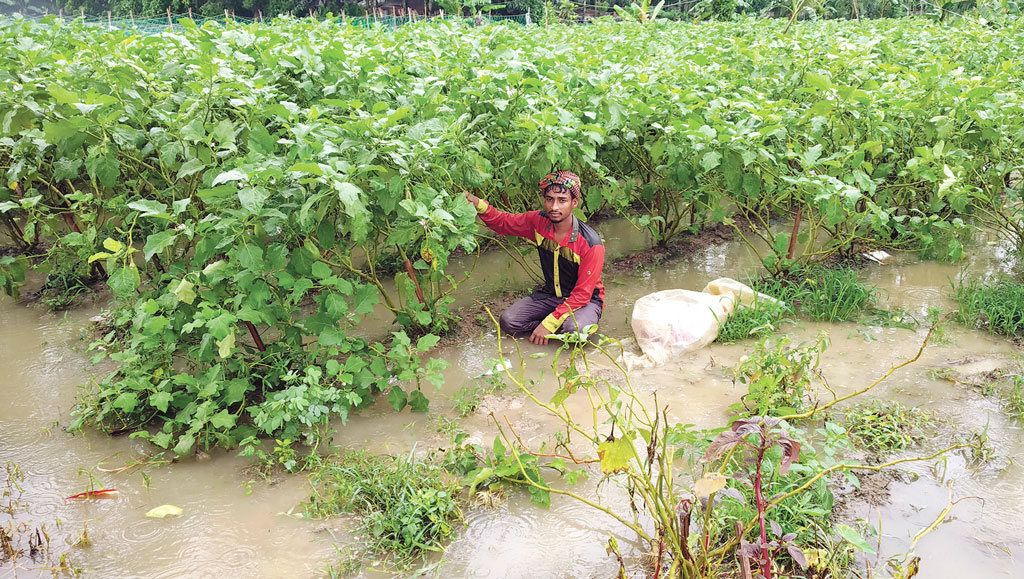
Two days of rain under the influence of Cyclone Akvan have left farmers in several districts unable to bring in their harvested paddy. Water has collected in winter vegetable fields including cauliflower, cabbage, beans and tomatoes, and there are fears of damage to mustard, potatoes, onions and maize. Dried-fish production has stopped, and the earnings of low-income people such as day labourers and rickshaw pullers have fallen.
In Tala upazila of Satkhira, water standing in paddy and vegetable fields after two days of rain has raised fears of crop damage. Farmers have cut paddy and left it in the fields, but cannot dry it because of the rain. Water has also collected in fields of cauliflower, cabbage, turnip cabbage, beans, radish, tomatoes and brinjal, and farmers are busy draining it.
Tala upazila assistant agriculture extension officer Md Mohsin Ali Sardar said the paddy has now ripened, so there is not much fear of damage unless excess water stands at the base of the plants in the field. But if water stands at the base of vegetable plants, the plants can be damaged, he said.
Low-income people cannot go to work because of the rain. Local resident Rafiqul Islam of Tala said people are not leaving home except for urgent need, and day labourers and working people are in the greatest difficulty, with their daily income stopped because they cannot go to work.
In Moulvibazar, the Sreemangal weather observatory recorded 9.3 millimetres of rain from 6 a.m. Thursday to 6 a.m. Friday. Farmers cannot harvest the ripe Aman paddy, and those who have already cut it are struggling to thresh and dry it.
In Kamalganj, Rajnagar, Kulaura and other areas of Moulvibazar, many farmers have left cut paddy in the fields. Others have stacked paddy beside roads covered with tarpaulin, but cannot thresh it because of the rain. Rajnagar farmer Mizan Ahmed said he had cut paddy on only 1 acre out of 3 acres, but could neither thresh nor dry it. Another farmer, Suhan Mia, said he was paying hired workers while keeping them sitting idle.
In Sharankhola and other coastal areas of Bagerhat and in Fakirhat upazila, continuous rain has brought public life to a standstill. Day labourers' work has stopped in parts of the district, and with fewer passengers on rickshaws, vans and easy bikes, the income of low earners has fallen. Members of rootless and Bede families in Fakirhat are also suffering.
Fish worth about one crore taka belonging to fishers at the dried-fish village on Dublar Char in the Sundarbans has spoiled after getting wet, and farmers are worried about fish enclosures in low-lying areas. Dubla Fisherman Group president Bir Muktijoddha Md Kamal Uddin Ahmed said on Friday that fish worth about one crore taka brought by fishers three days ago had spoiled after getting wet, and that fishers faced about another crore taka in losses because bad weather prevented them from fishing at sea.
In Fakirhat, unseasonal rain has raised fears of damage to agriculture. Farmer Mostafa Hasan said there is a risk of fungal disease and rotting in potato fields, other winter vegetables may also be damaged, and ripe Aman paddy in the fields has been harmed by the rain.
In Chandpur, 60 millimetres of rainfall was recorded in 24 hours from Thursday. Many people's daily income has fallen by half. CNG-run autorickshaw driver Anwar Hossain Gazi said he could not earn even half his usual amount on Friday because of the rain. Vegetable seller Jahangir in the same area sat under polythene waiting for customers, but sales were very low.
On New Truck Road in Chandpur town, none of the three shops that had started selling winter pithas a week ago opened in Friday's rain. Mobile hawkers were few, and one seller was seen calling out to sell bananas at half price to attract customers.
In Manikganj, raw bricks at at least fifty brick kilns have been soaked and destroyed by the continuous rain. Visits on Friday afternoon to five kilns in Baniyajuri, Joka and Pukhuria of Ghior upazila and Bhatbaur of Sadar upazila showed several lakh raw bricks destroyed; many bricks turned to mud in the rainwater and some stacks collapsed.
Bhatbaur kiln owner Abdul Malek said he had covered the raw bricks with polythene fearing rain, but continuous rain since Wednesday and wind blowing the polythene away left the bricks soaked and melted. District brick kiln owners' association general secretary Samsul Alam said the district has about 80 kilns, raw bricks at more than fifty were destroyed by rain at the very start of the season, and losses of several crore taka are feared.
In Ghior, Daulatpur, Shibalaya, Harirampur, Singair and Saturia upazilas of Manikganj, water has collected in fields of mustard, potatoes, onions, maize and vegetables. Farmer Kabir Khan of Rathura village in Ghior said mustard plants in his field had bent under continuous rain and wind, and he feared damage to the plants and flowers from standing water.