Khulna Marks Poet Sukanta Bhattacharya's Birth Centenary as Rain Forces a Change of Venue
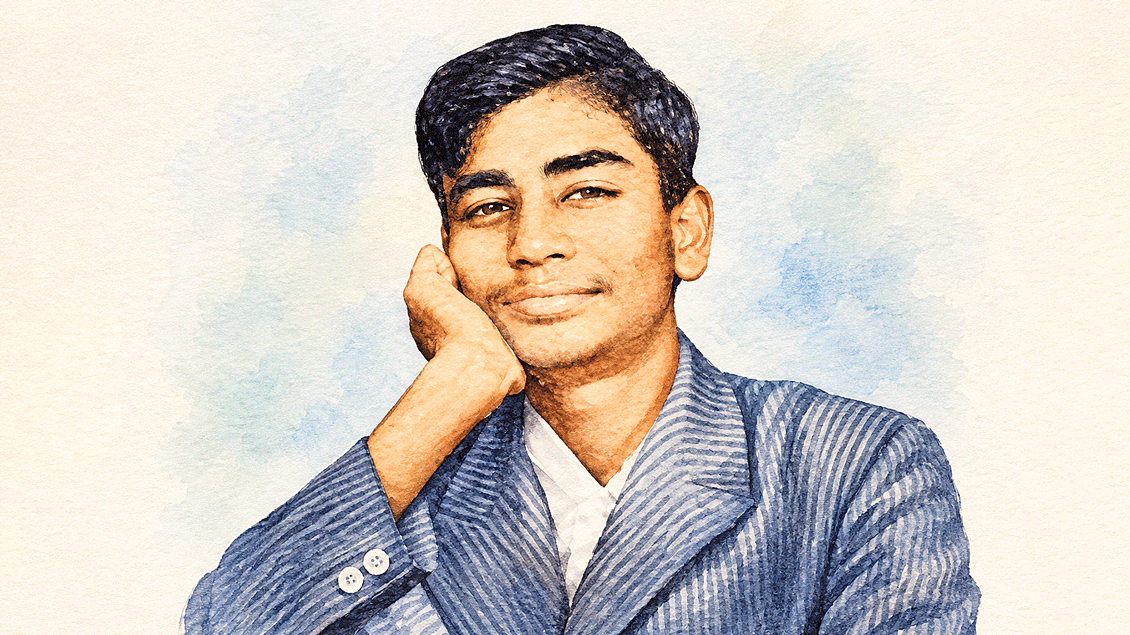
The birth centenary of poet Sukanta Bhattacharya is being observed this year. While the centenary has not been widely marked across the country, Khulna has seen a striking response. A centenary celebration committee was formed there after long preparation, with artist Mina Mizan as its chief initiator.
Khulna has long had an undercurrent of cultural practice. The Sandipan Sahitya Sangha was once known across the country. Mass songs and recitation are prominent there, the left movement was once active in the area, and the wave of the Naxalbari movement touched it during the Pakistan era. A large Rabindra Sangeet conference was also held in Khulna not long ago.
Sukanta Bhattacharya lived only 21 years. He began writing poetry as a teenager. He would take his poems to poets such as Subhas Mukhopadhyay, seek their advice and write them anew.
His writing centred on people's struggle, hunger, poverty and the struggle for human liberation. His poem 'Mahajiban' carries the lines about a homeland seen in anger at birth, and its closing line says that in the kingdom of hunger the world is all prose and the full moon looks like a scorched loaf of bread.
As an adolescent, Sukanta came into contact with Rabindranath and Nazrul. Before Sukanta was born, poet Nazrul wrote the poem 'Bidrohi' in 1921. Nazrul's poems, songs and novels repeatedly raised poverty, non-communalism and equality.
Before his death, Sukanta became a member of the Communist Party. As a party worker he had the chance to travel across the country. He saw people's deprivation and terrible poverty up close, witnessed the horrors of the Second World War, fratricidal riots and the horror of Partition.
The opening ceremony of the Khulna celebration was scheduled for 19 November at the open ground of Shaheed Hadis Park in Khulna city. Heavy rain made that impossible. The programme was finally moved to the small auditorium of the Umesh Chandra Public Library, and the situation was such that the following two days of programmes might also have to be held there.
The theatre programme suffered a setback as well. The Aranyak theatre troupe's new production, a play based on Sukanta's poem 'Moroger Kahini', was to have its first show. The troupe could not travel because of transport disruption, and the railway authority cancelled the night train of 19 November.
Despite all this, the opening ceremony saw considerable enthusiasm among artists who came from local and neighbouring districts and upazilas. Performers ranging from children to mature artists took part in recitation and song. The 21 November programme is expected to be completed well if the weather stays fine.
As part of the celebration, a 304-page commemorative volume titled 'Abak Prithibi' has been published, and its publication ceremony was also held on the opening day. With writings by important authors from the country and West Bengal, the volume offers an overall introduction to Sukanta Bhattacharya's life and literary work.
Alongside poetry, Sukanta also wrote rhymes. In his rhyme 'Purono Dhadha' he raised the question of class inequality in simple language — why the rich ride in motor cars while the poor are crushed under them, and why those who build the rich man's house die in huts.
For the centenary, a play is also being made from Sukanta's poem 'Moroger Atmokahini'. At Mina Mizan's request, work is under way on writing the play around the poem, and young playwright Apu Mehdi has been asked to develop an idea for it. Through rehearsals, the play has taken a fairly complete shape.
On Tuesday 24 November, the play will be staged at the Studio Theatre Hall of the Shilpakala Academy. The Sukanta birth centenary will also be marked there with songs, dance and a discussion programme. The organisers say that if audiences like the play, it will be performed in different places.