Discriminatory Politics Has Gained Dominance After the Mass Uprising: Anu Muhammad
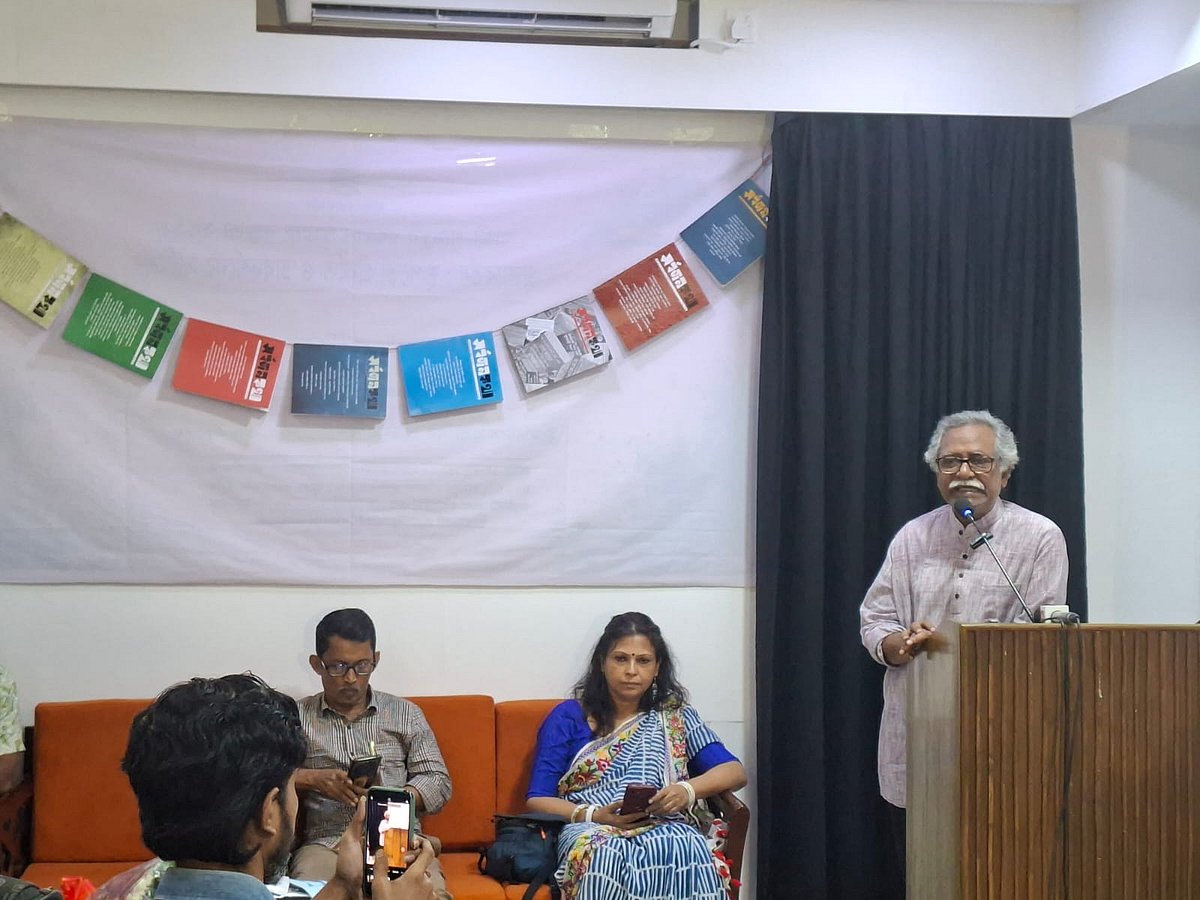
Although much was said against discrimination during the 2024 mass uprising, discriminatory politics has gained dominance after the uprising, economist Professor Anu Muhammad has said. He made the remarks at a get-together at Bangla Academy in Dhaka on Saturday afternoon.
The get-together was organised to mark 12 years of 'Sarbojonkatha', the quarterly journal on politics, economy and society edited by Anu Muhammad.
Anu Muhammad said a group has been empowered that opposes people's creative world, world of thought and ideas of liberation, and that wants to keep people, women and diversity in chains.
He said elements within the process by which society forms thought and consent are why people cannot distinguish anti-discrimination thinking from discriminatory thinking. At times, he said, hatred is expressed through what people take to be anti-discrimination.
On Bangladesh's political culture, Anu Muhammad said the country has fallen into a 'toxic circle'. Political parties show no normal political character or culture; their rivalry is much like a hereditary feud, and this division continues from generation to generation.
He also noted, however, that political parties show unity on policies harmful to the public. Even when governments change, he said, policy continuity remains on port agreements, the US trade deal and initiatives involving foreign companies' interests.
Anu Muhammad said intellectual change is needed alongside political struggle to get out of this situation. Explaining the name 'Sarbojonkatha', he said it comes from the idea of a society with no class, gender, religious or ethnic discrimination, where people live with dignity and keep a natural relationship with nature.
At the event, Sarbojonkatha council member Professor Tanzimuddin Khan said that even after 12 years the journal's thinking remains youthful, and from the start their aim was to build quality academic writing and research in Bangla.
Writer and researcher Altaf Parvez said Bangladesh effectively has no parliamentary opposition, as shown by the opposition's role on issues such as the tariff deal with the United States or workers' wage movements. In such a situation, he said, Sarbojonkatha can play an important oppositional voice on political economy.
In her welcome speech, publisher Moshahida Sultana said Sarbojonkatha's aim is to raise the voices of ordinary people, the environment and all living beings against hegemonic knowledge practices. Over 12 years it has published data-based analysis on economic, social and gender discrimination, communalism, war and the power sector crisis, among other issues.
Executive editor Kallol Mostofa, council members Bithi Ghosh and Mahtab Uddin Ahmed, and labour leader Moshrefa Mishu also spoke at the event.