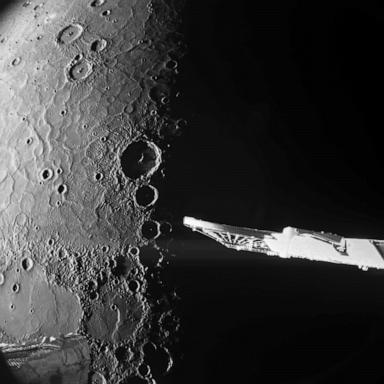
Scientists grow potatoes in lunar-like regolith, with 30 percent worm compost matching Earth's fertile soil yield
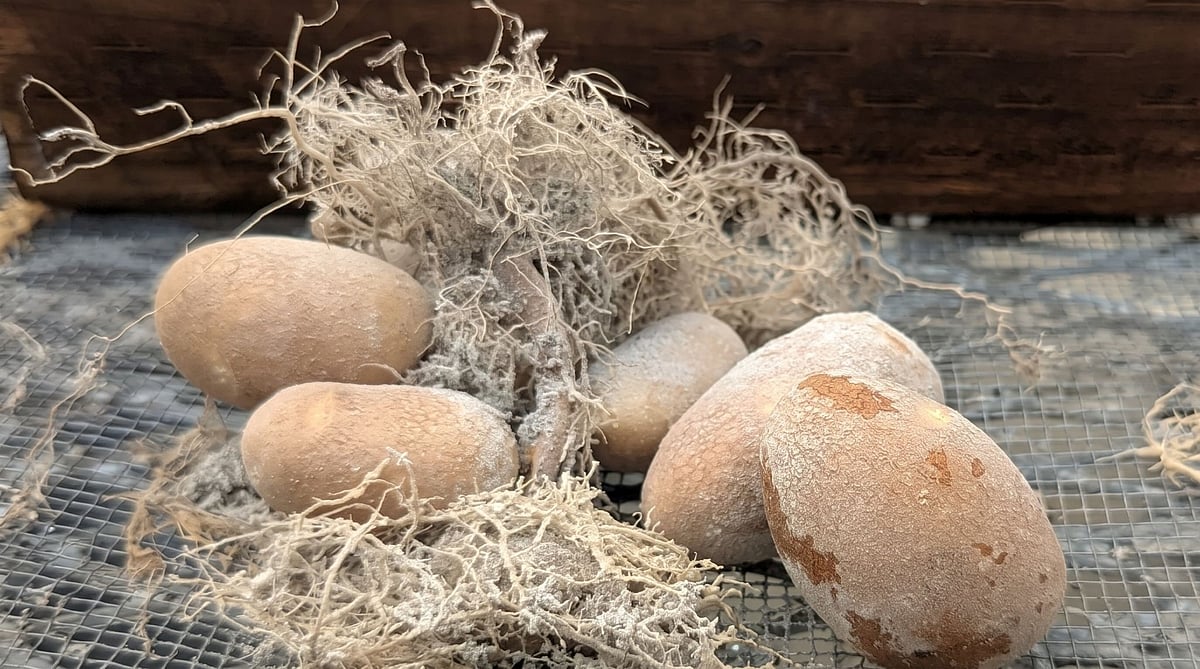
A team of researchers at Oregon State University in the United States has grown potatoes in soil made in the laboratory to resemble lunar soil. They chose the fast-growing Modak variety of potato for the cultivation. The research was funded by the US space agency NASA.
The research team was led by plant scientist Emeric Goyer, with space scientist David Handy as his co-researcher. Their findings were recently published in the science journal npj Microgravity.
The United States wants to send people to the Moon again, and that mission will begin within the next few years. Scientists are also thinking of building a long-term base there. But staying on the Moon permanently requires a food supply; carrying food from Earth is extremely expensive. The research was carried out with that reality in mind.
Lunar soil is not fertile like Earth's. Scientists call this lunar soil 'regolith' — a rough layer of rock powder and dust particles. It has no rotted-leaf compost or organic material, it severely lacks the nitrogen plants need, and heavy metals such as copper obstruct root growth and normal plant growth.
As a solution, the researchers used vermicompost, or worm compost, made by rotting organic waste with the help of earthworms. They made five types of artificial regolith copying the characteristics of lunar soil. Tests showed that in the imitation soil alone, without any fertiliser, the potato plants could not spread roots properly and no tubers formed.
After mixing just five percent worm compost into the soil, the potato plants began to grow roots and small potatoes formed. And after mixing 30 percent vermicompost into the soil, the potato yield stood equal to that of Earth's fertile soil.
Emeric Goyer said lunar soil has almost no nitrogen, so no crop will survive there unless the right nutrients are supplied from outside. In his view, when a permanent base is built on the Moon in the future, it will be possible to make such compost from astronauts' waste and farm with it.
Goyer also explained why potatoes were chosen. In his words, potatoes yield more than any other crop, so more yield and more calories are obtained from less land at less cost. Potatoes contain more potassium than bananas, plenty of vitamin C and good-quality protein, and eating potatoes keeps the stomach full for a long time.
However, the experiment was carried out in a protected greenhouse on Earth, using laboratory-made imitation regolith instead of real lunar soil. Sunlight and artificial light were arranged there; the daytime temperature was kept at 22 degrees Celsius and the night temperature at 18 degrees. Because small pots were used, the potatoes produced weighed less than 10 grams on average, although the researchers later obtained comparatively larger potatoes in bigger pots.
The researchers tested the nutritional value and safety of these potatoes in the laboratory, but have not yet tasted a single one themselves. In the Moon's real environment, gravity is one-sixth of Earth's and radiation is much higher; how potato plants will behave in that environment is still unknown. The research was done to test the feasibility of farming on the Moon in the future.