BUET's Sohel Rahman elected fellow of The World Academy of Sciences: in the AI era, the key skill is asking the right question
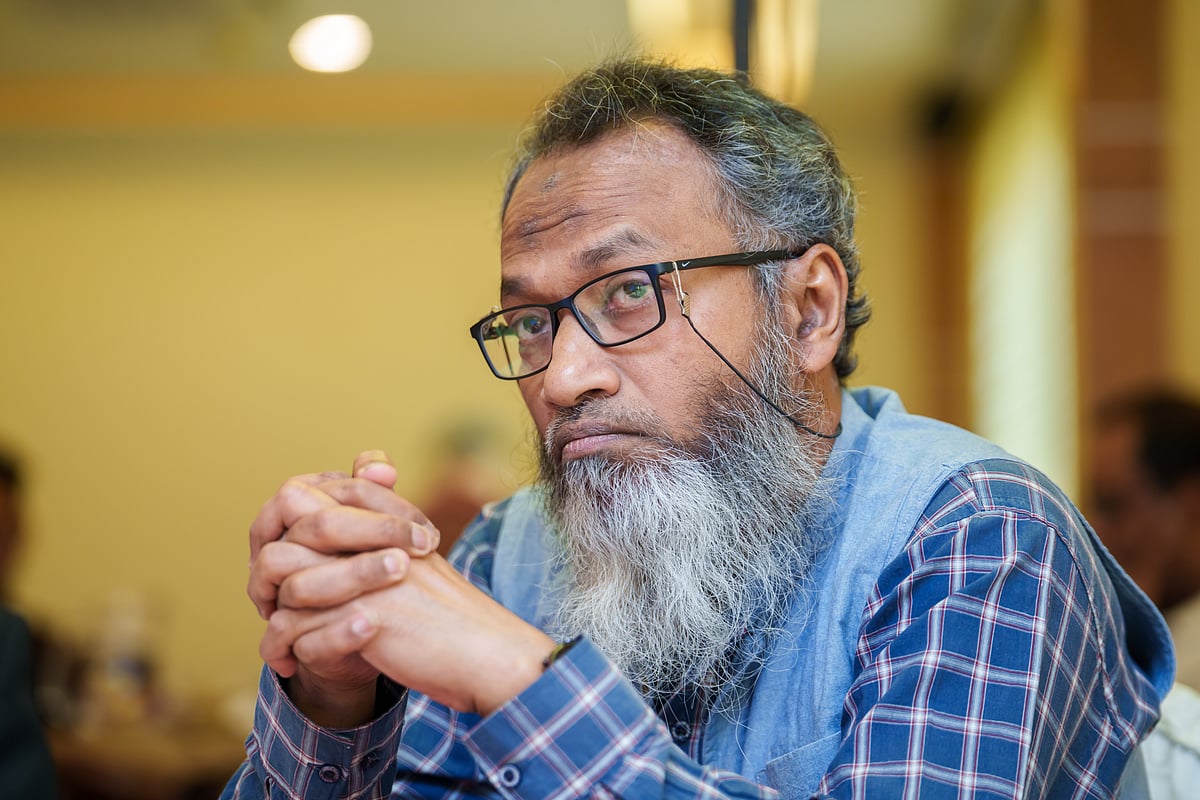
Professor Mohammad Sohel Rahman of Bangladesh University of Engineering and Technology (BUET) has been elected a fellow of The World Academy of Sciences in recognition of his research in algorithms, theoretical computer science and artificial intelligence. In a special interview he spoke about his research, the future of AI, the practice of computer science in Bangladesh, data privacy and programming competitions.
Describing how he felt on receiving the news, he said being elected a fellow is a matter of joy, honour and, at the same time, a deep sense of responsibility for him. He does not see the recognition only as a personal achievement, but also as recognition of Bangladesh's capacity in science and research. In his words, many talented teachers, researchers and students in the country are doing international-standard research with limited facilities, and this achievement would not have been possible without the contributions of his students, colleagues and research team.
Important areas of his research are string algorithms, combinatorics and sequence analysis. Explaining them simply, he said string algorithms are used to find a specific word within a large text, detect spelling errors or identify similar texts; the same technology works behind Google searches, identifying photos on mobile phones, or finding the cause of a disease by testing DNA.
On combinatorics, he gave examples: planning how to seat 100 examinees in 10 rooms, the schedules of thousands of flights and trains, or determining hospital doctors' duties all need this mathematical analysis. And sequence analysis is used to analyse changes in weather temperature, stock market fluctuations, a patient's heartbeat records, or features of DNA.
Asked which skills Bangladesh's computer science education should emphasise in this time of rapid AI progress, he said the most important thing is not only to make students skilled in using current technology, but to build their capacity to create the technology of the future. Many of today's AI tools will change within a few years, so learning only a specific software or programming language is not enough.
In his view, emphasis must first be placed on mathematics, logical thinking, algorithms, data structures, probability, statistics and the fundamentals of programming. Second, students must understand how AI works, what its limitations are, why it sometimes gives wrong decisions and how to verify its results. At the same time, importance must be given to data analysis, machine learning, scientific computing and computational thinking. Third, interdisciplinary knowledge linking computer science with medicine, the environment, agriculture, water management and disaster response is essential, which is especially important for Bangladesh.
Advising those who want to research AI or algorithms, he said they should first strengthen their fundamental knowledge, then start working deeply on a specific subject; they need to read good research papers regularly, do small projects, test their own ideas and discuss research results with others.
An important remark in the interview was that in the age of AI, the important skill is being able to ask the right question. AI can answer many questions, but understanding which question is important, which answer is trustworthy and which problem needs solving requires human judgement and scientific thinking.
Giving examples of his applied work, he said the cause of a disease or an indication of susceptibility to it may be hidden among millions of pieces of information in DNA; using machine learning, the relationships and patterns in that information can now be found much faster. By analysing MRIs, CT scans or X-rays, AI can help doctors detect signs of disease, but AI is in no way a substitute for a doctor — it is only a tool to make decision-making richer in information.
In epidemic research, with the help of his students he built agent-based models for malaria and Covid-19, through which it became possible not only to observe how diseases spread but also to prepare in advance. In the environmental field, he used machine learning to create a national-level groundwater map for Bangladesh, collaborating with his wife, who is a groundwater specialist. They are now also working with satellite images using AI.