Cyclone Akvan never made landfall, yet its rain damaged crops on 24,818 hectares in 20 districts
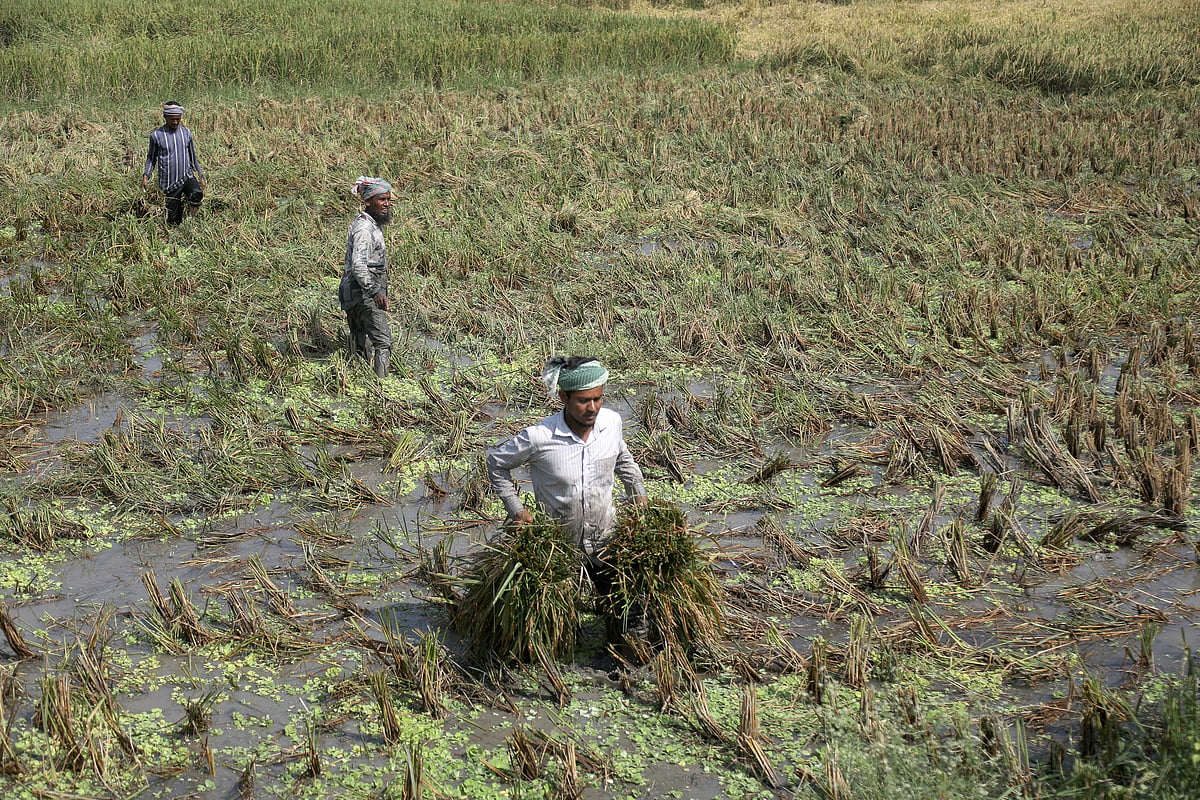
Cyclone Akvan did not strike, but rain driven by its influence caused extensive crop damage in different parts of the country. Reports of damage came from Tala in Satkhira, Feni, Bhola, Rajbari, Amtoli in Barguna and various settlements in the south adjoining the Sundarbans.
In some places ripe paddy cut and left in the fields was submerged in rainwater, and elsewhere standing paddy went under water. In some areas winter vegetable seedbeds were washed away, and in others onion seedbeds and potato fields were flooded.
In Rajbari district alone, the district agriculture office estimates that three to four hectares of onion seedbeds were submerged.
The Department of Agricultural Extension prepared an initial report based on information received over four days, from 19 to 22 November. It shows crop damage on 24,818 hectares of land in 20 districts.
Dried fish production has also suffered heavy losses. At the drying grounds of Dublar Char, Alorkol, Meher Ali's Char, Majher Kella, Office Kella and Narkelbaria, the sun was not seen for four consecutive days.
A large quantity of fish spread on platforms to dry rotted in three straight days of rain. As a result, the livelihoods of at least 10,000 fishers, traders and workers have been put at risk.
The dried fish production season had begun on 30 October. But the impact of three successive depressions caused a major slump in dried fish production.
The Bangladesh Agro-Meteorological Information Service (BAMIS) of the Department of Agricultural Extension, in its district agro-weather advisory bulletin of 18 November, had mentioned a forecast of moderate to heavy rain in places in Dhaka, Khulna, Barishal and Chattogram divisions on 20–21 November.
In other words, advance agro-weather advice had been issued to deal with the harmful effects of the rain on the agriculture sector. However, although the disaster forecast came at the time of harvesting ripe Aman paddy, it was not possible for all farmers to cut the paddy within one or two days.
Finding workers, the cost of harvesting, transport and places to dry the paddy can all create limitations for farmers, the report noted. Without arrangements to dry, store and transport paddy cut in the fields, rain damage increases further.