Harmful metals found in five fruits in Chattogram study, guava mercury about 23 times the cited limit
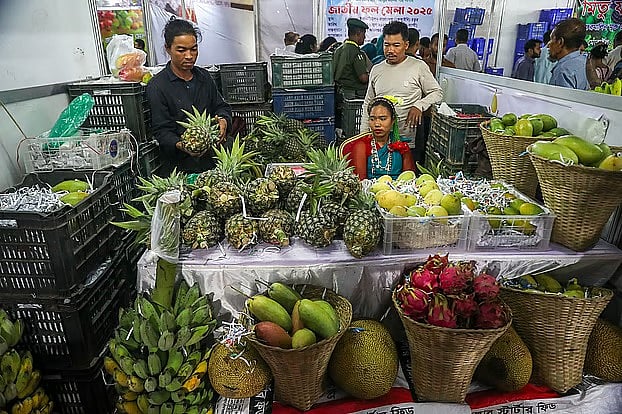
Researchers testing samples of five fruits in Chattogram have found traces of mercury, lead, arsenic, cadmium and chromium. The metals were detected in banana, guava, mango, papaya and pineapple samples. The highest mercury levels were found in some guava and banana samples, the highest chromium in mango, and lead was found in guava collected from a hill production area.
The study was led by the Department of Applied Food Science and Nutrition at Chattogram Veterinary and Animal Sciences University (CVASU), with researchers from the Bangladesh Council of Scientific and Industrial Research (BCSIR) and Rajshahi University also taking part. The paper was published online on October 14 in the Journal of Food Composition and Analysis, in the journal’s November volume 159.
Samples were collected over eight months, from November 2024 to June 2025, from three kinds of sources: the hill production area of Rangamati, local markets in Chattogram, and super shops. Fifteen composite samples were taken from each source, 45 in total. The fruits were washed in clean water at the CVASU laboratory, dried whole with the peel on and ground, and the levels of the five metals were then measured at the BCSIR laboratory in Dhaka using specialised instruments.
The highest chromium level was found in mango collected from a supermarket, at 1.958 milligrams per kilogram. Guava from the Rangamati hill production area also carried a comparatively high chromium level of 1.542 milligrams per kilogram. In fruit-by-fruit averages, chromium measured 1.399 milligrams per kilogram in mango, 1.268 in papaya, 1.200 in guava, 1.067 in banana and 0.869 in pineapple.
For mercury, guava collected from a supermarket showed the highest level, 0.691 milligrams per kilogram, while banana from the same source measured 0.478 milligrams. The paper compared the results against an acceptable mercury level for fresh fruit of 0.03 milligrams per kilogram; on that basis, the guava carried about 23 times and the banana about 16 times that level.
Guava from the Rangamati hill production area carried the highest lead level, 1.687 milligrams per kilogram. Guava from the same source also showed 0.074 milligrams of cadmium per kilogram, the highest cadmium level in the study. Supermarket guava showed 0.272 milligrams of arsenic per kilogram, the highest arsenic level among the five fruits’ samples, while the lowest arsenic level, 0.009 milligrams per kilogram, was found in mango from the hill area.
Not every sample carried the same levels. Mercury in hill-area papaya measured only 0.002 milligrams per kilogram. Professor Ayesha Begum, head of the CVASU department and the study’s supervisor, said chromium was highest in mango among the five fruits, while several metals were found together at higher levels in guava.
The researchers cautioned against treating the mercury findings as final. Ayesha Begum said the mercury results were marked as preliminary in the paper because the measurement method had some technical limitations: the certified reference material needed to verify the results could not be used, and the high readings were not retested at another laboratory. She said a final comment on those figures would not be appropriate without independent reanalysis.
Alongside measuring the metals, the researchers calculated the possible health risk from eating the fruit, assuming an adult body weight of 65 kilograms and daily fruit consumption of 95.4 grams. They said fruit is beneficial for health, but harmful metals entering the body in excessive amounts over a long period through fruit could be damaging.
The researchers have not yet established exactly where the metals in the samples came from. They said the metals could enter fruit from contaminated soil, irrigation water, chemicals used in farming or other environmental sources, and contamination could also occur during transport, storage and packaging after harvest. Ayesha Begum said identifying the source would require separate testing of soil, irrigation water, fertiliser, pesticides, weedkillers and fruit packaging, none of which was tested in this study, so no particular production area, market or supermarket can be blamed.
On what ordinary consumers should do, Ayesha Begum said the study covered whole fruit with the peel on, and how much washing or peeling reduces the heavy-metal content is not yet known. She said the findings have not yet been formally reported to the Bangladesh Food Safety Authority. In her view, fruit sold in markets must be tested regularly across different seasons and market levels, and monitoring of farm chemicals, industrial waste and other possible pollution sources must increase.
The study was funded by the University Grants Commission for the 2024-25 fiscal year, with involvement of the National Science and Technology Fellowship of the Ministry of Science and Technology. The research team included Professor Ayesha Begum, CVASU associate professor Mohammad Mojibul Haque, BCSIR chief scientific officer Mohammad Moniruzzaman, Rajshahi University associate professor Shah Md. Shahan Shahriar, and CVASU postgraduate students Orthita Barua, Mahdi Al Hasan Rahat and Tasnia Khanam.