With policy support, Bangladesh's pharmaceutical industry can build a big position in the world market, says Abdul Muktadir
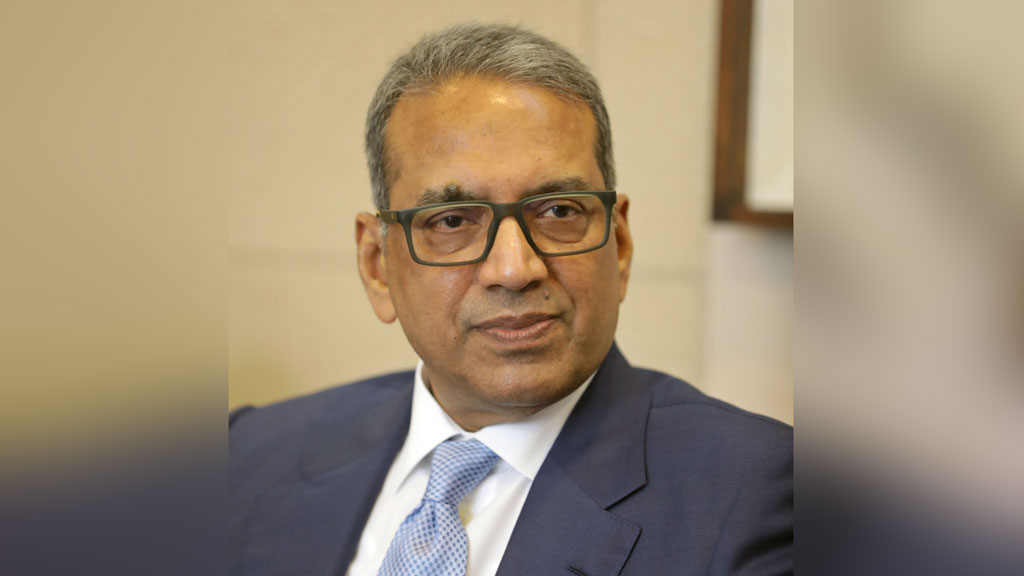
Shedding import dependence, domestic companies now meet 98 percent of Bangladesh's local demand for medicines. Bangladeshi medicines are also exported to more than 150 countries. But there are obstacles in production costs, dependence on imported raw materials, maintaining prices and quality, and surviving international competition, said Abdul Muktadir, president of the Bangladesh Association of Pharmaceutical Industries and managing director of Incepta Pharmaceuticals. He spoke in an interview with Ajker Patrika, conducted by Muhammad Shafiullah.
Abdul Muktadir said the size of Bangladesh's pharmaceutical market is a little over 3.5 billion dollars. Per capita spending on medicines is less than 2,000 taka a year — that is, a person spends less than 200 taka a month on medicines. In his words, per capita medicine use in Bangladesh is probably the lowest in the world.
He said medicine prices in the country have remained almost unchanged for about eight years. Yet the dollar price, inflation, production costs and all related expenses have risen. Even if price adjustment becomes necessary in future, competition among companies will keep prices comparatively low, he believes.
Most of the 2 percent of medicines that are imported are cancer and specialised medicines, including medicines made from blood and plasma. Some medicines are not produced in the country because global demand for them is low, so they have to be imported. Work is also under way to reduce dependence on imported raw materials, he said.
Describing the rise in costs, he said wages have doubled compared with seven or eight years ago. The dollar has risen from 80 taka to 120–125 taka, gas and diesel prices have also doubled, but gas supply is not adequate. Bank loan interest rates have risen from 7–8 percent to 12–13 percent.
The cost of quality control has also risen greatly, he said. Earlier only the final product was tested; now testing has to be done at every stage of production. The share of total production cost spent on quality control has multiplied compared with before.
Under cost pressure, 35 of the top 100 companies are on the verge of closure and another 30 are making continuous losses, Abdul Muktadir said. These companies built the pharmaceutical industry's capacity, he said; if they close, the dream of exporting medicines to the world market will also be obstructed.
He also said 64–65 of the top 100 companies have had negative growth for several years, and the profit of the remaining 35 has fallen by about 65 percent compared with before. Production costs have risen about threefold in the last five years, he said.
On the raw material (API) industry, he said an API industry cannot be built overnight. Producing at competitive prices requires 5 to 10 years of research behind each molecule. Research began a decade and a half ago and only two to four API products have been brought to market so far, but the possibility of making 10 to 15 globally competitive products has now emerged.
Without waiting for the API industrial park, his company has built its own infrastructure and factory in Dhamrai, he said. The industrial park lacks gas, electricity and necessary infrastructure; three or four companies invested there but could not start production. Producing API needs steam, which requires gas, but Titas has said it cannot supply gas. The government has now consented to the use of clean coal, which he hopes will open the way for API production. He hopes Bangladesh will move ahead in the API industry within three to five years.
On exports, he said growth in developing-country markets is comparatively slow — exports of 1 million dollars in one year reaching 1.2 million the next means 20 percent growth. But in European and American markets, exports starting at 1 million dollars in one year can jump to 50 million dollars the next year. Eight to ten Bangladeshi companies have already qualified to export medicines to those markets.
Raising the patent issue after LDC graduation, he said that without an emergency, patented medicines cannot be exported to non-LDC countries, but there will still be scope to export to the domestic market and some LDC countries, so the impact on exports will be comparatively small. After 2029, many patented medicines important for human health will come to market; patents can raise the price of some medicines by up to 100 times. To face this situation, capacity in API, biosimilar and vaccine production must be increased, he believes.
On price setting, he said there is no objection if the government fixes medicine prices considering all factors; the objection is to the lack of transparency in the price-setting process. India introduced a system in 2012 that benchmarks the average price of medicines on the market and allows annual price adjustment in line with inflation; Bangladesh adopted such a policy but did not implement it, he noted.
On quality control, he said regulators of developed countries, including the US FDA and the UK's MHRA, have approved production centres of various Bangladeshi companies, and delegations from some country's regulator visit big companies' factories almost every week. Records of every stage of production and quality control are stored in a blockchain system and will be retrievable even after 10 years, he said.
On research, he said Bangladeshi pharmaceutical companies invest in research and development with their own money, whereas governments in countries such as the United States, India and China invest in and grant money for research. Bangladesh needs a coordinated research environment among the government, pharmaceutical companies, hospitals and research institutions, he said.