Measles Deaths Hit Record Low Worldwide, but Bangladesh's Largest Recorded Outbreak Has Killed 1,378

While measles deaths worldwide have fallen to a record low, Bangladesh is facing the largest outbreak of the disease in its recorded history. The contrasting picture emerges from the World Health Organization's latest report and figures from Bangladesh's Directorate General of Health Services.
The World Health Organization (WHO) report, published on Friday (27 November), said an estimated 72,000 people died of measles worldwide in 2025. That figure is 91 percent lower than in 2000.
According to WHO, measles vaccines have saved more than 60 million lives since 2000. But despite the fall in deaths, the world is still not close to eliminating measles; an estimated 9.8 million people were infected in 2025, and large outbreaks occurred in 59 countries.
Globally, 84 percent of children received the first dose of the measles vaccine and 77 percent received the second dose. Yet to effectively stop the disease from spreading, at least 95 percent of every community needs to have received both doses.
In Bangladesh the picture is the opposite. According to the health directorate's figures released on Friday, 1,378 people died with measles or measles-like symptoms between 15 March and 27 November this year. The number of suspected patients has passed 262,000.
The directorate's detailed figures up to 27 November put suspected measles patients at 262,808, hospital admissions at 235,482, laboratory-confirmed measles deaths at 106, and suspected measles deaths at 1,272.
The outbreak, which began in March this year, has still not been brought under control after eight months. After 253 consecutive days, 23 November was the first day with no death from measles or measles-like symptoms, but the next day nine deaths were reported again.
In the first 23 days of November, the daily average of suspected patients identified and admitted to hospital was the highest since the outbreak began. In other words, even though the daily death count has fallen on some days, the scale of infection remains worrying.
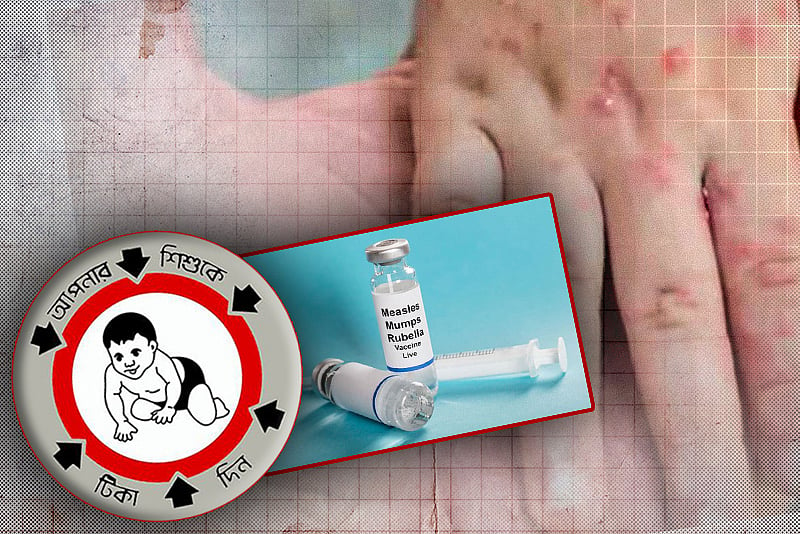
WHO's observations point to several reasons behind Bangladesh's current outbreak. A nationwide shortage in measles-rubella vaccine supply in 2024 and 2025, gaps in routine immunisation, and the absence of a nationwide supplementary immunisation campaign for a long period after 2020 left a large number of children at risk of infection.
WHO's regional report, also published on Friday, said 47 percent of the world's estimated measles infections in 2025 occurred in the South-East Asia region. About 4.6 million people were infected in the region and an estimated 16,800 died.
According to the report, an effective measles vaccine has existed for decades; the crisis is not about the vaccine's effectiveness but about delivering it to every child on time. Malnutrition, weak immunity, delays in getting treatment and limits in healthcare can raise the risk of death among those infected.
To tackle the ongoing outbreak, the report said, emergency vaccination must go together with identifying children who have missed vaccination, ensuring an uninterrupted vaccine supply and strengthening disease surveillance at the local level.