Administration Planting 50,000 Trees on 100 Acres of Shariatpur's Nawpara Char, Farmers Fear Losing Their Livelihood
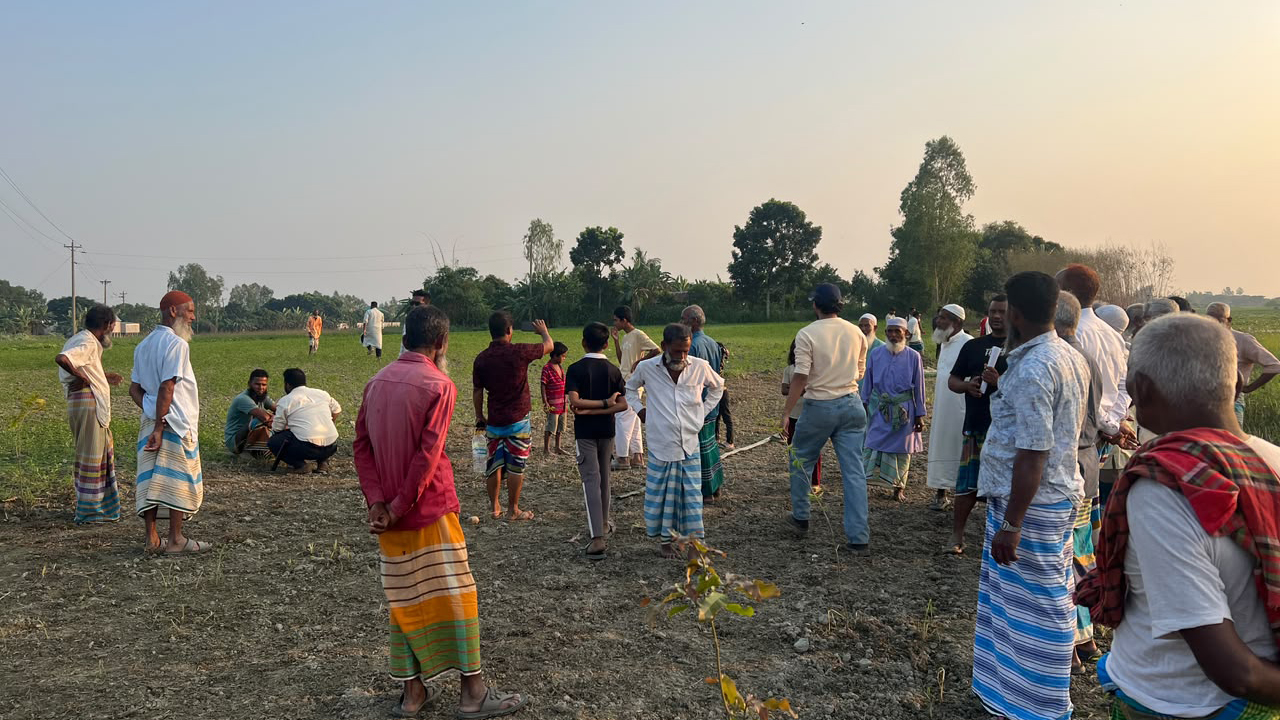
The Naria upazila administration in Shariatpur has taken an initiative to plant around 50,000 trees on 100 acres of land on Nawpara Char, a remote char that rose from the Padma River. Local farmers, however, have objected to the initiative, alleging that the afforestation is being carried out on cropland they have been cultivating for a long time.
Planting began last October and around 5,000 trees have already been planted. Farmer families now fear losing their livelihood.
The farmers say their ancestors held the land; after it was lost to river erosion, they resumed cultivation when the char re-emerged. Although the land is government khas land, they have demanded that it be settled with the actual cultivators in accordance with the law, taking their situation into account.
The administration, on the other hand, says the land is government khas land classified as river land. As it stays under water for most of the year, regular farming is not possible there, and the plots were selected for afforestation as part of a government programme.
Nawpara Union in Naria upazila of Shariatpur is surrounded by the Padma. According to local people, Nawpara Char re-emerged from the Padma around 1985. Before that, homesteads and cropland across a wide area had been devoured by the river in several rounds of erosion. After the char rose again, settlements gradually grew there and farming began.
At present, chillies, mung beans, maize, paddy and other crops are grown across a wide area of Daingaon mouza in the union. Local people say their ancestors owned the land, and after erosion took it away, the heirs of the original owners resumed cultivation when the char reappeared. Their families' livelihoods have been tied to this land for generations.
Sources at the office of the Naria Upazila Nirbahi Officer (UNO) say almost 650 acres of land in Daingaon mouza of Nawpara Union are government khas land classified as river land. Of that, 100 acres under plot number 438 have been taken up for the afforestation project.
Tree planting began there at the start of last October. There is a plan to plant around 50,000 trees of various species on the land by next June, UNO Abdul Kaiyum Khan said.
Local farmers, however, have objected to the selection of land for the project. They allege that cropland was chosen for planting even though uncultivated khas land lies nearby, and that families dependent on cultivation for a long time will fall into financial crisis.
Local farmer Sharif Ali Molla is 68 and supports a family of five daughters and a son. He has cultivated chillies on 20 decimals of land on the char in the Padma, and took a loan of Tk 30,000 from a local NGO to meet the cost of cultivation. With the afforestation initiative on the land, he is now worried about repaying the loan instalments.
Sharif Ali Molla said, 'This land belonged to our fathers and grandfathers. After we lost it to erosion, we started farming again when the char rose. Now the government will plant trees on this land. If the government takes this land away, how will we survive?'
Jasim Dhali (60), a farmer from the same area, said they have been earning their living by cultivating this land for about 20 years. 'If the land is khas land, then let the government settle it with us. Our families run on the crops from this land. If trees are planted, where will we go?' he said.
Another farmer, Sadek Ali Bepari (55), said, 'This property of ours is more than three hundred years old. My grandfather lived off it, and his grandfather before him. The land was lost to erosion, and when the char rose again, we were the ones who started farming. Our households run by selling the crops from this land. If we lose the land because of tree planting, our path to a livelihood will close.'
UNO Abdul Kaiyum Khan, however, disagreed with the farmers' allegations. He said almost 650 acres in Daingaon mouza are river-classified government khas land, of which 100 acres were selected for afforestation. The land stays under water for most of the year and no regular farming takes place there; the planting initiative was taken after verification, he said.
The UNO said, 'When we started planting, there were no crops there. This initiative is part of the government's plan to plant 250 million trees in five years. By next June, 50,000 trees of various native species will be planted there.'
He added that there are no poor farmers there — only moneylenders who occupy the land and the labourers who work under them. As afforestation on khas land has hurt the occupiers' interests, they are opposing it by putting the labourers in front, he said.
According to the UNO, once the afforestation is implemented, the area will become a sanctuary for endangered wildlife and birds. There is also a possibility of developing it as a tourist centre in the future.