45 of 57 fertiliser dealers in Lakshmipur are BNP leaders and activists, raising questions over experienced traders left out
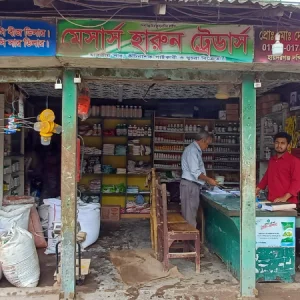
At least 45 of the 57 people nominated as fertiliser dealers across six upazilas of Lakshmipur, including Raipur, are leaders and activists of the BNP and its affiliated organisations. Allegations have been raised that they were nominated by using party influence, and the issue is now at the centre of discussion across the district.
The fertiliser dealer appointment policy states that applicants already involved in the fertiliser business should be given priority. However, many of the nominated BNP and affiliated-organisation leaders and activists reportedly have no experience in the fertiliser trade at all.
Many rejected applicants allege that despite being involved in the fertiliser business for a long time, they could not become dealers. They claim genuine fertiliser traders have thereby been deprived of business opportunities.
Under the dealer appointment policy, an applicant must have their own or rented warehouse in the relevant union or municipality with a capacity of at least 25 metric tonnes. The warehouse floor must be paved and above the normal flood-water level. Food items, restaurant supplies, livestock and fish feed or vegetables cannot be kept in the same warehouse, and storing seeds in the same warehouse is also prohibited. Applicants must also be financially solvent and submit a recent bank solvency certificate of at least Tk 500,000.
Dealer recruitment notices were issued for 58 unions and 4 municipalities of Lakshmipur district, including Raipur. The application deadline was 10 September, and a total of 336 applications were submitted by that time.
On 7 October, in a letter signed by Shahnaz Akter, agricultural economist at the Fertiliser Management and Monitoring wing of the Ministry of Agriculture, 57 people were nominated as fertiliser dealers and the deputy commissioner was instructed to take further steps.
An analysis of the ministry’s finalised list shows that 45 of the dealers are leaders and activists of the BNP and its affiliated organisations. Some hold BNP posts, others are leaders of the Chhatra Dal, Jubo Dal or Swechchhasebak Dal, and a few are active party workers. Several others have family ties to party leaders. However, the list of those left out also includes many who are involved in the politics of the BNP and its affiliated organisations.
Dakshin Charbanshi union in Raipur upazila, a vast char area of the Meghna, is agriculture-based, with crop fields as far as the eye can see and huge demand for fertiliser for soybean and other crops. The union’s nominated dealer is local BNP general secretary Aminul Aziz, whose firm Messrs Gazi Enterprise had not been in the fertiliser business before, according to local residents. Similarly, Messrs Falguni Enterprise of Ramganj municipal BNP general secretary Gias Uddin alias Palash has also become a dealer despite having no prior fertiliser business.
In Raipur’s Keroa union, nominated dealer Mehedi Hasan Ainan, owner of Messrs Hasina Enterprise, is a joint convener of the upazila Chhatra Dal. In Bamni union, nominee Amir Hossain alias Chhutu is senior vice-president of the union BNP. In Uttor Char Ababil union, nominee Md Masud Mia is joint general secretary of the Lakshmipur district Chhatra Dal, while in Charmohona union nominee Fahim Bhuiyan is president of the union Chhatra Dal. The same picture appears across unions in Lakshmipur Sadar, Ramganj and Kamalnagar upazilas — the nominees include union BNP, Jubo Dal, Chhatra Dal and Swechchhasebak Dal leaders and relatives of party leaders, many of whom reportedly had no prior fertiliser business experience.
Md Shovon has been selling fertiliser at Chandraganj market since 2002. He applied to become a dealer this time but his name is not on the nomination list. “Despite doing the fertiliser business for a long time, I did not get the dealership. I applied following all the rules. But because I have no political identity, I could not become a dealer,” he said. Shahed Hawlader of Char Kadira union, who has been in the fertiliser business for a decade, was also left out. He said: “The dealer appointment policy included having an existing fertiliser business. I have been doing fertiliser business in the area for a decade. But I was not appointed. Someone who never did the fertiliser business before has been appointed instead. This is sad and disappointing.”
In Kamalnagar’s Char Martin union, applicant Tareq Rahman alias Rocky, a union parishad panel chairman, says his family has been in the fertiliser and pesticide business by inheritance for nearly 50 years and their dealership was cancelled during the previous Awami League government. Despite applying this time, he was not nominated. He said: “Unqualified people have been appointed as fertiliser dealers. Those nominated have no warehouses. Many do not even have experience of selling fertiliser. Genuine fertiliser traders have been deprived of business opportunities.” He alleged that Kamalnagar upazila BNP president Nurul Huda Chowdhury traded dealer appointments for money.
Denying the allegations of irregularities, Nurul Huda Chowdhury said: “We did not interfere as a party in fertiliser dealer appointments. Everyone became a dealer on their own merit.” He added that they too expected that, under the policy, those already in the fertiliser business would get priority. Aminul Aziz, the nominee for Dakshin Charbanshi union in Raipur, also denied the allegation of political consideration, saying he was nominated after submitting proper documents, although he had never done the fertiliser business before. Md Iqbal, general secretary of Bashikpur union BNP in Sadar upazila, said no one else had even applied in his union and he was the sole applicant.
Lakshmipur deputy commissioner S M Mehedi Hasan, who chairs the district fertiliser and seed monitoring committee, was phoned for comment on the allegations. He did not receive the call and asked for a message instead; a message was sent but he gave no reply. Zahir Ahmed, deputy director of the district Department of Agricultural Extension and member-secretary of the district fertiliser and seed monitoring committee, said he too had learned that BNP and affiliated-organisation leaders and activists make up a large share of the list. He said the upazila committees scrutinised applications and sent a recommended list, which was then forwarded to the Ministry of Agriculture, from where the final list came. District BNP joint convener Md Hasibur Rahman said: “For the past 17 years, our party’s leaders and activists were deprived of many things including fertiliser dealerships. Now that the party is in power, many are turning their attention to business. Everyone applied following the rules. The party had no influence in the nominations.” The question now is how far this list stands up against the policy’s priority condition — an answer awaited by the experienced traders who were left out and by farmers.