General Motors Wants Drivers to Take Their Eyes Off the Road by 2028
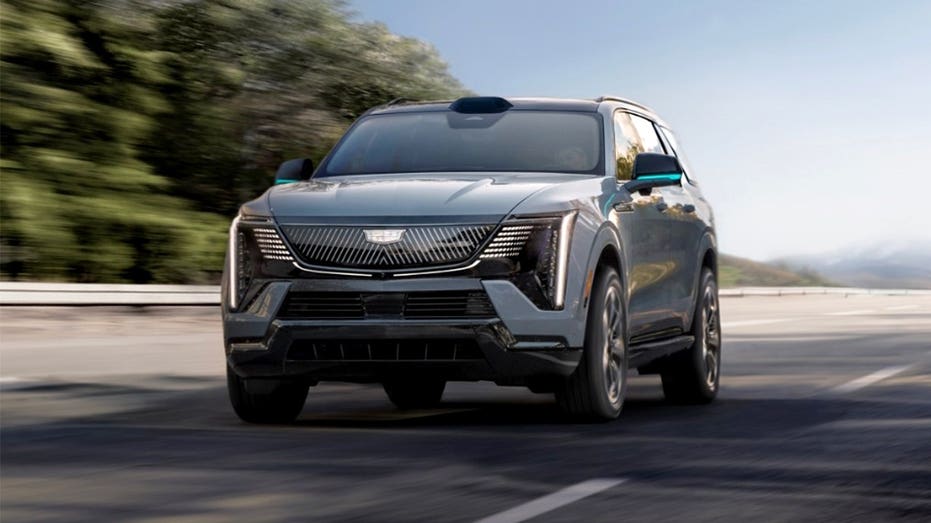
U.S. automaker General Motors plans to introduce technology in 2028 that would let drivers take their hands off the steering wheel and their eyes off the road. The company is betting that, cruising down a highway at 70 mph, a driver could answer emails, watch a show or attend a virtual meeting while the vehicle handles the driving.
The technology is expected to debut in the Cadillac Escalade IQ electric SUV. However, GM still has plenty to prove before drivers can safely look away from traffic. The company is testing how people react when a vehicle suddenly needs their attention, and that research could help determine how much warning drivers need before safely taking control.
GM already offers Super Cruise, a hands-free driving system available on more than 20 models across Cadillac, Chevrolet, GMC and Buick. It can manage steering, acceleration and braking on compatible roads under certain conditions. However, drivers must continue watching the road and remain ready to take control.
The next version of Super Cruise would remove that constant attention requirement when the eyes-off feature is active. GM plans to introduce it on compatible highways before eventually expanding to other roads. The system will use lidar, radar and cameras to monitor its surroundings. Turquoise lights on the dashboard and exterior mirrors will signal when eyes-off driving is available and active. GM says the technology could arrive as early as 2028, but the launch depends on further development, safety testing and other requirements, and availability will also depend on state laws.
GM's ambitions are also growing. On October 21, the company announced plans to bring autonomous highway driving to its full-size SUVs and light-duty pickup trucks, including gas-powered vehicles. Those vehicles represent some of GM's biggest sellers. However, the automaker has not announced when the technology will reach those additional models.
Before asking drivers to trust a vehicle with their safety, GM wants to understand what happens when people stop concentrating on driving. At its Global Technical Center in Warren, Michigan, hundreds of volunteers have climbed into real GM vehicles, including the Cadillac Lyriq. Instead of driving onto an actual highway, they enter an immersive simulator that recreates different road conditions, where researchers can introduce sudden traffic changes, construction zones and hazardous situations.
Sensors monitor the drivers' eye movements, heart rates and stress responses during the tests, helping GM understand how people behave when the technology encounters something unexpected. GM also tests its automated driving technology on closed courses and on public roads with trained safety drivers. According to the company, its simulation tools can reproduce the equivalent of 100 years of driving in a single day, giving engineers opportunities to study dangerous situations without exposing everyday drivers to those risks.
In one part of the research, GM is asking some participants to play Candy Crush while researchers study their reactions. The game creates an engaging distraction: players become focused on improving their scores, which gives researchers a way to measure what happens when they must suddenly shift their attention back to driving. According to reporting by The Associated Press, Maureen August, a senior manager at GM Research & Development, explained that the game helps researchers draw participants into an activity before interrupting them.
That interruption is especially important. At 70 mph, a vehicle travels roughly 103 feet every second. Even a five-second delay means it covers more than 500 feet — a lot of highway to travel while someone figures out why the car needs help.
The biggest question surrounding GM's plans is what happens when an automated vehicle encounters a situation it cannot safely handle: debris blocking the highway, road markings disappearing during construction, or an unexpected maneuver by another driver. GM's engineers are studying how much warning drivers need before taking control, and whether people understand the system's alerts and feel comfortable trusting the technology. An eyes-off system must be designed around the possibility that someone cannot respond immediately, which is why the vehicle's ability to handle unexpected conditions and safely manage a failed takeover becomes especially important. GM has not yet publicly detailed every situation its planned system will handle or exactly how it will respond when a driver fails to take over.
Several automakers already offer systems that reduce the work involved in highway driving, but their capabilities vary considerably. Ford's BlueCruise allows hands-free driving on compatible roads, but drivers must continue paying attention. Tesla's Full Self-Driving (Supervised) can handle many driving tasks, although it still requires active human supervision. Mercedes-Benz previously introduced its DRIVE PILOT system, which allowed conditional eyes-off driving in limited situations, but the automaker has since pulled back from that technology in the U.S. as it develops its next generation of automated driving systems. GM's larger ambition is to make eyes-off driving available at highway speeds across a broader network of compatible roads, and to expand the capability to additional models after the Escalade IQ.
There is also a financial incentive behind the push toward automated driving. Automakers increasingly offer advanced features through paid software subscriptions, and GM already charges for continued Super Cruise access after the included service period expires. According to the company's August 2026 update, equipped vehicles include three years of service, followed by plans starting at $39.99 per month. GM has not announced pricing for its future eyes-off technology.