Polls Close in Israel With No Clear Winner in Exit Polls: Likud Slightly Ahead, Anti-Netanyahu Bloc Leads Overall

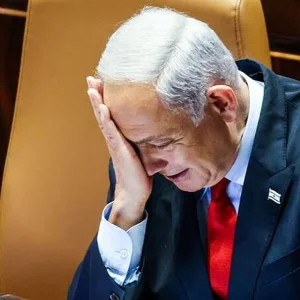
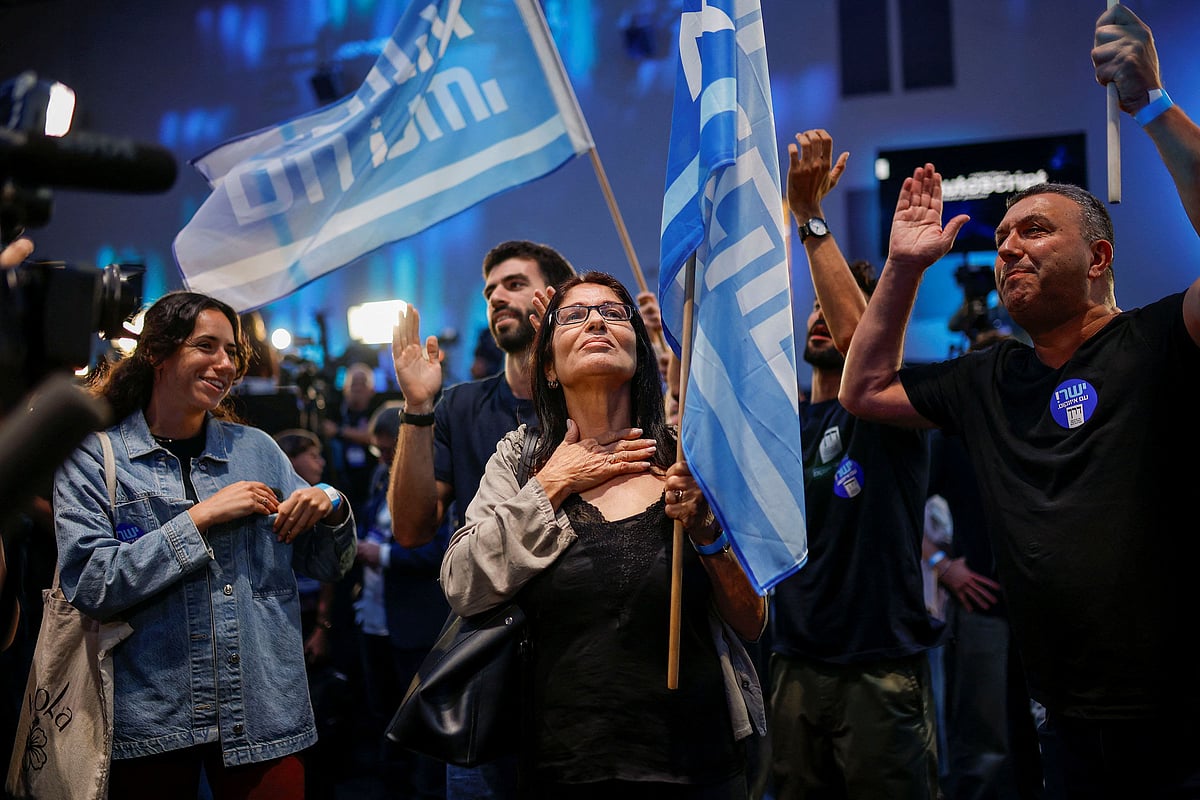
Polls have closed in Israel, and initial exit polls point to no clear victor. Exit polls published by Israel's main television networks indicated that Prime Minister Benjamin Netanyahu's Likud party held a small lead over the party of former military chief Gadi Eisenkot. But the anti-Netanyahu bloc, including two predominantly Arab parties, held a wide lead over the prime minister and his allies in the exit polls.
Polling stations closed at 10 pm local time, although people still in line will be able to vote. By 8 pm, two hours before polls were scheduled to close, 74.3 percent of eligible voters had cast ballots, the highest rate for that point in the day since 1988.
No party is expected to achieve a clear victory, which means the election will likely only be the first step in determining who will form the next government. Assembling a governing coalition in Israel's parliamentary system could take weeks or months.
Votes are tallied in Israel by hand, with ballot slips tabulated at more than 12,000 polling places across the country. The counters are monitored by camera-toting election observers. After the hand count is completed, paper tallies are taken to regional hubs where the results are recorded electronically, a process that takes hours. Exit polls give an initial sense of each party's relative strength, but they have a spotty history of accuracy, particularly in a tight race.
Turnout appeared to be particularly high among Arab citizens, who make up about a fifth of Israel's population. By late afternoon, hours before the polls were set to close, turnout in some Arab-majority towns had exceeded the totals from the last election, in 2022.
Responding to the high turnout in those towns, Mr Netanyahu accused Arab citizens of 'trying to steal the elections,' repeatedly using brazen and overtly racial appeals to push his right-wing base to vote. An attempt by his Likud party on Tuesday to have voting hours extended was rejected by the Central Election Committee. Election officials said on Tuesday that there had been no indication of widespread irregularities.
The election is Israel's first since the Hamas-led attacks on October 7, 2023, which was the deadliest day for Jews since the Holocaust and ignited three years of war that left Gaza largely in ruins and nearly all its population displaced.
Voters had a choice between two blocs offering starkly different visions. Mr Netanyahu, the leader of the most far-right government in Israeli history, built a coalition of nationalists and ultra-Orthodox Jews, which faces an ideologically diverse group of Jewish opposition parties loosely led by Gadi Eisenkot, a former military chief of staff whose son was killed in the Gaza war. Parties representing Arab citizens of Israel also staunchly oppose Mr Netanyahu's government.
Opposition leaders led by Mr Eisenkot have called for a reckoning over what they call Mr Netanyahu's failure to prevent the catastrophic October 7 attacks. They have also pledged to repair Israel's shattered image abroad, including by cracking down on Israeli extremist violence against Palestinians in the occupied West Bank. Mr Netanyahu has resisted the establishment of an independent commission to investigate the October 7 attacks.
Election day began with a protest by bereaved families of those killed in the October 7 attacks. They held a minute of silence at 6.29 am, the moment when Hamas launched its onslaught just over three years ago, in a Tel Aviv plaza known as 'hostages square.' Holding pictures of their loved ones, they called on voters to remember the losses of that day when deciding on the next government. 'Three years after the massacre, our loved ones will not be voting today. Go out and vote – remember them at the ballot box. This is what these elections are about,' the group said. One of their key demands is a state commission of inquiry into the attacks.
Eisenkot started the day by visiting communities attacked on October 7. 'If someone in the government had a shred of responsibility, they would start the morning here,' said the former military chief and leader of the Yashar party. Standing in a cheering crowd, he called on all Israelis to vote to get rid of 'the worst government Israel has known.'
Tens of thousands of Israelis who live overseas also returned to vote, because electoral law only allows voting in person. A bipartisan 'Fly&Vote' initiative was set up to support those who wanted to return. Monica Moria, 58, and her husband, Ron, flew in to Tel Aviv from Barcelona and took a train to a kibbutz where she is registered to vote, casting her ballot for the Democrats, the most leftwing of the Jewish Israeli parties. 'It feels like Israel has lost its way, there are deep divisions and hatreds that will be very difficult to heal,' she said. Kobi Mizrahi, 35, who has been completing a PhD in New York, paid more than $1,600 to come back to Israel for just a few days and vote. More than 500,000 Israelis have reached voting age since the last election in 2022.
President Trump has endorsed Mr Netanyahu, praising him as an important partner in the war against Iran and saying anyone else would be the 'wrong leader' for Israel. Analysts were skeptical that the US president's intervention would sway many voters. The 77-year-old leader has dominated Israeli politics for decades and in recent days repeatedly suggested that the country could face annihilation without him in charge.