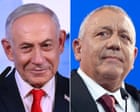
Netanyahu's Bloc Wins the Most Seats in Israel's Election but Falls Short of a Majority as Arab Parties Surge
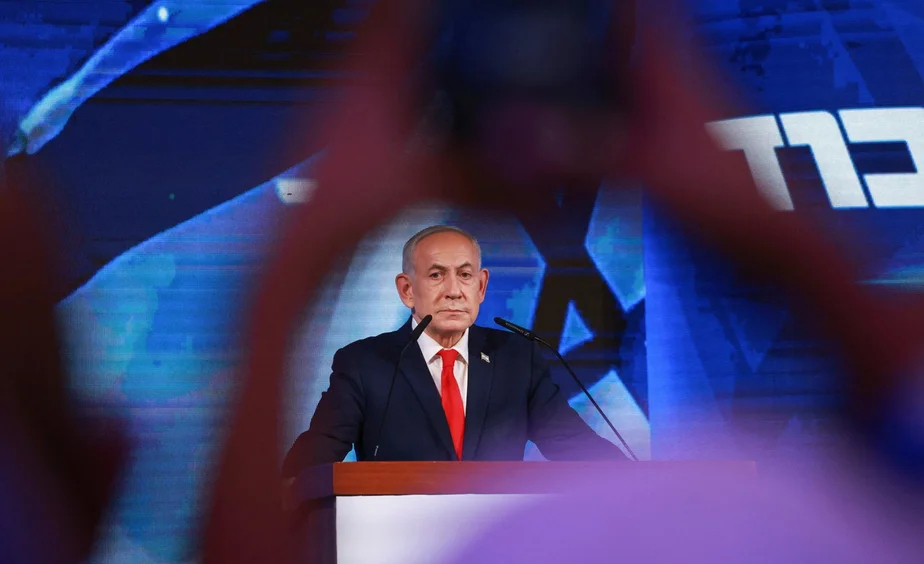
Prime Minister Benjamin Netanyahu's bloc has won the most seats in Israel's election but is struggling to form a government. The picture emerged from the Central Elections Committee's latest figures on Wednesday morning (October 29), after about five million votes had been counted.
Forming a government requires 61 seats in the Knesset. But according to the Elections Committee's latest count, Netanyahu's bloc stands at 53 seats — eight short of a majority.
By the committee's count, Netanyahu's Likud party is set to win 26 seats. United Torah Judaism, Shas and Otzma Yehudit are each set to win seven, and the Religious Zionist Party six — bringing the bloc's total to 53.
The opposition bloc led by Gadi Eisenkot, on the other hand, is set to win 48 seats. The bloc includes Yashar, the Together alliance, Yisrael Beiteinu and the Democrats.
Among the opposition parties, Eisenkot's Yashar is set to win 21 seats. The Together alliance led by Naftali Bennett and Yair Lapid is set to win 12, Yair Golan's Democrats eight, and Avigdor Lieberman's Yisrael Beiteinu seven.
The Arab parties have increased their seat tally to 19 in this election. Of these, the Joint List is set to win 12 seats and Ra'am seven. If this result holds, the Arab parties could play a decisive role in determining which of the two main blocs forms the government.
The latest results, however, have deepened uncertainty over government formation in Israel. The prospect of a unity government between Netanyahu and Eisenkot appears slim for now. Eisenkot has ruled out joining a government under Netanyahu; he is not willing to work under Netanyahu even in a government formed on the basis of a rotating premiership offer. Other leaders of the opposition bloc have also ruled out joining a Netanyahu-led government.
Eisenkot has called for the leader of the opposition bloc's largest party to be nominated for prime minister. But there is still no agreement within the bloc on the question.
The latest results and exit polls have also raised the possibility of a minority government that could win a confidence vote in the Knesset but would not command an outright majority of 61 seats. However, objections within the opposition bloc to relying on the support of Arab parties could complicate the formation of such a government as well. The political deadlock could ultimately lead to a new election, although the parties could still reach an understanding through coalition talks before that.
Meanwhile, Democrats chairman Yair Golan said Netanyahu's bloc has lost the 2026 Knesset election. Counting the Arab parties together with the opposition bloc, their seat total stands at 65, he claimed. Speaking on Wednesday morning, he said: 'Netanyahu has lost. I know how to count to 120. Sixty-five is more than 55. That is how Israeli democracy works.'
Calling for the Arab parties to be included in the next government, Golan said that if Netanyahu considers forming a Zionist coalition, he would have to drop the 16 members of parliament from the non-Zionist Haredi parties in his own bloc. He added: 'We have a majority. We have a responsibility. And we have the opportunity to form a government of change in partnership with Israel's Arab citizens — a government that works for all Israeli citizens.'
Joint List chairman Youssef Jabareen also expressed readiness to cooperate with the opposition to remove the Netanyahu government. In a post on the social media platform X, he said: 'Against bloodshed, domination and racism, we offer a completely different, alternative proposal. Change can come through Jewish-Arab partnership.'
Later, in an interview with Army Radio, Ahmad Tibi, chairman of the Joint List's parliamentary faction and a Hadash-Ta'al leader, also signalled positively about working with the opposition. He said the opposition bloc would be able to form a government if it shows courage, and that the Arab parties are ready to extend a hand of cooperation.
Netanyahu, for his part, has stressed forming a right-wing government to ensure Israel's long-term security. He has said the country cannot be governed in coalition with Arab parties that oppose Israel's existence. Although he has lost an outright majority, the latest results suggest he could remain in power as caretaker prime minister.