Tourist cap jumps 75 percent at once: how much pressure of 3,500 tourists a day can St Martin bear
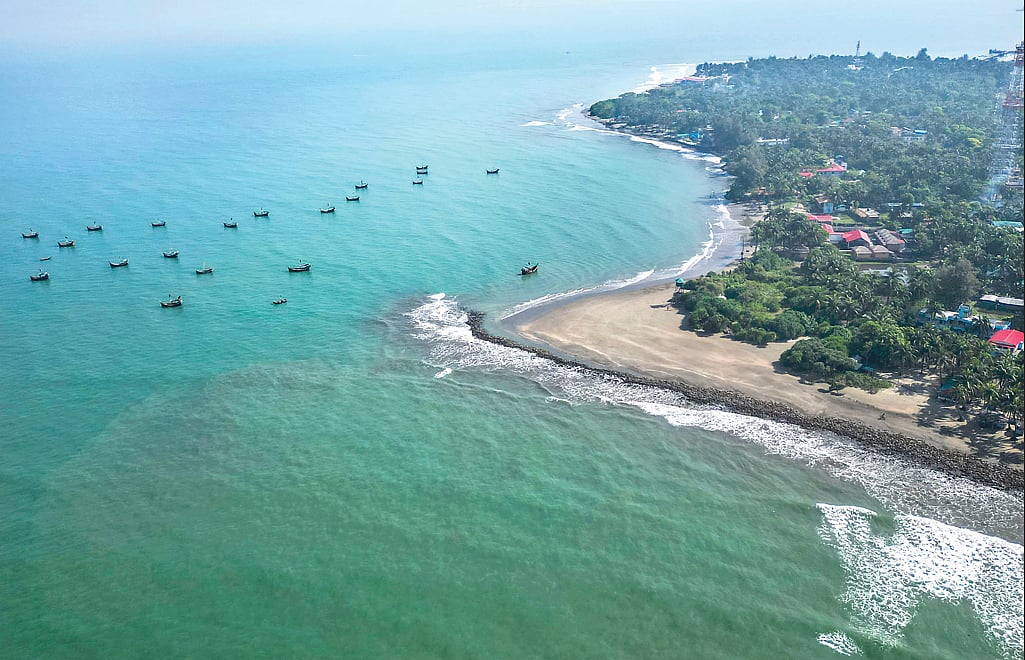
To protect its ecosystem, St Martin had a limit of an average of 2,000 tourists a day. The government has now raised it to 3,500. The overnight stay facility has also been extended from two months to four and a half months. But questions have been raised over whether any updated scientific study has been done to determine how much of this extra pressure the island’s water, waste management and ecosystem can bear.
St Martin is an ecologically critical area. As tourist numbers rise, sewage, garbage and human movement on the beach will rise along with the demand for drinking water. Environmental activists have questioned whether the new limit was set with these pressures in mind. In their view, the island never developed adequate arrangements even to handle the pressure of the previous 2,000 tourists. Adding another 1,500 tourists will put the ecosystem at fresh risk.
Under the government decision, tourists will be able to visit St Martin from November 1 to March 15. Each visitor will have to pay an environmental conservation fee of Tk 100.
After confusion arose over overnight stays, the Ministry of Environment, Forest and Climate Change issued a fresh notification last Tuesday to clarify the matter. It said overnight stays will be allowed from November 1 itself. Previously, overnight stays were permitted only in December and January.
St Martin was declared an ecologically critical area in 1999. Lighting on the beach at night, loud noise and barbecues are prohibited. There are also various restrictions to protect the keya forest and biodiversity. Questions have also been raised over how much monitoring will be increased to enforce these restrictions alongside the rise in tourist numbers.
After August 5, 2024, the former interim government restricted tourist movement to St Martin. Through online registration, 2,000 tourists a day could visit the island during the three months from November to January. The island remained almost tourist-free for the rest of the year.
In the last two seasons, 237,000 tourists visited the island, less than half the figure of three years ago. This also brought environmental benefits, according to those concerned.
Alongside controlling tourism, the interim government also took initiatives for alternative employment for the island’s residents. A project was taken up for this. It included training for local residents and two months of financial grants for a fixed number of families directly dependent on tourism.
A draft master plan for St Martin was also finalised. It emphasised building a tourism system centred on the local community and friendly to nature.
A high-level source at the environment ministry said ship owners and hotel-resort owners had sought permission for at least 6,000 tourists a day. After discussions, the number was reduced to 3,500.
Environment Minister Abdul Awal Mintoo was contacted for comment on the increase in tourist numbers. He was busy and could not speak. Questions sent to his office’s public relations officer Tofazzal Hossain also went unanswered. Ministry secretary Fahmida Khanam is abroad. She did not respond despite contact over WhatsApp and written questions.
Decades of unplanned tourism and unchecked construction have devastated St Martin’s ecosystem. Especially during the Awami League government, hotel after hotel, resort and cottage sprang up across the island. Many structures had neither environmental clearance nor fire safety approval. There was no limit on tourist numbers either. As tourist crowds grew, so did plastic and other waste. The beach and the surrounding sea became polluted.
According to environmental activists, the island had begun to reap the benefits of the interim government’s steps. With fewer tourists, the tendency to dump waste on the beach declined. Research also found signs of improvement in seawater quality while tourism was closed. The ecosystem had a chance to get some relief from long years of pollution and the pressure of unrestricted human movement.
Now that the daily tourist limit has been raised by 75 percent at a stroke, fears have arisen over holding on to those gains. Extra tourists will increase water use in hotels and resorts. Sewage, plastic bottles and food packaging will increase. Without adequate waste treatment and removal arrangements, this pollution will spread to the beach and the sea. At the same time, human movement in the habitats of coral and marine animals will also rise.
Mohammad Kamal Hossain, supernumerary professor at the Institute of Forestry and Environmental Sciences of the University of Chittagong, said that considering the island’s environmental carrying capacity, 1,100 to 1,200 tourists a day would be reasonable. Yet the tourist number has been raised to 3,500 without significantly increasing the capacity of drinking water supply, waste management and necessary infrastructure. A scientific assessment of how much pressure the island can bear was needed before raising tourist numbers.
Raising the sensitivity of coral and marine biodiversity, he said mass tourism may be possible in Cox’s Bazar. But the same arrangement is in no way acceptable in St Martin. The island’s ecosystem cannot be put at risk for tourists’ recreation. If tourist numbers are raised to satisfy people involved in the tourism business, the environment will suffer.
St Martin is Bangladesh’s only coral-rich island and an important habitat for the country’s marine biodiversity. According to the Department of Environment, the island once had about 1,076 species of biodiversity. It was a safe habitat for coral, sea turtles, algae, snails, oysters and various species of migratory birds. Over the last two decades, many species have been lost due to plastic pollution and unplanned infrastructure construction.
Comments have also come that the decision to raise tourist numbers has no scientific basis. In the past, the Department of Environment, the Oceanographic Research Institute and other concerned agencies were involved in setting tourist and overnight stay limits. This time, it has been alleged, tourist numbers were raised at the request of resort owners and local political figures. It has also been said that where the Tk 100 collected from tourists will be spent needs to be clarified.
Syeda Rizwana Hasan, environment adviser to the former interim government, said the administration had struggled enough to enforce the previous limit of 2,000 tourists. Her question: how will effective monitoring of 3,500 tourists now be possible?