Navy ends 22-day mother hilsa operation: illegal nets and gear worth Tk 61 crore seized
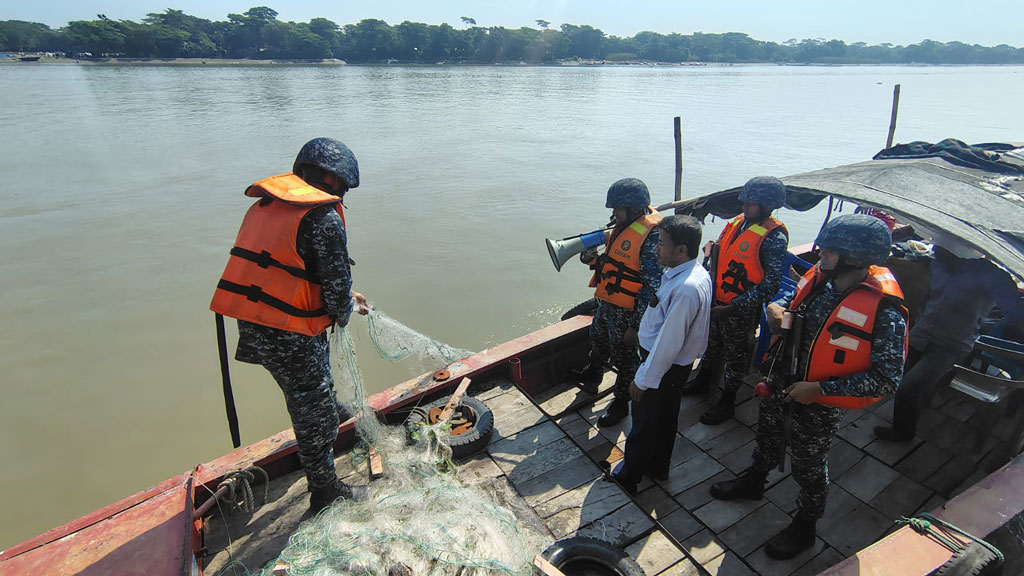
The Bangladesh Navy has completed a 22-day special operation to protect mother hilsa. The estimated value of the items seized during the operation, conducted from 8 to 29 October, is Tk 61 crore 18 lakh 3 thousand 890. The Inter Services Public Relations Directorate (ISPR) disclosed the information in a press release on Friday.
According to the ISPR release, the Navy conducted 212 drives over the 22 days and seized 8,421,670 metres of illegal nets, 166 nets of various types, four boats and 570 kilograms of mother hilsa. A fine of Tk 6,000 was also collected during the operation.
The release said the Navy conducted the operation under 'In Aid to Civil Power' to ensure the safe breeding, reproduction and conservation of hilsa, a national resource.
During the 22-day operation, regular patrols and surveillance were carried out in nine districts using seven ships and various contingents. Drives were conducted at the main hilsa breeding grounds in the sea, coastal areas and the country's inland rivers.
To prevent the illegal intrusion of domestic and foreign fishing vessels into the deep sea and hilsa catching during the ban period, surveillance was also carried out with maritime patrol aircraft alongside naval ships, the release said.
The Navy worked in coordination with the local administration, other law enforcement agencies, the Bangladesh Coast Guard, the river police and the Department of Fisheries to carry out the activities.
The illegal nets seized in the drives were destroyed in the presence of the local administration. The seized jatka (juvenile hilsa) was donated to local orphanages. People who violated the ban and the fishing boats were handed over to the local administration for legal action.
Awareness campaigns were also conducted among fishers during the operation, according to the ISPR release.
The ISPR said such operations play an important role in increasing the country's hilsa production by ensuring an undisturbed breeding and reproduction environment for mother hilsa. At the same time, they are paving the way for the conservation and sustainable management of the country's marine and inland fisheries resources.
With the ban period over, fishers are once again able to catch fish and earn their livelihoods normally, the release said.