Your walking speed may hold a clue to how long you will live, study of over 4,000 older adults suggests
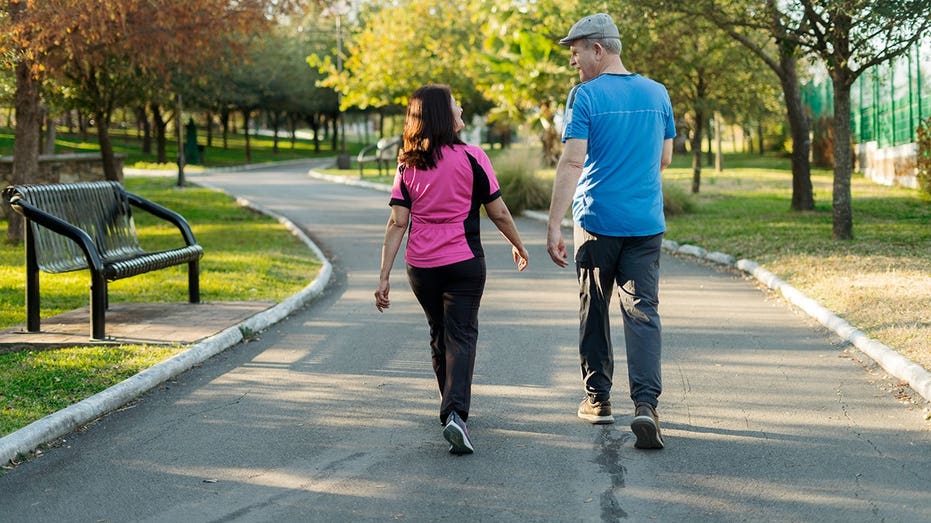
The speed at which a person normally walks could offer an important clue about their overall health and longevity, new research suggests. The study was published in the medical journal JAMA Network Open.
The study followed 4,067 adults in the United Kingdom, who were about 69 years old on average. The researchers wanted to see whether the participants' usual walking pace was linked to their risk of death over time.
Participants first completed a short walking test at their normal pace. They then wore a wrist activity tracker for nine days so their walking speed could be captured during everyday life.
Over nearly 12 years of follow-up, faster walking in both settings was linked to a lower risk of death, even after the researchers accounted for other health and lifestyle factors. A total of 739 participants died during that period.
Beth Templin, a board-certified geriatric clinical specialist and chief executive of HouseFit Physical Therapy and Fitness in St. Louis, who was not involved in the study, told Fox News Digital that walking speed can offer a broader look at how well the body is functioning.
Templin said that in physical therapy, walking speed is called the sixth vital sign because it is a snapshot of how well many body systems are working together. To walk briskly, she said, a person needs strong legs, a healthy heart and lungs, good balance, and a brain and nervous system that can coordinate it all.
When walking speed starts to slip, she added, it is often an early warning sign that one of those systems is declining, sometimes before anything shows up on a lab test.
For older adults who want to improve their walking speed and overall fitness, simply taking more steps may not be enough, Templin advised. She urged people to build the engine, not just the habit, because speed comes from strength and balance.
She suggested strengthening the legs with simple exercises, such as standing up from a chair without using the hands and doing heel raises while holding onto a counter. She also recommended adding short bursts of faster walking: after warming up, walk briskly for one minute, slow down for two minutes, then repeat, gradually increasing the faster periods.
Experts cautioned, however, that the findings do not mean simply walking faster will make someone live longer. Templin said the study shows an association, not proof that walking faster by itself adds years.
The researchers themselves noted limitations. The participants included in the study were generally healthier than the larger population, and there is no single standard method for measuring everyday walking pace with wrist activity trackers. More research is needed to determine whether the findings apply to other groups, they said.