10 platoons of BGB deployed in Gazipur amid garment worker protests, led by 21 executive magistrates
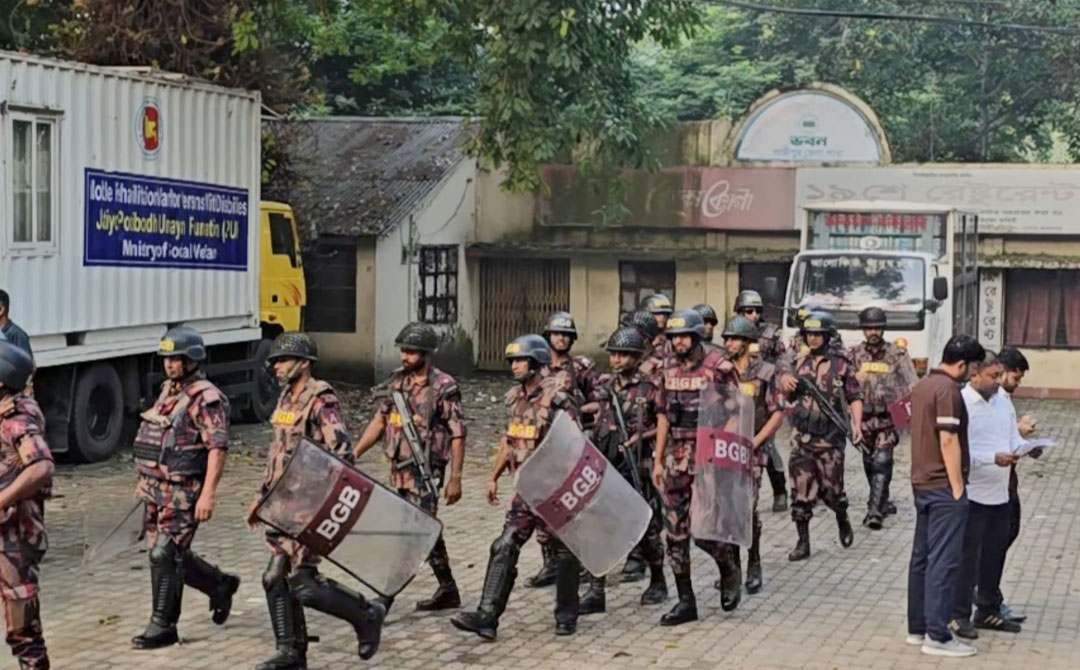
Ten platoons of Border Guard Bangladesh (BGB) have been deployed in Gazipur to control the ongoing movement by garment factory workers pressing demands including higher wages, and the situation it has created. BGB members will work under 21 executive magistrates to keep law and order normal in the district's industrial areas. Gazipur Deputy Commissioner Mohammad Nurul Karim Bhuiyan confirmed the deployment on Monday morning (2 November).
The deputy commissioner said the 10 platoons were deployed in view of the ongoing worker protests in industrial Gazipur. BGB members led by 21 executive magistrates will work to control the law and order situation. Law enforcement agencies are working so that no state property or people's lives and property are harmed in the name of movement. BGB members have already taken position in the field, and members of other law enforcement agencies are also ready.
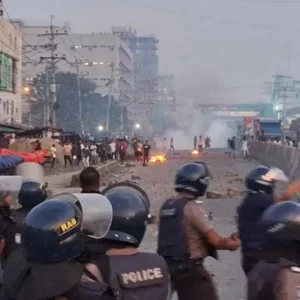
For the past few days, workers of different garment factories in Gazipur have been protesting by blocking the Dhaka-Tangail and Dhaka-Mymensingh highways with demands including wage increases. During this time, allegations were raised against agitated workers of setting fire to a police box, a factory warehouse and a police vehicle.
On Sunday, garment workers protested throughout the day in Kaliakair, Gazipur, demanding a minimum wage of 30,000 taka. From the morning they blocked the Dhaka-Tangail highway and carried out vandalism and arson at different places. A police box, a factory godown, a market, a bank branch, shops and vehicles were damaged. After traffic remained halted for about six hours, workers left the highway at noon after law enforcers fired tear shells and sound grenades. Traffic then resumed, though movement was slow because of extra vehicles.
Centred on these incidents, clashes took place repeatedly between workers and law enforcement members. Workers and law enforcers were injured, several people were detained, and authorities of many garment factories in the district declared holidays for security reasons in the situation that arose.
On Sunday noon, a fire broke out in the jhut warehouse of a factory named Tropical Knitex Limited in the Chandra Palli Bidyut area of Kaliakair, Gazipur. The fire service received the news at noon, but reaching the spot was difficult because traffic on the Dhaka-Tangail highway was halted due to the worker protests.
Reports in newspapers published from Dhaka on Monday said production stopped in 529 garment factories in different industrial areas of the country in a single day due to labour unrest. About 987,000 workers of those factories left their workplaces without working yesterday. Factory owners fear production may be disrupted today as well if the situation does not improve.
In this situation, a review meeting on the garment industry was held on Sunday night (1 November) at the Secretariat with Prime Minister Tarek Rahman. After the meeting, Home Minister Salahuddin Ahmed told journalists that the prime minister had directed that necessary steps be taken to protect garment workers' interests, improve their living standards and increase their financial capacity. He also stressed keeping production and export activities in the garment industry normal and uninterrupted.
The home minister said there is a provision to form a wage board every three years to re-fix workers' minimum wage. Although time remained until next December, the government took the initiative to form the board early after discussions with owners and workers. The owners gave their representative's name, but receiving the workers' representative's name was delayed. After the workers' side name was received last night, the wage board was formed and a gazette issued this (Sunday) morning.
He said representatives of owners and workers on the wage board will fix the minimum wage through discussion, considering workers' living standards, living respectably with their families and their financial capacity. Noting that the path of discussion on wages remains open, he said there was no need for a violent movement in this case.
The home minister said incidents took place in the name of movement such as setting fire to police vehicles, attacks at different places, vandalising vehicles and arson in factories. None of these is acceptable. Law enforcement agencies have been instructed to strictly suppress anyone involved in violence, unruly behaviour or attempts to create disorder and instability without reason.
In reply to a question, the home minister claimed that analysis of information available to the government showed some people from across the border were instigating by using innocent garment workers. Through this, attempts were being made to create instability in the country, disrupt export trade and obstruct garment production. He said the government would strictly suppress such activities.
Labour and Employment Minister Ariful Haque Chowdhury, meanwhile, announced the formation of the wage board and called on workers to leave the movement and return to work. With the BGB deployment in Gazipur on Monday morning, the industrial-area situation now depends on the government's announced steps and the law and order arrangements in the field.