Betel leaf output halves as rain fails, Khasia growers in Moulvibazar face hard times
Hard times have hit betel leaf cultivation in the Khasia punjis of Moulvibazar. Production has fallen this year because there was not enough rain. Unfavourable weather has also shrunk the size of betel leaves, pushing prices down. At the same time, labour wages and the cost of inputs have risen. Taken together, growers are seeing no profit.
Betel leaf cultivation is the main livelihood of the Khasia people. There are about 65 small and large Khasia punjis in the hilly areas of Sreemangal, Kamalganj, Kulaura, Juri, Barlekha and Rajnagar upazilas of Moulvibazar district. In these punjis, betel leaf is grown naturally in the shaded forests on the hillocks, using traditional and environment-friendly methods.
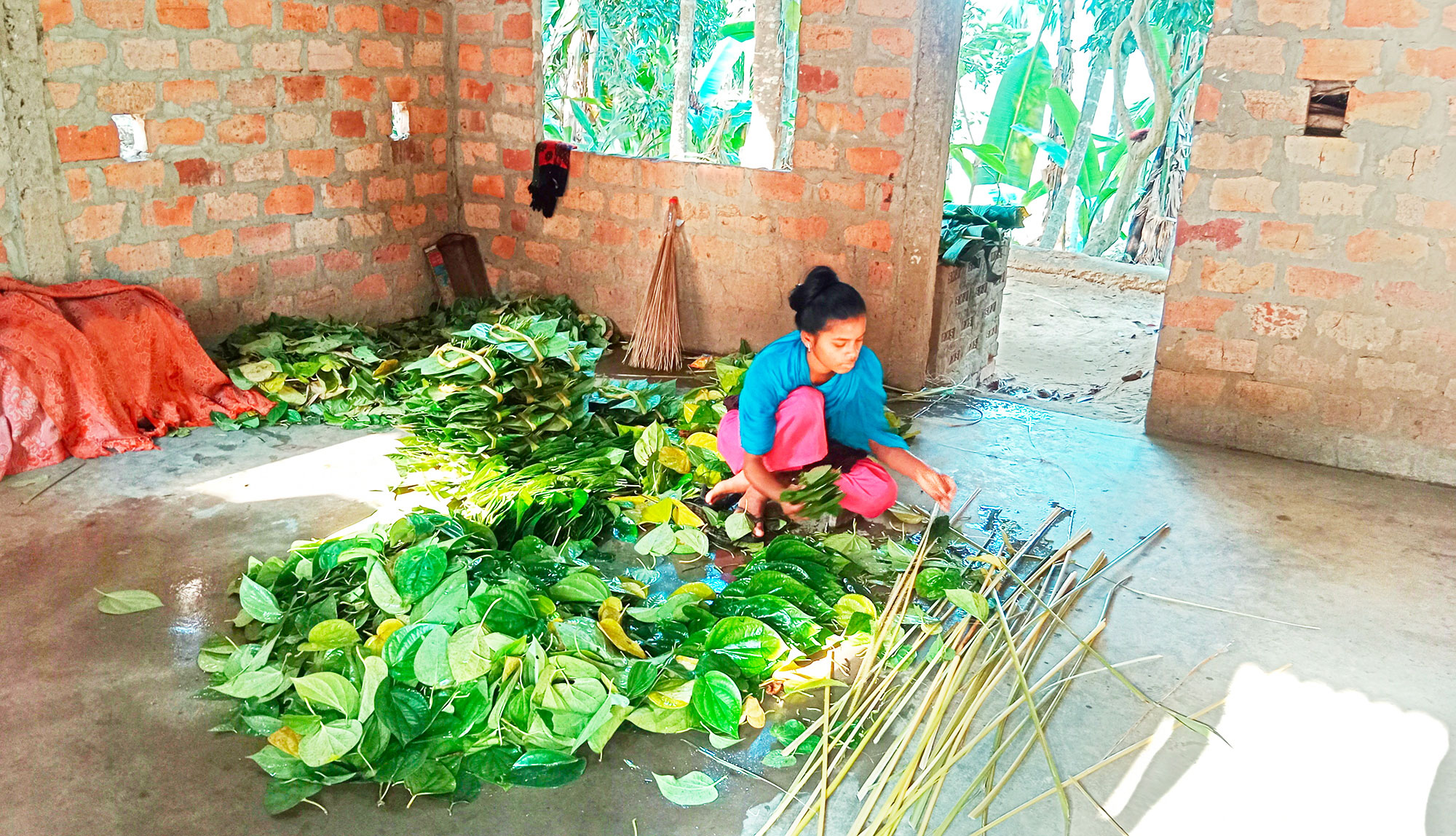
Men of the punjis go to the jhum or baraj to tend the plants and collect the leaves. Women sit together in groups and, with great skill, arrange the leaves into 'guchhi' bundles ready for market. The lives, heritage and culture of the Khasia community are bound up with this betel leaf cultivation.
Khasia growers say that although the monsoon is the peak season for betel leaf, nature's whims have changed the picture this year. With insufficient rain in September and October, production has fallen to nearly half. Where mature leaves could earlier be collected every month and a half, growers now have to wait two to two and a half months.
It is not only production that has fallen. Adverse weather has also made the leaves smaller. Small leaves fetch less demand and a lower price in the market, so growers are missing out on the profit they expected. Meanwhile, the prices of labour, fertiliser, pesticides and all other inputs have risen many times over.
Depending on the season, twenty betel leaves sell for 500 to 3,000 taka. In a normal peak season, weekly sales reach 10,000 to 12,000 taka. But with less rain this year, only 5,000 to 6,000 taka worth of leaves is being sold each week. Growers are incurring losses.
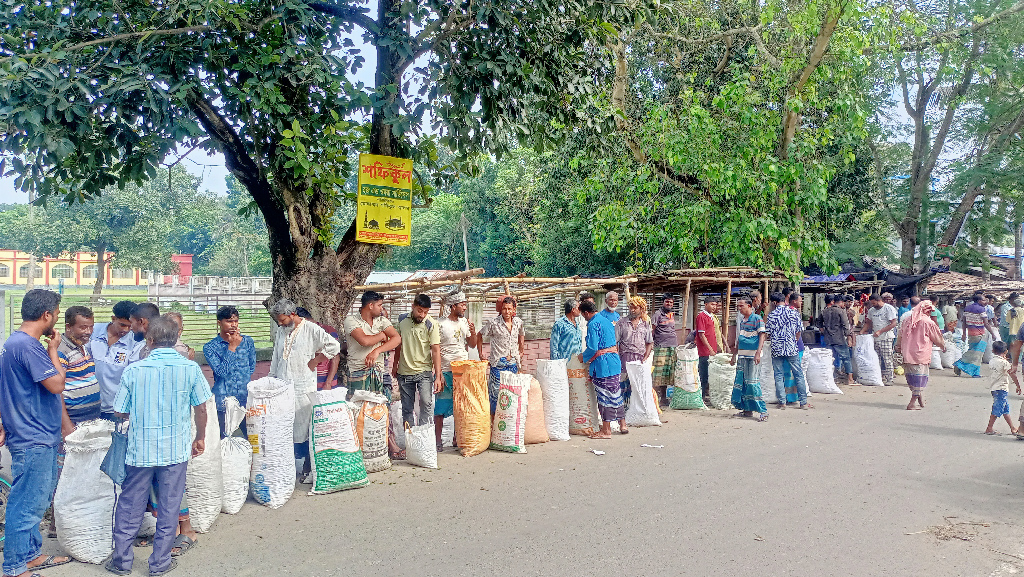
Traders in Dhaka used to collect large leaves and export them abroad. But this year, with the leaves smaller and their colour somewhat dull, exports have fallen. That has cut growers' incomes further.
Dibormin Potam, a resident of Nahar punji in Sreemangal, said the season had begun with some hope, but from June to October they had to sell leaves at very low prices for a long stretch. Now, with winter arriving, the betel leaf season is coming to an end, and many jhums are nearly empty of leaves. Families in the punjis are falling into severe financial crisis as a result.
Potam added that with daily essentials becoming costlier, growers are at a loss because they are not getting a fair price for their leaves. Many are borrowing from moneylenders or other sources to run their households. It has become difficult to run a family on the income from selling betel leaves.
Fila Potmi, headman of the Lawachhara Khasia punji, said, "After fighting off various diseases and pest attacks on the leaves, even the small amount produced this year did not get a fair price. The price of everything around us is rising, yet the price of betel leaf — our only source of income — is falling day by day. If there had been government financial assistance and patronage, we would not have had to see these hard times."
Biwanli Sung, headman of the Hiramotichhara Khasia punji in Madhabpur union of Kamalganj upazila, said, "Wholesalers no longer buy leaves paying the prices they used to. We are facing severe financial hardship with our families. Even so, drawn by the century-old tradition of our forefathers and our livelihood, we are holding on to betel leaf cultivation."
Saju Marchiang, publicity secretary of the Khasi Social Council, the organisation of the Khasia people, said the Khasia economy is entirely centred on betel leaf. With less leaf in the jhums and no fair price, everyone, including the young generation, is frustrated. Although Khasia betel leaf is exported abroad and brings honour to the country, the producers remain neglected to this day.
Marchiang added that unless the government provides easy-term loans and a proper marketing system, it will be difficult to preserve this heritage. Betel leaf growers want easy-term loans and patronage from the government.
Md. Jalal Uddin, deputy director of the Department of Agricultural Extension in Moulvibazar, said the agriculture department regularly provides advice and support to solve growers' various problems. If any new problem appears in betel leaf cultivation, it will be examined seriously and necessary steps will be taken.