What Matters Is Where Loan Money Is Spent, Not the Amount: Titumir in Cox's Bazar
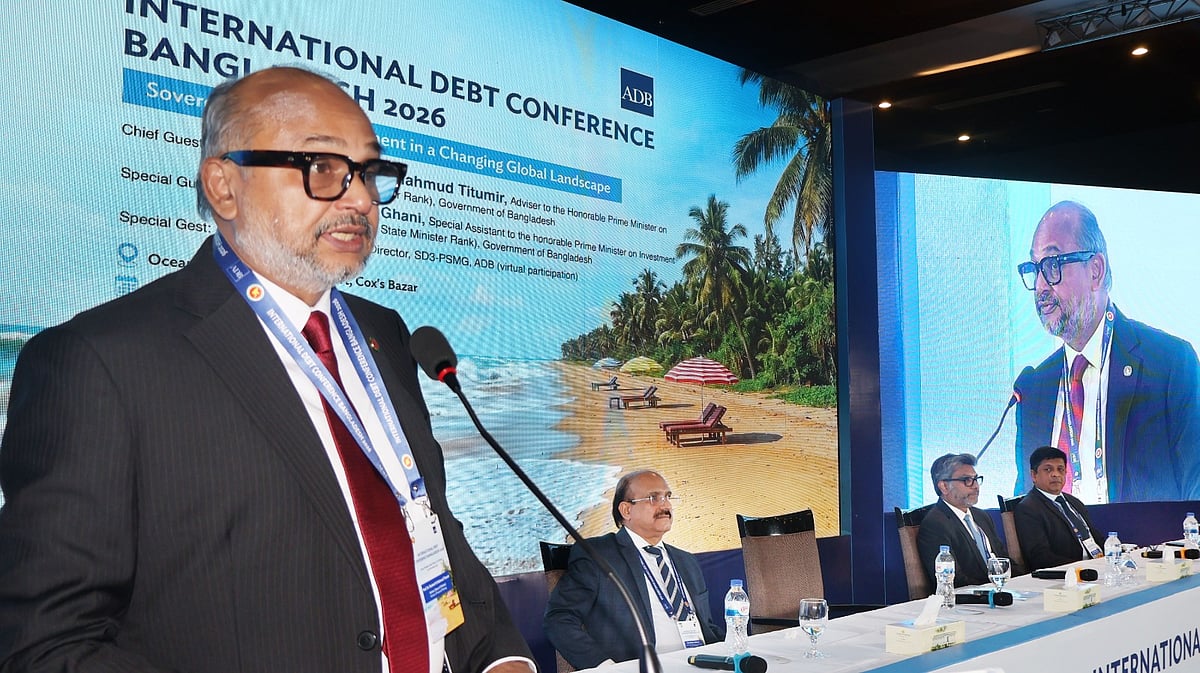
It is not the amount of borrowing that matters, but how productively the money is used, the Prime Minister's adviser for the finance and planning ministries, Rashed Al Mahmud Titumir, has said. He said transparency, accountability and national ownership must be ensured in debt management.
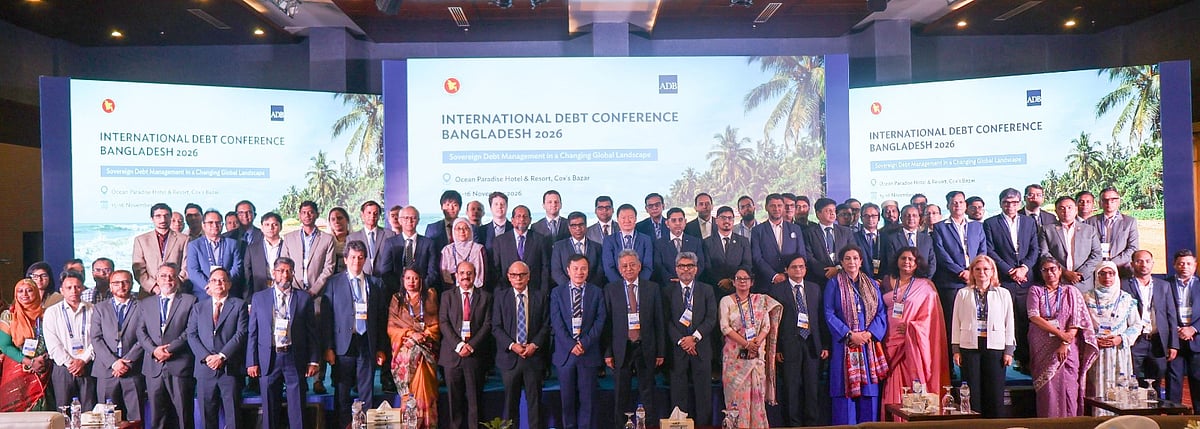
He made the remarks on Monday as chief guest at the closing ceremony of a two-day international debt management conference in Cox's Bazar. The Prime Minister's special assistant Tanvir Shahriar Gani attended as special guest.
Representatives of the Asian Development Bank (ADB), the World Bank, the International Monetary Fund (IMF) and domestic and foreign policymakers and lending institutions took part in the conference.
In his speech, Rashed Al Mahmud Titumir said Bangladesh repaid 4.49 billion US dollars (449 crore dollars) in foreign debt, including principal and interest, in the 2025-26 fiscal year. As grace periods expire, annual debt repayment could rise to about 5.5 billion dollars (550 crore dollars) by the 2030 fiscal year. In some scenarios, it could reach 7.6 billion dollars (760 crore dollars).
Titumir said the immediate pressure of debt repayment is real. But it should not be viewed separately from Bangladesh's repayment capacity and its commitment to its obligations. The pressure is rising now because loans taken in the past are maturing. This period must be faced responsibly, he said.
He placed special emphasis on increasing revenue collection to strengthen repayment capacity. Raising revenue by just 2 percent relative to GDP over the next five years would significantly increase the capacity to repay debt, he said.
Titumir also stressed the use of financing instruments such as long-term bonds and sukuk to extend loan maturities and reduce refinancing risk.
He further said the government aims to turn Bangladesh into a one-trillion-dollar economy by 2034 and build the country into a hub of production and exports. To that end, the financing strategy must be linked with economic diversification, export capacity, technological development, infrastructure, skills development and climate resilience.
Titumir said the basis of the government's five-year reform and development strategy is the 'Three-R' — recovery, re-establishment and reconstruction. Through it, plans have been taken to restore confidence in the economy, increase investment and strengthen institutions.
At the same event, the Prime Minister's special assistant for investment and capital market affairs, Tanvir Shahriar Gani, said debt policy is not merely a number in a report. It has a direct impact on ordinary people's lives. When a dollar crisis appears in the country, ordinary people and businesses suffer the most.
Giving examples, he said debt and financing management also lies behind a Chattogram shopkeeper's rising fuel costs, medical supplies stuck at a port, or a factory's operations stalling when it tries to create new jobs.
Tanvir Gani said, 'The IMF and World Bank frameworks tell us whether a debt is sustainable. But they do not tell us whether taking the debt was justified in the first place. Making that judgment is our responsibility, and explaining it is also our responsibility.'
He added that doors open only for a country that everyone can clearly understand — meaning the matters must be comprehensible to the country's people, the institutions that run the country, and the world that will lend to Bangladesh. He identified clear communication as important for winning the trust of global lenders and investors.
Tanvir Gani said, 'I have worked on the lender's side. When we could not understand a country, we did not directly say no. But we raised the interest rate or lent for a shorter period. There is always a price for failing to explain yourself, and someone has to pay that price.'
Tanvir Gani emphasised two things: first, building the capacity of the country's own debt management institutions; and second, connecting Bangladesh with new sources of global capital.
The Prime Minister's special assistant announced two initiatives to increase transparency and accountability in public debt management. A joint taskforce comprising different ministries will be formed, through which data and statistics from different offices will be harmonised, he said.
In addition, a report open to the public will be published every three months. It will present the progress of the government's work in debt management and the areas where there has been no progress.