Why sneezing and colds worsen on rainy days, and what is advised to ease allergies
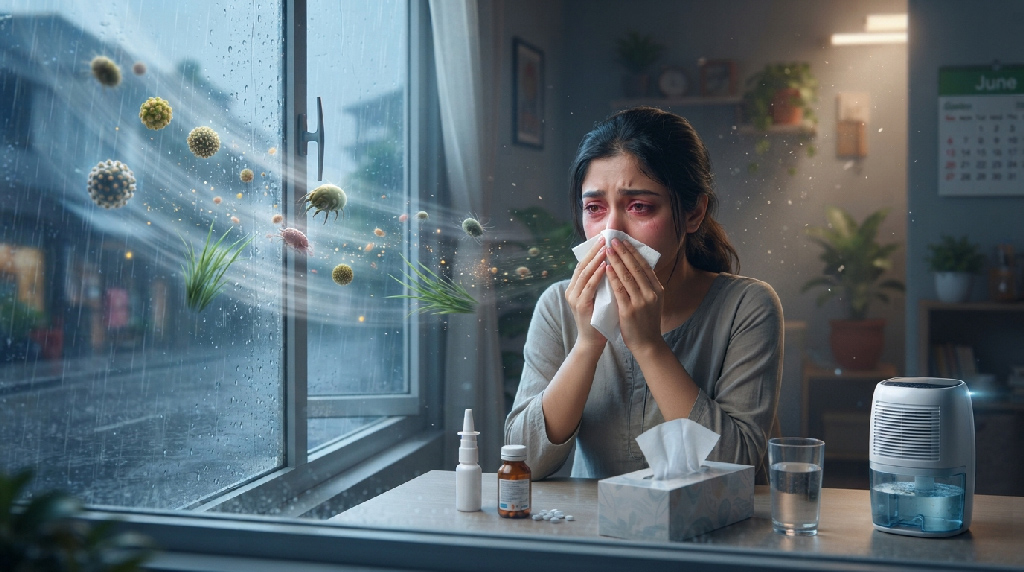
On rainy days, many people's allergy problems get worse. Some sneeze repeatedly, some get a runny nose, and others develop itchy eyes or a cough.
A health report says rain may ease allergy symptoms for some people but can make them worse for others. Problems are especially likely on rainy days for people allergic to pollen, grass, dust and mould.
Rainwater breaks pollen into tiny particles that spread further through the air. Because these tiny particles spread easily, they can enter the body with breathing, which can worsen symptoms for people allergic to pollen.
The report also says the amount of pollen in the air can sometimes rise significantly even after rain.
Rain increases humidity in the environment. Dust mites and mould grow in warm, humid conditions. Dust mites are extremely small creatures that live in household dust and cannot be seen with the naked eye. They can worsen allergy problems indoors and outdoors.
With humidity and warmth, mould grows inside and outside homes, and the report identifies it as one of the causes of breathing difficulties and allergies.
In heavy rain, grass pollen breaks up and drifts through the air, increasing allergy problems.
Many people spend more time indoors on rainy days. That increases the chance of contact with dust, mould and allergy-triggering material shed from pets.
The type and symptoms of allergy can differ from person to person. For many, symptoms ease somewhat when rain starts but become severe again later in the day as pollen spreads through the air.
To reduce symptoms, keeping house windows closed during rain, especially in allergy season, is advised. A dehumidifier can be used to remove excess indoor humidity.
Keeping the home clean regularly so dust does not accumulate, and regularly checking whether there are holes in the roof or walls to prevent water seeping in and dampness, were also mentioned.
Antihistamine medicines and saline nasal spray may be used on a doctor's advice. If allergy symptoms are extremely severe and ordinary medicine does not work, seeing a doctor quickly is advised; the doctor may, if needed, recommend advanced treatment including immunotherapy injections.