Researchers at BAU and BTRI identify a tea genotype that can withstand severe drought
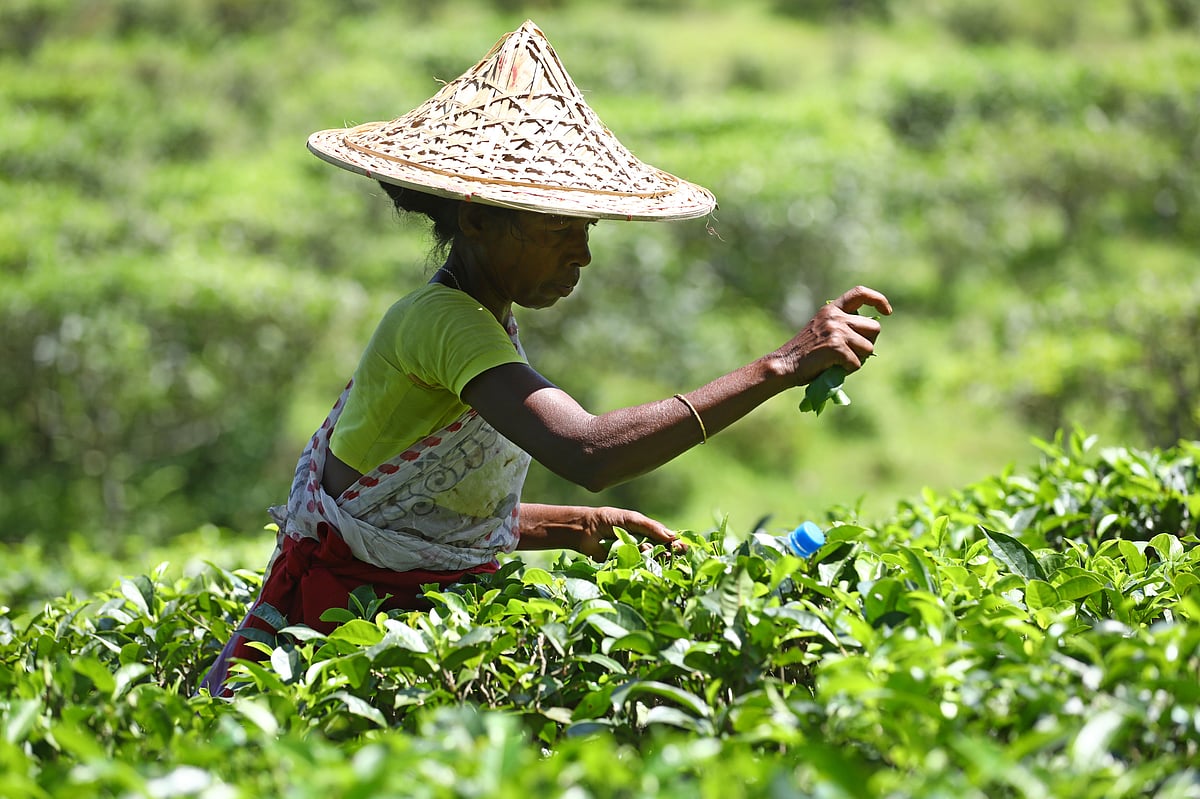
Climate change is bringing irregular rainfall, long heatwaves and severe drought, which is becoming a major challenge for agriculture in Bangladesh. The impact is also falling on tea, one of the country's main cash crops. In the tea gardens of Sylhet, Moulvibazar, Habiganj and Chattogram, a lack of adequate rain severely disrupts the sprouting of new buds, leaf growth and overall production.
Against this backdrop, a team of researchers from Bangladesh Agricultural University (BAU) and the Bangladesh Tea Research Institute (BTRI) has offered hopeful news. Their joint study comparatively evaluated five tea genotypes and one conventional variety. A genotype named B/8/93 was identified as the most drought-tolerant. Another genotype, MZ/39, showed excellent adaptability at field level.
The research was led by Professor Md. Ashrafuzzaman of BAU's Department of Crop Botany and Ismail Hossain, director of BTRI. Several researchers from the botany-related departments of both institutions assisted in the work.
The paper, titled 'Screening of Bangladesh Tea Genotypes for Drought Tolerance', was recently published in the 'Proceedings of the International Tea Symposium' by an international publisher. Its main aim was to identify promising genotypes for tackling drought in Bangladesh's tea-growing regions and to build a scientific basis for future variety development.
Explaining the method, Professor Md. Ashrafuzzaman said the study included the genotypes A/17/7, MZ/39, SH/9/65, B/8/93 and A/8/8, along with the conventional BT-2 variety for comparison. Drought effects were tested at nursery and field level with soil moisture kept at 36, 30, 24 and 18 percent. Plant height, root length, volume and spread, dry matter content, relative water content of leaves, and changes in proline, total polyphenols and reducing sugar were analysed.
On the results, Professor Ashrafuzzaman said B/8/93 proved the most drought-tolerant, while A/8/8 was identified as the most sensitive. MZ/39 showed broad adaptability in the field, and BT-2, SH/9/65 and A/17/7 were identified as moderately drought-tolerant.
In field trials, B/8/93 plants averaged 67.5 centimetres in height with an average of 7.6 branches per plant. Green leaf weight was 9.2 grams. Total polyphenol content was 89.81 ppm and catechin 23.07 ppm, both important in determining tea quality.
Tea is a perennial cash crop, and marketable tea is made from its tender leaves and buds. When soil moisture falls short, root water uptake and leaf photosynthesis are disrupted, growth stalls and tender leaf production declines. Prolonged drought hits newly planted saplings the hardest.
According to the Bangladesh Tea Board, about 94.91 million kilograms of tea were produced in the country in 2025. That output was higher than in 2024 but lower than the record production of 2023. Rising production costs, weather uncertainty, irrigation shortages and international competition are now major challenges for the industry.
There are precedents of drought damage. In April 2025, tea plants in gardens across the Sylhet region were reported damaged by intense heatwaves and lack of rain. Similarly, in 2024 tea production in five northern districts fell by about 20 percent compared with the previous year.
Professor Ashrafuzzaman said the findings open new possibilities for using tea's genetic diversity to select drought-tolerant varieties. However, he noted that field yields, leaf plucking, processing quality and adaptability to the climates of different regions must be verified further before commercial potential can be confirmed.
The researchers say promising genotypes including B/8/93 and MZ/39 should be tested over multiple seasons in the country's main tea-producing regions. Green leaf and processed tea yields per unit of land should be compared under normal and drought-prone conditions. Quality traits such as taste, aroma, colour, polyphenols and catechin, as well as sapling production costs, irrigation needs and farmers' potential income, also need analysis.
A huge number of workers, small farmers and traders depend on the tea industry for their livelihoods. When drought cuts production, their incomes and the local economy suffer. The researchers believe coordination among the Bangladesh Tea Board, BTRI, agricultural universities and tea-producing companies is needed to ensure supplies of drought-tolerant saplings, training and agricultural extension services.