A Lichen Gene Points to Drought-Resistant Crops: Wheat Yields Up by as Much as 33 Percent

Drought is intensifying in many parts of the world under climate change. Irregular rainfall, groundwater shortages and rising temperatures have become a major threat to farm production. Against that backdrop, researchers have succeeded in producing drought-tolerant, higher-yielding crops using a gene from a lichen.
The findings were published on 25 November in the international science journal Nature. The research was carried out by scientists from China's Northwest A&F University and the Institute of Microbiology of the Chinese Academy of Sciences.
The researchers chose a lichen-forming fungus called Endocarpon pusillum, which has an extraordinary ability to survive severe water scarcity. A lichen is a biological system formed by the coexistence of a fungus with algae or cyanobacteria, and lichens can survive in hostile environments from deserts to polar regions.
Inside the fungus, the researchers identified a special gene named EP-TFIIA-gamma. Using biotechnology, they inserted the gene into wheat, rice and maize and ran trials.
The study found that the gene helps improve plants' water-use efficiency and photosynthetic capacity and delays the normal ageing process. In water-scarce conditions, yields of five wheat varieties rose by between 19.4 and 32.8 percent. For rice and maize, yield per plant rose by between 19.7 and 42.4 percent.
The researchers also reported positive results in field-level trials alongside the greenhouse experiments, according to the study.
An important aspect of the discovery is the possibility of raising crop productivity alongside drought tolerance. Plants usually spend much of their energy on self-protection in hostile conditions, which hampers growth and grain production. The new research shows a way past that limitation.
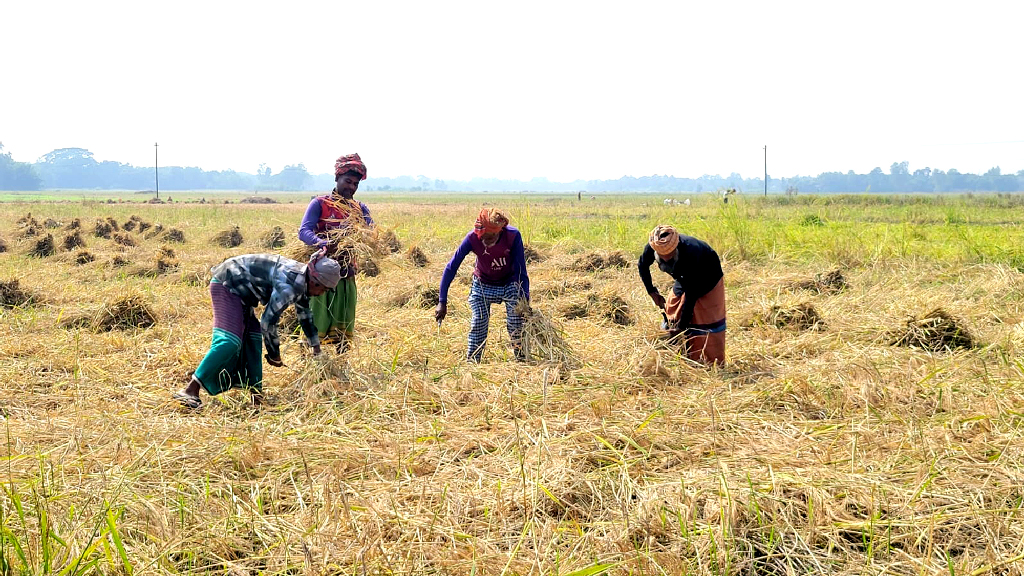
The discovery is also significant for Bangladesh. In the country's northwest, especially the Barendra region, drought and irrigation-water scarcity are major challenges for farmers, and boro rice production also requires huge amounts of irrigation water. If the technology can be adapted to Bangladesh's environment and local crop varieties, it could create an opportunity to cut irrigation dependence and production costs.
Success in research, however, is not the same as widespread use in farmers' fields. More research is needed on the environmental impact of these genetically modified crops, food safety, performance in the soils of different regions and long-term yields. Regulatory approval in each country will also be required before commercial cultivation.