Glacial lake bursts in Bhutan triggering flash flood; alerts in West Bengal and Assam, Bangladesh also watching
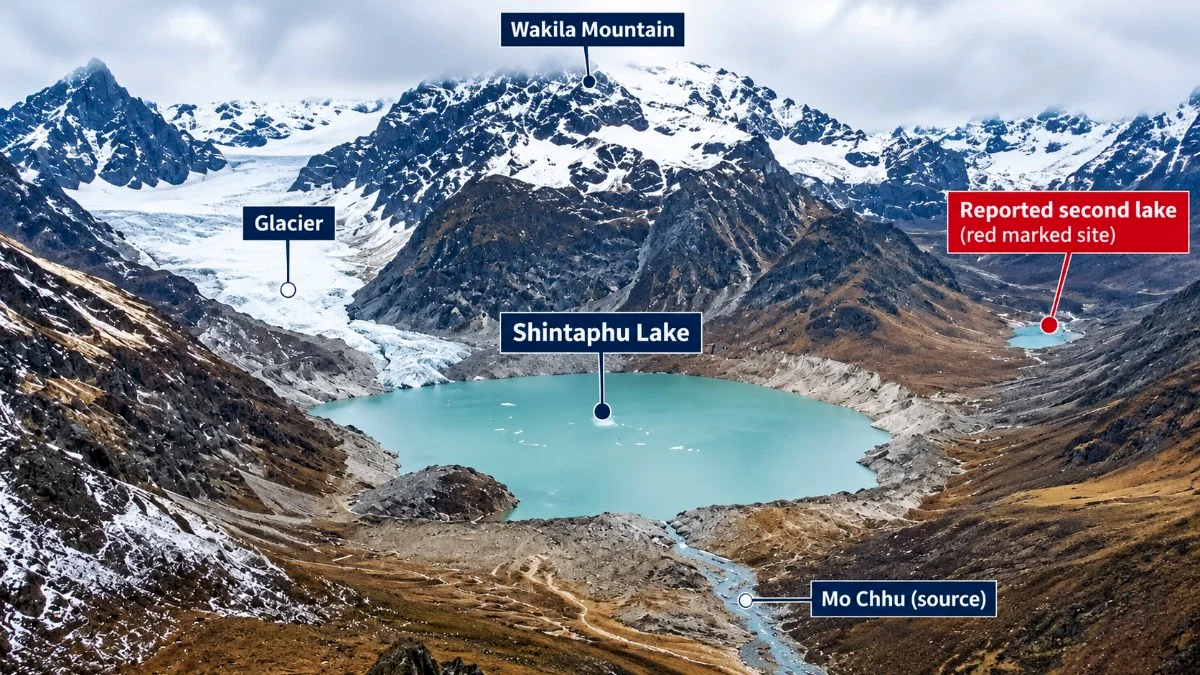
A glacial lake has burst in northwestern Bhutan, triggering a glacial lake outburst flood (GLOF). Flood alerts have been issued across large areas of India's West Bengal and Assam. Indian media reported that the incident occurred on Thursday evening local time at Lake Shintafu in Bhutan's Gasa district.
The flood completely washed away all the structures of Gasa Tsachu, a popular natural hot spring centre on the banks of the Mo Chhu river. However, as people had been evacuated from the area beforehand, no loss of life has been reported so far.
Lake Shintafu is considered one of Bhutan's 17 potentially dangerous glacial lakes. It lies at the source of the Mo Chhu river. Earlier, on August 26, 2021, a devastating flash flood completely washed away Gasa Tsachu; that time the powerful current of the Mo Chhu changed the river's course towards the hot spring centre.
This time the floodwater has already crossed the Srigang area of Kabisa gewog, about eight kilometres from Punakha Dzong. A related report said about 7.4 million cubic metres of water had flowed from the lake into the river, and the surge was feared to be able to reach the Puna-1 dam area within 10 to 15 minutes.
The Bhutan government has alerted the governments of West Bengal and Assam in India. Several districts of these states bordering Bhutan are at risk of flash flooding. The at-risk areas include Assam's Dhubri district and, in West Bengal, the Darjeeling hills, Alipurduar and Jalpaiguri districts.
In West Bengal's Cooch Behar district, the administration has also warned residents along the banks of the Sankosh river. The Sankosh, which originates in northern Bhutan, is formed by the combined flow of several major upstream tributaries, including the Mo Chhu and the Pho Chhu. The river later joins the Brahmaputra in Assam.
Given the situation, all observation stations in the lower basin of the Sankosh river in West Bengal have been ordered to remain on the highest alert. The Central Water Commission (CWC) stations at Barobisha, Sankosh LRP, Golokganj and Baladoba have been specifically told to stay vigilant — to monitor water levels closely, take necessary precautionary measures and inform the authorities immediately if any significant change in water level is noticed.
Residents of the lower basin and nearby low-lying areas have been advised to remain alert and to follow the instructions of the local administration and disaster management authorities.
Although the flood originated in Bhutan, the river system through which its water is flowing is directly connected to Bangladesh. The Sankosh joins the Brahmaputra, and the Brahmaputra enters Bangladesh through Assam and flows on as the Jamuna. If the upstream flash flood water advances downstream, it could therefore affect the situation in Bangladesh as well. However, the scale of any flood risk in Bangladesh will depend on the volume of the floodwater, the flow of the rivers and the behaviour of the water coming down from upstream.