Barisal Board Sees Worst HSC Results in the Country: Pass Rate Falls to 44.84 Percent
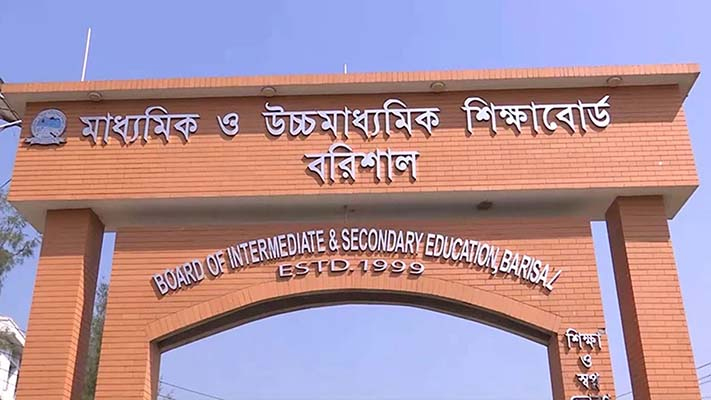
The Barisal Education Board has recorded the steepest collapse in this year's HSC examination results anywhere in the country. Among the nine general education boards, Barisal now sits at the very bottom, with a pass rate of 44.84 percent — the lowest in Bangladesh.
Compared with last year, the board's pass rate has fallen by nearly 18 percentage points. Last year Barisal's pass rate was 62.57 percent and the board ranked second. The number of GPA-5 achievers has also dropped by 724: 1,674 students earned GPA-5 last year, against 950 this year.
The board's HSC results were announced on Saturday, alongside those of the other education boards across the country. The fall from second place last year to the bottom this year has raised questions about what went wrong.
According to the board authorities, candidates performed worst in English, and that dragged down the board's overall result. The pass rate in English under the Barisal Board is around 53 percent.
Asked about the decline, the board's controller of examinations, Professor Sharif Morshed Reza, said the poor performance in English reduced both the overall pass rate and the number of GPA-5 results. He said this year's results were published after proper review and evaluation, and that they reflect the students' real merit.
Principals and teachers of various colleges in Barisal, however, pointed to three broad reasons behind the collapse. They said that after the student movement of August 2024, students drifted away from their studies, were irregular at college, and guardians did not pay proper attention to their children.
Because of this, the teachers said, students could not do well in the three hardest subjects — English, Higher Mathematics and ICT — and that affected the board's overall result.
Students and guardians disagreed with the teachers' account. They said students and guardians alone are not responsible for such poor results; the educational institutions also bear responsibility.
At Barisal Islamia College, a private institution in the city, the pass rate this year was just 28.74 percent. Atikur Rahman Bappi, guardian of a student who passed from the college, said: "Given the collapse in results, I am satisfied that my son passed at all. But students and guardians are not solely responsible for results this bad; the institutions bear responsibility too."
Tasmia Akter, a student of Barisal Government Women's College, said the examinations being held on the full syllabus, variations in the standard of question papers and errors in the questions may have affected the results. She also cited the absence of regular classes at many colleges as one of the reasons for the poor outcome.
Din Mohammad, acting principal of Government Hijla College in Hijla upazila, blamed students arriving weak from school and becoming involved in various movements instead of studying after the mass uprising. He also blamed the departure of good students to the city after the SSC examination.
Professor Kazi Jaber Ahmed, acting principal of Barisal Government BM College, said students spent their time on the streets in movements and guardians were not aware. Especially after the student movement, students were not attentive to their studies, he said, calling it a kind of social problem and questioning whether institution authorities are properly discharging their duties.
Professor Abu Taher Mohammad Rashedul Islam, the recently retired chairman of the Barisal Education Board, said there is no studying in remote areas and that students do not study.