Supreme Court hears Colorado pre-K case: can religious schools turn away LGBTQ families from a state-funded programme
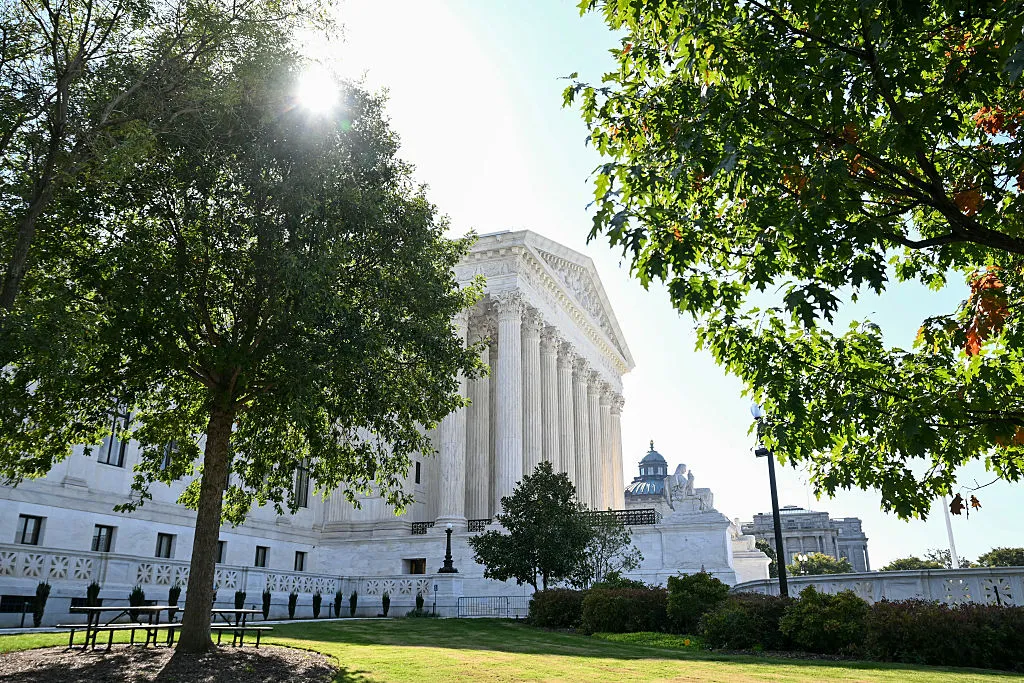
On Tuesday, the Supreme Court hears arguments in a case that pits the Catholic Church against a taxpayer-funded programme in Colorado aimed at giving virtually all four-year-olds in the state a pre-K education. At issue is whether religious schools may refuse to admit the children of gay and trans parents in violation of a state law that bars discrimination.
The Archdiocese of Denver wants to be able to turn away LGBTQ families from Catholic preschools that receive state funding. The case therefore sits at the centre of a clash between religious freedom and anti-discrimination law.
The first line of the Bill of Rights says Congress shall make no law respecting an establishment of religion, or prohibiting the free exercise thereof. As early as the founding of the country, Thomas Jefferson described the clause as creating a 'wall of separation between church and state'. The Supreme Court formally embraced that idea in the 1940s, making it the law of the land — until roughly ten years ago.
That is when the court's new conservative majority made an increasingly dramatic doctrinal U-turn, focusing not on the separation of church and state, but on the second clause in the First Amendment: protecting the free exercise of religion. 'It's literally the opposite of what the law was not that long ago. It is just a complete shift,' says Michigan State University law professor Frank Ravitch, who has written extensively about the Constitution's religion clauses.
To cite one example, the Supreme Court, by an 8-to-1 vote, ruled in 1983 that Bob Jones University should lose its tax-exempt status because it prohibited interracial dating and interracial marriage on religious grounds, and that constitutes racial discrimination that government money may not support. That said, it is unclear whether the court will reach a similar conclusion now.
Race has a 'unique' place in US history, contends professor Douglas Laycock, emeritus professor of law at the University of Texas at Austin and the University of Virginia. 'There's nothing like 250 years of slavery, civil war, 750,000 dead, three constitutional amendments. Nothing like that for any other group,' he says. As for the Colorado case, Laycock acknowledges that the Denver archdiocese is discriminating, but adds, 'The question is whether that discrimination is a protected exercise of religion.'
The thinking behind Colorado's universal pre-K programme was explained by Steve Fenberg, who served as president of the Colorado state Senate when the programme was enacted, complete with a $6,300 benefit for each child enrolled every year, money that comes from a tobacco tax. 'The law really was about implementing a program that said we want every kid, no matter where you live, to be able to have access to universal preschool,' Fenberg says.
To accomplish that, the state did something most other states have not. It created a broad plan including religious schools, as long as the schools abide by a state law that bars discrimination based on race, religion, sexual orientation or gender identity. Colorado state Representative Emily Sirota, a prime sponsor of the universal pre-K bill, emphasises that the state wanted parents to have 'a robust choice' about where their four-year-olds would go to school.
Sirota notes that the Catholic Church initially endorsed the programme, and Catholic Charities continues to participate, along with other religious groups, including at least 35 Christian schools, one Muslim and three Jewish schools. 'The caveat is that you can't discriminate, and you need to allow all students to participate,' says former state Senator Fenberg.
That caveat is where things went awry. The Denver Archdiocese and two parishes challenged the law in court, represented by the Becket Fund for Religious Liberty and its CEO, Mark Rienzi. He maintains that the Colorado law flatly discriminates against Catholic schools. 'They're only excluding religious schools that are organized around beliefs that Colorado doesn't like. And that's the constitutional problem,' says Rienzi. 'Not everybody has to be Catholic to show up, but they do have to agree to support Catholic teachings and not publicly contradict Catholic teachings. That's the way these schools are set up.' The church therefore wants an exemption from the state's anti-discrimination law, which makes it illegal to refuse entrance to four-year-olds whose parents or potentially other family members are gay or trans.
Not all Catholic programmes march to the same drummer. Tim Uhl, who has held multiple leadership positions for Catholic school systems in seven states and is currently the interim director of mission and ministry at Notre Dame High School in San Jose, California, is among a group of Catholic school directors who filed a brief siding with Colorado. 'I don't agree with the sky is falling,' Uhl says. He notes that they do admit students and families who are not Catholic, adding that non-Catholic families understand that even if they do not agree with certain doctrine, that does not mean they will be disruptive, and that diversity of opinion and thought is part of an educational experience.
The Archdiocese of Denver has a different viewpoint. In an article published in the Denver Post, Archbishop James R. Golka wrote that as a result of the Colorado pre-K programme, enrollment in Catholic schools is down 20 percent across the archdiocese and two preschools have closed, including one which serves 'minority and low income families'. Scott Elmer, superintendent of Catholic schools for the Archdiocese, says it is 'very rare' for LGBTQ parents to try to enroll their children. 'This is not something we deal with regularly,' he adds.
The Supreme Court's conservative supermajority, including President Trump's three appointees, has sent strong signals that it is headed toward revolutionising religious rights in ways not widely embraced before. Last year, the court was evenly divided on whether taxpayer-funded charter schools could include religious schools and teachings. But because Justice Amy Coney Barrett recused herself over a potential conflict of interest, the justices dropped the case. Now the Colorado case is before the Supreme Court, and this time Barrett has not felt a necessity to recuse, so there will be a full court ready to decide the case.
'The question is, how far will the Supreme Court go in requiring the government to pay for religious schools?' asks Berkeley Law School dean Erwin Chemerinsky. He also observes that there is the issue of whether the government will have to fund religious charter schools, and that it is not known how far the court is willing to go. There are some 8,000 charter schools nationally, and roughly 276 in Colorado, and they have not, until now, been run by religious groups. Just a few weeks ago, however, a federal district judge in Oklahoma allowed a taxpayer-funded Jewish charter school 'grounded in enduring Jewish values' to open, using $2.6 million in state funding that is projected to grow to $8.3 million in state funds by 2030. The fate of the school remains in limbo. Whether that continues and expands depends, of course, on the Supreme Court's decision in the Colorado case.